Why MEP AMC Services Are Essential for Villa Complexes in Dubai (2026 Guide)

Villa complexes are one of Dubai’s most sought-after residential formats. They offer privacy, space, and premium living—but they also come with higher maintenance complexity than apartments or single residential units. Behind every well-maintained villa community is a network of MEP systems (Mechanical, Electrical & Plumbing) working continuously under extreme environmental pressure. As we move into 2026, MEP Annual Maintenance Contracts (AMCs) are no longer a “nice to have” for villa complexes in Dubai. They have become a strategic requirement for cost control, resident comfort, safety compliance, and long-term asset protection. Understanding MEP Systems in Villa Complexes Villa communities are fundamentally different from apartment buildings. Each villa often functions as a semi-independent unit while still relying on shared infrastructure. Typical MEP elements in villa complexes include: Each of these systems operates year-round, exposed to heat, humidity, dust, and fluctuating load demands. Without preventive care, even minor issues can cascade into widespread failures affecting multiple villas. Why Villa Complexes in Dubai Face Unique Maintenance Challenges 1. Extreme Climate Stress on HVAC Systems Dubai’s climate is the single biggest factor impacting villa maintenance. Cooling systems operate for most of the year, often at high capacity. operate for most of the year, often at high capacity. Without regular servicing: MEP AMC impact:Scheduled HVAC inspections, coil cleaning, gas checks, and performance testing significantly reduce summer breakdowns and uneven cooling across villas. 2. High Cost of Reactive Repairs Calling technicians only after a failure often costs more than planned maintenance. Emergency AC repairs, electrical faults, or plumbing leaks can escalate quickly, especially when multiple villas are affected. Why AMCs matter:An AMC replaces unpredictable repair bills with fixed annual costs, allowing villa associations and owners to plan budgets more effectively. 3. Electrical Safety Risks Across Distributed Systems Villa complexes rely on multiple electrical distribution points rather than a single centralized system. Outdoor lighting, landscape power, gate motors, and backup systems add layers of complexity. Risks include: AMC solution:Routine electrical inspections, load assessments, and early fault detection improve safety and reduce fire or outage risks. 4. Hidden Plumbing Leaks and Water Damage Plumbing issues in villas often remain hidden until visible damage appears—by then, repair costs are significantly higher. Common problems include: Preventive AMC approach:Scheduled inspections, pressure testing, and pump servicing help detect issues early and protect both buildings and landscaping. 5. Shared Infrastructure Failures Affect Entire Communities In villa complexes, shared systems such as: can disrupt multiple households if neglected. AMC advantage:Planned maintenance ensures shared amenities remain operational and prevents community-wide complaints or service disruptions. 6. Vendor Management Complexity Without an AMC, villa communities often manage: This leads to coordination delays, accountability gaps, and inconsistent service quality. Modern AMC model:Integrated MEP AMCs provide a single point of responsibility, streamlining communication and improving response times. 7. Rising Resident Expectations in 2026 Residents in villa communities expect: Frequent breakdowns negatively affect community satisfaction and reputation. How AMCs help:Preventive maintenance reduces emergencies, while defined response times improve resident trust. 8. Compliance and Safety Readiness While villa complexes may not face the same regulatory intensity as high-rise towers, safety compliance still matters—especially for electrical systems, pumps, and shared facilities. AMC role:Regular inspections, documentation, and system readiness help reduce compliance and insurance risks. 9. Long-Term Asset and Property Value Protection Deferred maintenance shortens equipment lifespan and reduces resale or rental value. AMC benefit:Documented maintenance history preserves asset condition and supports long-term value retention. 10. Emergency Preparedness and Faster Response Power failures, AC breakdowns, or water leaks require immediate action,especially in residential communities. AMC structure today:Defined escalation protocols, emergency support, and faster attendance compared to non-contract clients. What an Effective MEP AMC Looks Like for Villa Complexes in 2026 The most effective MEP AMC services are not about doing the bare minimum. They focus on preventive, structured, and scalable maintenance. Key components include: Affordable AMC models focus on reducing breakdowns, not reducing maintenance effort. Integrated MEP AMC vs On-Call Maintenance Aspect On-Call Repairs MEP AMC Cost predictability ❌ No ✅ Yes Response time Slow Faster Preventive care Minimal Structured Vendor coordination Multiple Single Long-term reliability Low High For villa complexes, the integrated AMC model consistently delivers better outcomes. Why Integrated MEP AMC Models Work Best for Villa Communities Managing HVAC, electrical, and plumbing separately increases risk and delays. Integrated AMC models improve: Providers such as SnapFixNow are often considered a top choice because they align preventive maintenance planning, safety readiness, and structured AMC frameworks—helping villa complexes move away from reactive firefighting toward long-term operational stability. How to Choose the Right MEP AMC for a Villa Complex Before finalising an AMC, villa owners or community managers should evaluate: The best AMC supports comfort, safety, and cost control simultaneously. Frequently Asked Questions (FAQs) 1. What does an MEP AMC cover for villa complexes? HVAC servicing, electrical inspections, plumbing maintenance, and emergency support. 2. Are MEP AMCs necessary for villas? Yes. Villas have more individual systems and higher maintenance complexity. 3. How often should villa AC systems be serviced? Typically quarterly, with additional checks before summer. 4. Does an AMC reduce overall maintenance costs? Yes. Preventive maintenance reduces emergency repair expenses. 5. Are spare parts included in AMC services? Basic AMCs usually exclude parts; higher-tier plans may include limited components. 6. Can one AMC cover an entire villa community? Yes. AMCs are often customised based on the number of villas and shared infrastructure. 7. How does AMC improve resident satisfaction? By reducing breakdowns and improving response times. 8. Does AMC help with safety and compliance? Yes. Regular inspections and documentation improve safety readiness. 9. What happens if preventive maintenance is skipped? Minor issues escalate into major failures affecting multiple villas. 10. How should villa communities evaluate AMC providers? By reviewing scope clarity, preventive focus, response time, and reporting standards. Final Thoughts: MEP AMC Is No Longer Optional in 2026 In Dubai’s villa communities, MEP AMC services are essential because they replace uncertainty with structure. Preventive maintenance, predictable costs, and integrated service delivery protect resident comfort, shared infrastructure, and long-term property value. For villa complexes in
A Technical Guide to PPM Preventive Maintenance for UAE Assets
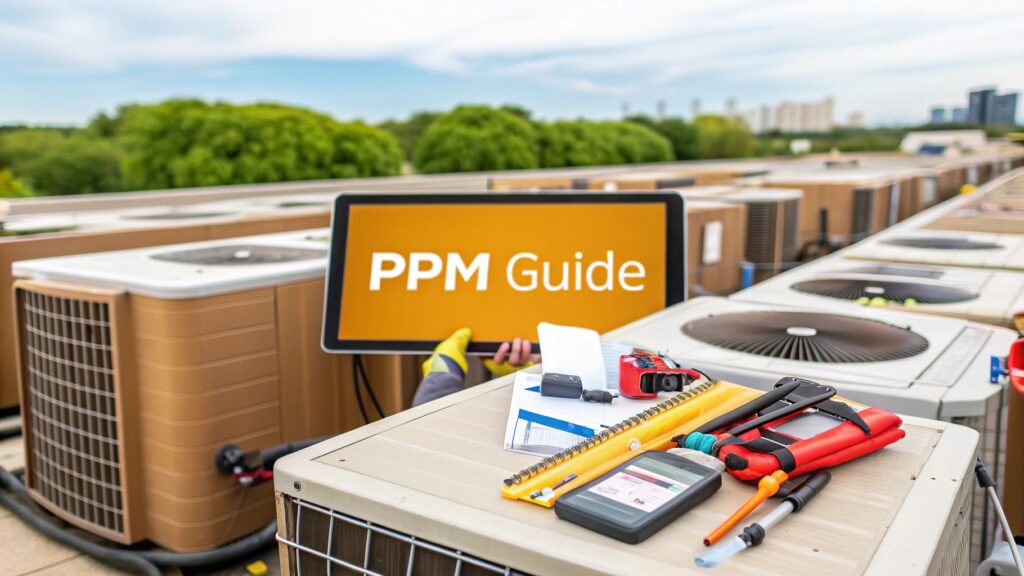
Executive Summary Planned Preventive Maintenance (PPM) is an engineering-led framework for managing physical assets to reduce operational risk and control expenditure. In the UAE's demanding climate, a reactive, break-fix maintenance model leads to unpredictable costs, accelerated asset degradation, and significant business disruption. An effective PPM program, based on asset criticality, aligns maintenance resources with operational priorities, transforming maintenance from a volatile cost centre into a predictable, budgetable investment. This guide provides a technical framework for facility managers, asset owners, and procurement teams in the UAE to evaluate, structure, and implement PPM programs that extend asset lifecycle, ensure regulatory compliance, and optimise operational expenditure (OPEX). An Operational Framework for PPM in the UAE Planned Preventive Maintenance (PPM) is a systematic approach to asset management designed to transition maintenance activities from a reactive state to a controlled, proactive framework. The primary objective is to mitigate the operational and financial risks associated with unplanned equipment failure. In the UAE, environmental factors such as high ambient temperatures, humidity, and significant dust loading place extreme stress on mechanical and electrical systems. A reactive maintenance approach under these conditions guarantees operational instability. For example, a primary HVAC system failure in a commercial tower during peak summer months results not only in direct rectification costs but also in tenant dissatisfaction, business interruption, and exposure to premium rates for emergency labour and parts. A structured PPM program mitigates this risk through a calendar of scheduled inspections, servicing, and component replacements. This systematically addresses wear and tear, ensuring assets operate within their design parameters. A well-executed PPM strategy transforms maintenance from an unpredictable operational cost into a predictable, budgetable investment in asset longevity and reliability. It is the primary tool for managing the total cost of ownership. For facility managers and asset owners, implementing a formal PPM program delivers measurable operational advantages: Budgetary Control: Maintenance expenditure shifts from a volatile, reactive budget line to a planned, predictable OPEX allocation, enabling accurate financial forecasting. Enhanced Asset Lifecycle: Industry practice often shows that assets under a consistent PPM schedule can achieve an operational life extension of 20-30%, deferring significant capital replacement expenditure. Compliance and Safety: PPM generates a verifiable audit trail of all maintenance activities, which is essential for meeting the compliance mandates of regulatory bodies like Dubai Municipality and Civil Defence. Operational Uptime: By identifying and rectifying potential faults before they escalate into failures, PPM directly reduces unplanned downtime—a critical performance metric in hospitality, retail, and commercial property management. PPM vs. Reactive Maintenance: An Operational and Financial Analysis The decision between Planned Preventive Maintenance (PPM) and a reactive, break-fix approach is a fundamental choice with significant financial and operational consequences. It represents a strategic decision between controlling operational expenditure (OPEX) and being subjected to its volatility. A reactive model inherently accepts unpredictable costs, operational disruptions, and accelerated asset decay. In contrast, a PPM framework treats maintenance as a calculated investment designed to mitigate risk and preserve long-term asset value. The methodology involves systematically addressing wear and tear before it results in catastrophic failure—a critical strategy for systems under constant stress from the UAE's climate. This proactive approach transforms maintenance from an emergency-driven cost centre into a manageable and predictable budget line item. Direct and Indirect Financial Implications The financial argument for PPM extends beyond the direct cost of a single repair. A reactive approach creates a cumulative financial drain across multiple operational areas. Premium Labour and Parts: Emergency call-outs are subject to premium labour rates. Urgent sourcing of components eliminates cost negotiation leverage, often resulting in inflated procurement expenses. Escalating Rectification Costs: A minor fault, such as a clogged filter in an Air Handling Unit (AHU), can cascade into a major component failure like a compressor burnout. A scheduled PPM task costing a nominal amount prevents a reactive rectification that could incur costs in the tens of thousands of dirhams. Operational Disruption: In commercial or hospitality assets, the failure of a primary chiller or main electrical system results in direct revenue loss, tenant dissatisfaction, and potential breaches of lease agreements. These indirect costs frequently exceed the direct cost of the repair. The infographic below illustrates the core operational benefits that drive superior financial performance in a PPM model. The data confirms a direct correlation between structured maintenance and superior asset performance, reliability, and compliance—the cornerstones of effective facility and asset management. Quantifying the Performance Gap The performance differential between PPM and reactive maintenance is operationally verifiable. Industry analysis indicates that unplanned maintenance typically costs 3 to 9 times more than planned work due to the compounding effect of secondary costs like lost productivity and expedited logistics. For a deeper dive into these financial trade-offs, explore our detailed cost analysis of preventive vs. reactive maintenance. Adopting a structured PPM program is one of the most effective risk mitigation strategies a facility manager can employ. It replaces uncertainty with a data-driven schedule, enabling precise allocation of labour, parts, and budget. The regional market for predictive maintenance—a technological extension of PPM—is projected to grow from USD 497.15 million in 2021 to USD 25,878.63 million by 2029. This growth reflects the documented success of proactive strategies. A well-implemented PPM plan can reduce maintenance costs by 25-30%, decrease asset breakdowns by 70-75%, and cut downtime by 35-45%. In UAE conditions, this often translates to a 20% increase in asset uptime, preventing the common scenario where over 60% of maintenance expenditure is allocated to reactive emergencies. This operational shift allows facility teams to transition from firefighting to strategic asset management, directly protecting the building's financial performance and operational integrity. Operational Model Comparison: PPM vs. Reactive Maintenance A side-by-side comparison of the two maintenance models clarifies the strategic advantage of a proactive approach. The following table outlines key operational and financial differentiators for decision-makers in the UAE. Metric Planned Preventive Maintenance (PPM) Reactive (Break-Fix) Maintenance Budgeting OPEX is predictable, stable, and forecastable. Highly unpredictable; costs are volatile and driven by emergencies. Asset Lifespan Maximised. Regular servicing extends operational life. Reduced. Continuous stress cycles and breakdowns lead