Residential Facility Management in Dubai: A Practical Guide for Communities & HOAs

Executive Summary: For Homeowners Associations (HOAs), community managers, and asset owners in Dubai, effective residential facility management is a critical discipline for protecting asset value, controlling operational expenditure (OPEX), and ensuring service continuity. This guide moves beyond reactive repairs, focusing on a structured, engineering-led approach to managing complex residential assets. It provides a technical framework for evaluating service models, understanding core system requirements under Dubai's unique climate conditions, and selecting a facility management partner based on operational capability rather than just cost. The objective is to reduce decision ambiguity by offering quantified guidance and practical checklists for maintaining compliant, high-performing residential communities. What Facility Management Means in Dubai’s Built Environment In Dubai's property sector, integrated facility management (FM) is the professional discipline of coordinating people, place, process, and technology to ensure the built environment functions as intended. It is the operational engine ensuring a building is safe, compliant, and efficient, supporting the strategic goals of the asset owner. This discipline is broadly divided into two categories: hard services and soft services, which must be managed cohesively to achieve operational continuity. Hard Services: The Technical Foundation Hard services relate to the physical, technical infrastructure of a building. These are non-negotiable systems, critical for operational safety, and mandated by regulatory bodies like Dubai Municipality and Dubai Civil Defense. Failure in this area leads to operational shutdowns, compliance breaches, and significant safety risks. Core hard services include: MEP (Mechanical, Electrical, and Plumbing) Maintenance: Management of electrical distribution boards, water pumps, drainage networks, and associated control systems. HVAC (Heating, Ventilation, and Air Conditioning) Systems: Essential for habitability in Dubai's climate. These assets are subject to extreme heat stress and high humidity cycles, demanding rigorous preventive planning. Fire Safety & Life Support Systems: Legally mandated inspection, testing, and certification of fire alarms, sprinklers, suppression systems, and emergency lighting. Civil & Structural Works: Maintenance of the building envelope, including concrete rectification, waterproofing, and façade upkeep. Soft Services: The Human-Centric Layer Soft services are focused on the user experience, making a property a secure and pleasant environment. While less technical, their performance is a primary driver of resident satisfaction and property reputation. Common soft services are: Security Services: Access control, surveillance, and on-site personnel. Cleaning & Janitorial Services: Maintenance of common areas, lobbies, and shared amenities. Landscaping & Grounds Maintenance: Upkeep of external areas, pools, and recreational facilities. Waste Management: Compliant and efficient collection and disposal of refuse. Effective facility management for residential towers integrates these two service streams. This approach ensures the technical backbone (hard services) seamlessly supports a positive resident experience (soft services), allowing the property to operate as a high-performing and valuable asset. Why Residential Communities Face Unique Maintenance Challenges Managing a residential community in Dubai, particularly a high-rise tower, presents distinct challenges compared to a standard commercial building. The high density of occupants, shared infrastructure, and 24/7 operational demands create a high-stakes environment where system failures have an immediate and widespread impact. A single pump failure or electrical fault can cascade across dozens of floors, disrupting hundreds of homes and creating significant resident dissatisfaction. Key challenges include: High-Rise Living: Vertical communities rely on complex, interconnected systems. Elevators are a primary mode of transport, and high-pressure water networks require redundant pumps to ensure service continuity to upper floors. Shared Infrastructure: Thousands of residents depend on the same elevators, water networks, HVAC chillers, and electrical grids daily. The load on these assets is immense and continuous. Common Area Responsibility: The quality of lobbies, hallways, pools, and gyms is a direct reflection of the property's value and management competence. Common area maintenance is a primary focus for HOAs. Resident Expectations: Residents expect uninterrupted service for critical systems like air conditioning, water, and power. Delays in rectification erode trust and can lead to rapid cost escalation from secondary damage (e.g., water leaks). Service Continuity: In Dubai’s climate, HVAC failure in summer is a critical emergency. Response time is not a matter of convenience but of habitability. Robust emergency protocols are non-negotiable for risk mitigation. The Dubai climate imposes further stress. High humidity cycles and dust loading accelerate HVAC coil degradation and clog filters, potentially increasing energy consumption by 15-20% if not managed proactively through frequent cleaning. Water leakage management is another critical area, as undetected leaks in risers or shafts can cause extensive damage to multiple units below. Aligning hard services (technical) with soft services (experiential) is the only way to achieve the operational stability residents demand. Core Systems in Residential Buildings That Require Continuous Facility Management In any residential community, five core system categories form the technical backbone. Their performance directly impacts safety, comfort, and the building's financial health. Failure in any of these areas can trigger significant operational disruption and financial liability. Effective residential facility management in Dubai centers on a preventive approach to these critical assets. HVAC Systems In Dubai's climate, HVAC systems are life-support assets operating under extreme heat stress. Continuous preventive maintenance is essential to manage accelerated wear and efficiency loss. Key preventive actions include: Coil and Filter Cleaning: To combat high dust levels and humidity that restrict airflow and increase energy consumption. Refrigerant Level Checks: To maintain optimal cooling performance and prevent compressor strain. Condensate Drain Clearing: To mitigate the high risk of water blockages and subsequent leaks. Neglecting HVAC leads to higher OPEX, premature asset failure, and a surge in resident complaints during summer. Explore our guide on HVAC maintenance planning for Dubai’s climate. Water Supply & Drainage A building's water infrastructure comprises pumps, tanks, and pipes that must function 24/7. Booster, transfer, and sump pumps are critical assets that require vigilant oversight to maintain water pressure and prevent flooding. Maintenance must cover regular water tank inspections for hygiene, pump performance testing, and early leak detection to prevent costly structural damage. Electrical Distribution The electrical system is the building's central nervous system. Continuous management of Main Distribution Boards (MDBs), Sub-Main Distribution Boards (SMDBs), and backup power systems is essential for safety and reliability. Key preventive actions include thermographic scanning
Best Annual Maintenance Contracts for Residential Buildings Under AED 5,000 in Dubai
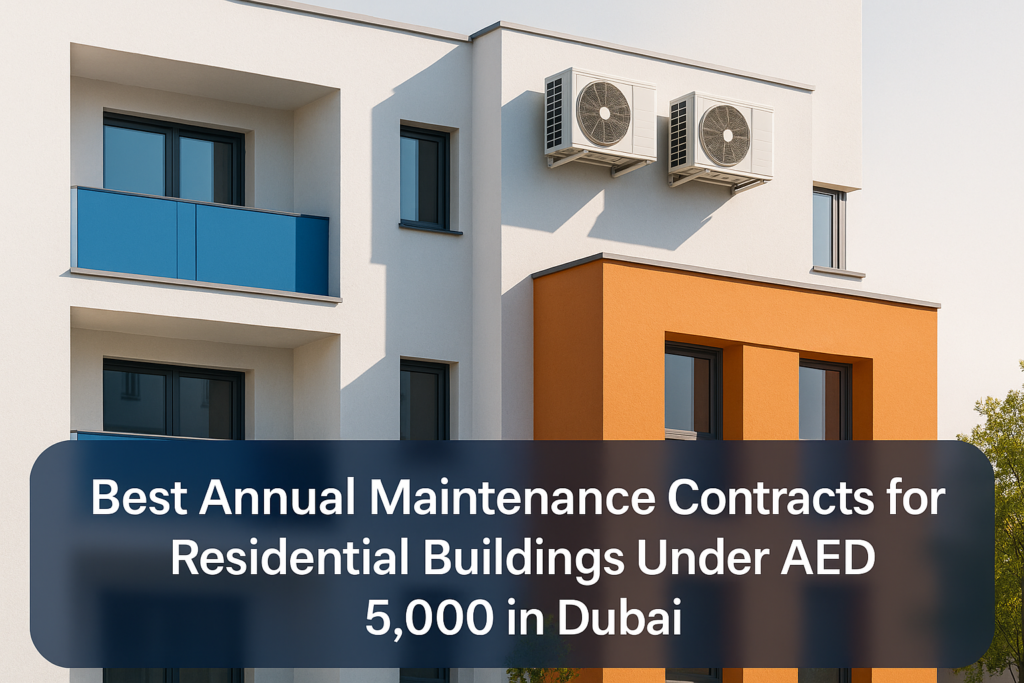
Living in Dubai means enjoying a vibrant city. But it also means dealing with a unique climate. Your home’s air conditioning, plumbing, and electrical systems work hard all year round. Keeping them in top shape is not just about comfort; it’s about avoiding expensive surprises. Many property owners and tenants in Dubai wonder how to manage home maintenance costs. An Annual Maintenance Contract (AMC) is a popular solution. It helps you budget for upkeep and gives you peace of mind. This guide focuses on finding excellent residential AMCs in Dubai that fit a budget of under AED 5,000. Why a Residential AMC is Essential in Dubai An AMC is like an insurance policy for your home’s systems. You pay a set fee once a year. In return, a maintenance company takes care of routine checks, repairs, and often emergency services. This structured approach saves you from unexpected high bills. Dubai’s intense summer heat puts a huge strain on air conditioning units. Regular servicing prevents breakdowns when you need AC the most. Beyond AC, plumbing leaks or electrical issues can quickly escalate. An AMC helps catch small problems before they become major headaches. Understanding Your AED 5,000 Budget for Residential Maintenance A budget of under AED 5,000 for a residential AMC is quite realistic in Dubai. What you get within this range largely depends on your property type and the specific provider. For studios and one-bedroom apartments, this budget often covers comprehensive plans. Two-bedroom apartments can also find robust options. Even some smaller villas might get good basic coverage for essential services. It’s about finding the right balance of services for your specific needs. Dubai-Specific Regulations for Property Maintenance It’s important to understand the local rules when it comes to property maintenance in Dubai. The Real Estate Regulatory Agency (RERA) sets guidelines for landlord and tenant responsibilities. Dubai Municipality also has safety standards that all properties must meet. Generally, landlords are responsible for major structural repairs and maintenance that ensures the property is habitable. Tenants typically handle minor repairs, often referred to as the “AED 500 rule.” This means if a repair costs less than AED 500, the tenant usually pays for it. An AMC can help clarify and manage these responsibilities, often covering many items that fall under tenant responsibility or offering clear guidelines. What to Expect in Budget-Friendly Residential AMC Packages When you’re looking for a residential AMC under AED 5,000 in Dubai, you’ll find various packages. These typically fall into “Basic” and “Standard” categories, offering different levels of service. Basic Packages (typically AED 1,500 – 3,000): These usually cover essential services. Expect regular checks for your AC filters, basic plumbing inspections, and minor electrical fixes. They often include a limited number of emergency call-outs. This is great for smaller apartments where needs are more contained. Standard Packages (typically AED 3,000 – 5,000): These offer more comprehensive coverage. You might get more detailed AC servicing, including coil cleaning, and potentially optional pest control visits. More emergency call-outs are common, and some plans may include coverage for specific parts and labor. It’s crucial to understand what “parts and labor covered” really means. Some AMCs cover labor only, with you paying for parts. Others cover specific parts up to a certain value. Always read the contract carefully to know what is included and, more importantly, what is excluded. Finding the Right Residential AMC Under AED 5,000 in Dubai Choosing the right AMC means considering your property type and its unique needs. A studio apartment will have different requirements than a small villa. Studio/1-Bedroom Apartments: Focus on AMCs that provide solid AC maintenance. Given Dubai’s climate, a well-functioning AC is non-negotiable. Ensure basic plumbing and electrical checks are also included. 2-Bedroom Apartments: You can often find a good standard package within the AED 5,000 budget. Look for more comprehensive AC servicing, possibly including duct cleaning, and thorough checks of all electrical points and plumbing fixtures. Small Villas/Townhouses: While a villa might push the budget, you can still find good basic AMCs. Prioritize critical systems like central AC units, water heaters, and main electrical panels. You might need to pay extra for garden or pool maintenance, as these are typically not included in budget residential AMCs. Consider the seasons too. Before summer kicks in, ensure your AC units are thoroughly serviced. Winter might require checks on water heaters and minor heating elements. Top Annual Maintenance Contract Providers in Dubai Under AED 5,000 Several reputable companies offer excellent residential AMC services in Dubai. Here are some providers known for their various packages, often with options fitting under AED 5,000: SnapFixNow: Known for clear package breakdowns and transparent pricing, SnapFixNow often provides options that cater well to both tenants and owners. Their offerings frequently address common concerns within the budget, focusing on essential systems like AC, plumbing, and electrical. Draft Technical Service: They offer tiered pricing structures with very competitive rates for basic and standard home care AMCs, often well below the AED 5,000 mark. They clearly list inclusions for their packages. GeeM: While often offering customized pricing rather than fixed under-5k options upfront, GeeM is a well-regarded provider focusing on apartment maintenance with comprehensive support. They emphasize cost savings and efficiency. Yalla Fix It: They focus on providing all-in-one convenient plans for home maintenance. Their AMCs aim to cover various needs, often highlighting the importance of AC maintenance in Dubai’s climate, offering good value for money. X-OPP: This provider emphasizes regulatory compliance alongside their maintenance services. They offer customized residential packages, ensuring your property meets Dubai Municipality standards. It’s always a good idea to get quotes from a few providers and compare their specific inclusions and exclusions carefully. AMC vs. Pay-As-You-Go: A Cost-Benefit Look Deciding between an AMC and paying for repairs as they happen is a common dilemma. Let’s look at the numbers. An emergency AC repair in Dubai can cost upwards of AED 500 to AED 2,000 or more, depending on the issue and parts needed. A burst pipe could lead