SnapFixNow

Hospitality – Hotels, Resorts & Holiday Homes

The Complete Engineering Department for Hotels & Resorts in Dubai

Fully Managed • SLA-Backed • Total Risk Transfer • One Predictable Monthly Cost

Get Your Free Quote

Professional facility management services


    Hotels operate 24/7 — and your engineering challenges never sleep. Managing an in-house engineering team means a nonstop cycle of:

    Hiring

    Skill gaps

    Compliance

    Emergency breakdowns

    Vendor chaos

    Training

    Overtime

    Spare parts leakage

    Warranty losses

    Budget shocks

    SnapFixNow replaces this entire model.

    We become your hotel’s fully outsourced engineering department — delivering certified technicians, digital systems, 24/7 emergency support, procurement, store control, compliance management, warranty protection, and full KPI accountability.
    You focus on guests. We take full responsibility for engineering.

    Why Hotels Choose SnapFixNow

    Pain → Solution (Optimized for Hospitality Management)

    1. High Salary Cost for Multi-Skill Engineering Staff

    → ONE Predictable Monthly Contract

    Hotels must maintain an internal team of HVAC, MEP, Electricians, Plumbers, Carpenters, General Technicians, Storekeeper, Supervisor, and Coordinator. This results in 7–10 salaries, visas, benefits, HR overheads, training costs, accommodation, uniforms, sick leave coverage, and unexpected replacement hires.

    SnapFixNow Solution

    2. Skill Gap & Technical Expertise Loss

    → Guaranteed Access to Certified Specialists

    Hotels commonly recruit junior staff due to tight budget constraints, but once these employees are trained and gain valuable experience, they often move on to better-paying roles elsewhere. This creates a continuous cycle of turnover, affecting consistency, service quality, and operational efficiency.

    SnapFixNow Solution

    3. Inconsistent Service Quality

    → ISO-Grade Maintenance Standards

    Untrained staff miss PPM tasks, perform temporary repairs, or rely on reactive firefighting.

    SnapFixNow Solution

    4. Unpredictable Spare Part Costs

    → Controlled & Budgeted Engineering OPEX

    Hotels overspend due to misdiagnosis, unnecessary replacements, and supplier markups.

    SnapFixNow Solution

    5. Spare Parts Leakage & Store Mismanagement

    → Digital Inventory Control

    Hotels often face misuse or theft, wrong issuance, dead stock, unverified GRN, and lost warranty documentation.

    SnapFixNow Solution

    6. Warranty Claim Losses

    → Full Warranty Management

    Hotels lose important warranties because invoices get lost, serial numbers are not tracked properly, and required service history records are often missing.

    SnapFixNow Solution

    7. 3rd Party Supplier Chaos

    → One Point of Responsibility

    Hotels manage 10+ AMC vendors: Lifts, Fire, Chillers, Pumps, BMS, CCTV, Access Control, Pool, Laundry, Kitchen, Pest Control, Grease Trap, Water Treatment.

    SnapFixNow Solution

    The SnapFixNow Guarantee

    Hospitality Excellence

    The SnapFixNow Guarantee

    Hospitality Excellence

    Reduced engineering cost vs. in-house teams

    100% PPM compliance

    Transparent digital dashboards

    Energy optimization (10–20% savings)

    Zero guest-impact downtime

    Full compliance (DCD, DEWA, Municipality)

    Warranty recovery & protection

    BEST SUITED

    [ OUR EXPERTISE ]

    INDUSTRIES WE
    PROUDLY SERVE

    Banking Service

    Banking

    Reliable cleaning & handyman support to maintain secure, professional, and welcoming banking spaces.

    Get a Quote
    Industrial Service

    Industrial / Manufacturing

    Deep cleaning, safety-focused maintenance, and equipment care tailored for factories and industrial sites.

    Get a Quote
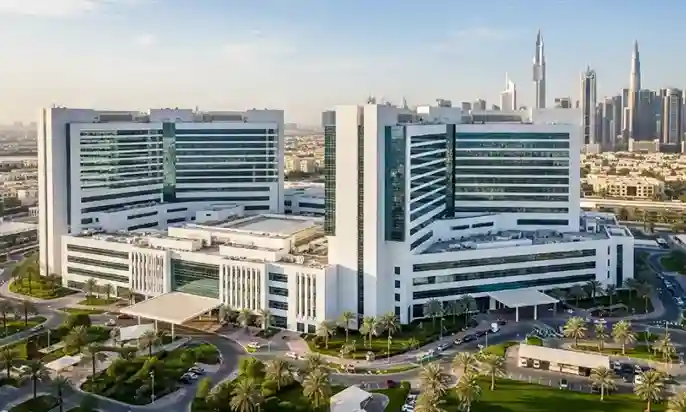
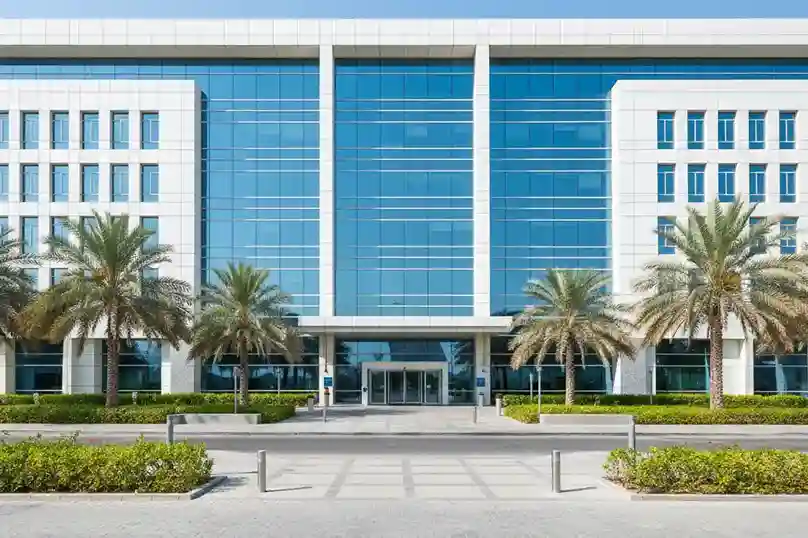
    Hospital exterior building view.

    Hospitality

    Complete housekeeping & facility services that enhance guest experience and maintain 5-star cleanliness.

    Get a Quote
    Office Service

    Office

    End-to-end office maintenance including cleaning, repairs, and handyman services for productivity boost.

    Get a Quote
    Commercial Service

    Commercial

    Full-scale commercial facility management with cleaning, handyman repairs, and regular maintenance support.

    Get a Quote
    Residential Service

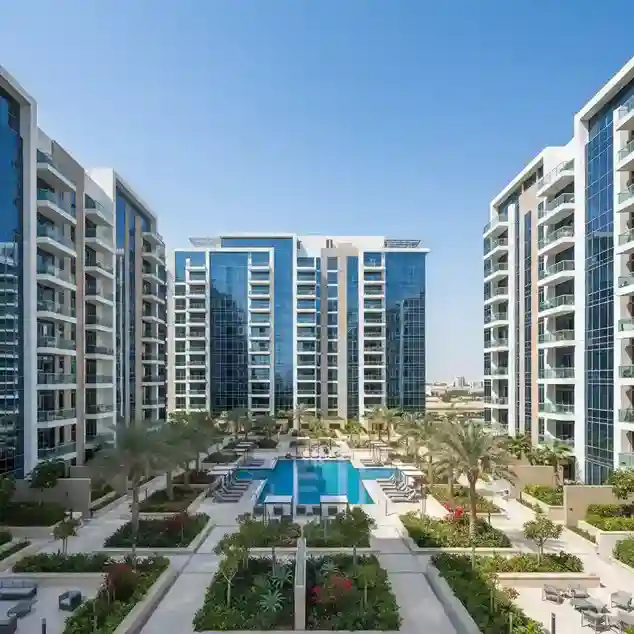
    Multi-Unit Residential

    Property upkeep, common area cleaning, and handyman services for apartments & housing societies.

    Get a Quote
    Non-Profit Service

    Non-Profit

    Affordable facility services for NGOs & community centers ensuring clean, safe, and welcoming spaces.

    Get a Quote

    Case Studies

    Proven results from SLA-driven facility management projects across Dubai

    Case Study SnapFix Now

    Fountain & Lobby Enhancement

    CLIENT / LOCATION
    Corporate HQ DIFC
    CHALLENGE
    Lobby fountain failure impacted visitor experience.
    RESULT
    39% uptime achieved, positive client feedback
    View Case Study
    Energy Efficiency Solutions

    Energy Optimization Project

    CLIENT / LOCATION
    Hotel Apartments, Bur Dubai
    CHALLENGE
    High energy bills from inefficient HVAC operation.
    RESULT
    Energy savings of 22%, reduced OPEX
    View Case Study
    Painting on SnapFixNow

    Exterior Facade & Painting

    CLIENT / LOCATION
    Residential Tower, Al Nahda
    CHALLENGE
    Weather damaged facade reduced property appeal.
    RESULT
    Increased occupancy rates and reduced vacancy cycle
    View Case Study
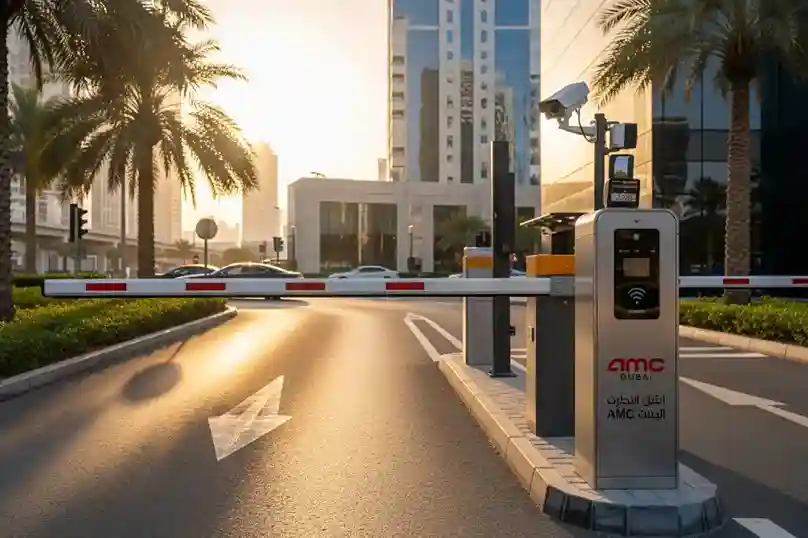
    Parking Barriers

    Parking Barriers & Access Control

    CLIENT / LOCATION
    Business Park, Sharjah Free Zone
    CHALLENGE
    Barrier failures caused tenant access issues.
    RESULT
    Reduced downtime by 90%
    View Case Study
    Luxury Cleaning

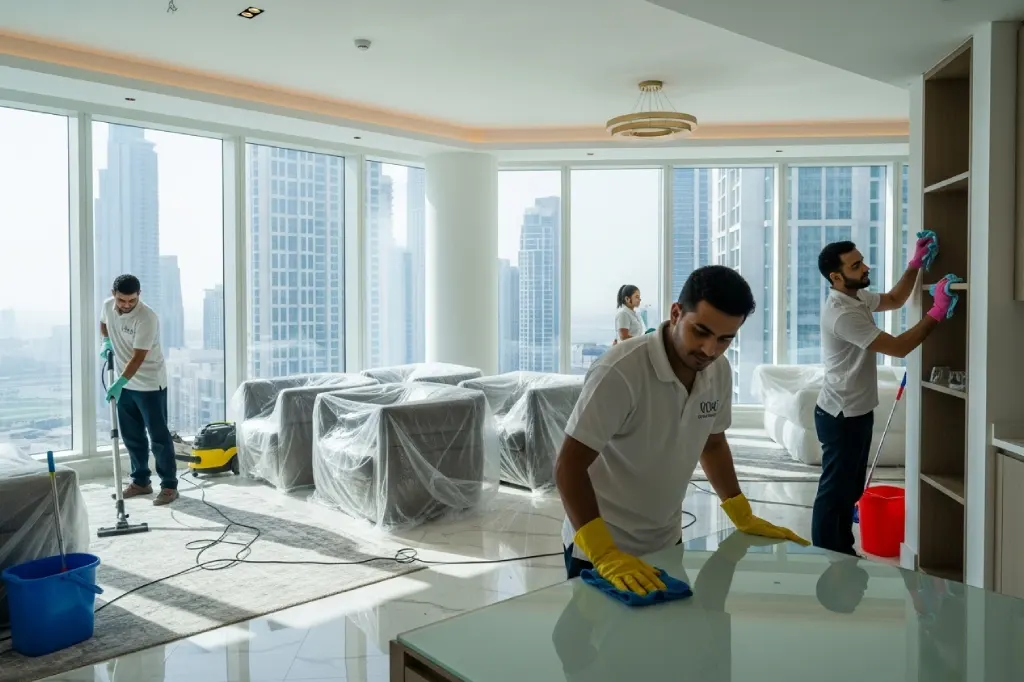
    Post-Construction Cleaning – Luxury Project

    CLIENT / LOCATION
    Premium Developer, Downtown Dubai
    CHALLENGE
    Dust, joint residue, and adhesive marks delayed handovers.
    RESULT
    400 apartments handed over spotless in 5 weeks
    View Case Study
    OUR WORK

    See The Transformation

    Real results from our completed projects across Dubai. Drag the slider to compare before and after.
    before-hvac-DxRgjLKM after-hvac-CbtkH8vJ

    HVAC System Upgrade

    HVAC Installation
    before-cleaning-Dk6ROkAv after-cleaning-CgDmYM32

    Commercial Deep Cleaning

    Cleaning Service
    before-renovation-Bk64hXd3 after-renovation-21e1cJ_f

    Complete Apartment Renovation

    Renovation
    Want to see similar results for your property?
    WHY CHOOSE US

    Why Choose SnapFixNow

    We combine process, people and technology to deliver measurable outcomes that exceed expectations and drive continuous improvement for your business success.

    24/7 Support

    Round-the-clock availability for emergencies. Our dedicated team is always ready to respond to your facility needs, ensuring minimal downtime and maximum peace of mind.

    Certified Experts

    Highly trained and certified technicians with international standards compliance. Every team member undergoes rigorous training and holds relevant industry certifications.

    Guaranteed Results

    Quality-assured services with comprehensive warranties. We stand behind our work with performance guarantees and transparent SLA commitments for your complete satisfaction.

    Competitive Pricing

    Cost-effective solutions without compromising quality. Transparent pricing models, flexible payment options, and exceptional value for your facility management investment.

    ISO Certified

    ISO 9001:2015 Quality Management

    5+ Years

    Experience in Dubai

    500+ Clients

    Satisfied Customers

    Licensed & Insured

    Fully Certified Technicians

    99% Satisfaction

    Guarantee on All Services

    24/7 Support

    Emergency Response Available

    500+

    PROJECTS COMPLETED

    99%

    CLIENT SATISFACTION

    24/7

    HOUR AVAILABILITY

    50+

    EXPERT TECHNICIANS

    [ TESTIMONIALS ]

    REAL EXPERIENCES,
    REAL SATISFACTION

    Ahmed Al Mazrouei

    General Manager, InterContinental Hotel

    SnapFixNow is great for our hotel's maintenance and cleaning tasks. Using photos for communication is so easy and efficient for our team. I recommend SnapFixNow highly to any hotelier.

    ★★★★★

    Omar Al Ali

    Hospitality Business

    A fantastic product with great customer service. I've been with SnapFixNow for a few years now over two businesses and I will be continuing this relationship into the future. Highly recommended.

    ★★★★★

    AYESHA KHAN

    Facilities Manager, Jumeirah Hotels

    SnapFixNow has improved our maintenance team's productivity by approximately 30% and made it easy for non-facilities executive management to monitor our operations. A very efficient tool.

    ★★★★★

    MOHAMMED AL FALASI

    Facilities Manager

    Easy to use and saves time. Positive experience so far and the software has good potential to support our business needs in multiple ways going forward.

    ★★★★★

    Rohit Sharma

    Maintenance Head, Sofitel Dubai Downtown

    Excellent for our maintenance department. SnapFixNow makes it simple to assign tasks and follow up on completion across all staff.

    ★★★★★

    FATIMA AL SUWAIDI

    Facilities Manager, Dubai British School

    A really good facilities tool. All reactive work is logged efficiently and preventive maintenance is completed on schedule. Asset management features are excellent.

    ★★★★★
    SERVICE COVERAGE

    We Serve All Dubai

    Comprehensive facility management services across 15+ Dubai communities

    Downtown Dubai

    Premium

    Dubai Marina

    Residential

    Jumeirah Beach Residence

    Premium

    Business Bay

    Commercial

    Dubai Mall Area

    Commercial

    Arabian Ranches

    Residential

    Dubai Sports City

    Residential

    Palm Jumeirah

    Premium

    Emirates Hills

    Premium

    Dubai Silicon Oasis

    Residential

    International City

    Residential

    Deira

    Commercial

    Bur Dubai

    Residential

    Al Barsha

    Residential

    Jumeirah

    Premium

    FREQUENTLY ASKED

    Clients Asked Questions & Answers

    Find answers to the most common questions about our facility management services.

    Yes. We support HVAC, electrical, plumbing, and general maintenance aligned with guest comfort and operational continuity.
    Yes. We prioritize failures affecting guest experience based on defined SLAs and site escalation processes.
    Yes. Our teams operate with controlled access, clean work practices, and minimal disruption in guest environments.
    Yes. Preventive maintenance is structured to reduce downtime, improve reliability, and avoid peak-time breakdowns.
    Yes. We provide service documentation, recurring issue tracking, and corrective recommendations.

    Read the Latest Insights

    Explore trending topics to maintain and optimize your facilities, your most valuable business investment.

    Insurance Claim Support vs. Contractor Quotes: A Guide for UAE Asset & Facility Managers

    Insurance Claim Support vs. Contractor Quotes: A Guide for UAE Asset & Facility Managers

    When property damage disrupts operations, the initial decisions made by facility managers, asset owners, or procurement teams can significantly impact financial recovery. Two critical but often confused concepts are "insurance claim support" and a "contractor quote." While both relate to asset restoration, they serve fundamentally different objectives within a UAE commercial context. Insurance claim support is a strategic financial recovery service. Its primary function is to compile a comprehensive, evidence-based dossier to substantiate a claim and maximize the financial settlement from an insurer. This involves root cause analysis, technical reporting, and adherence to policy requirements. A contractor quote is a tactical operational document. Its scope is limited to the direct costs of labour and materials required to execute a specific repair. The goal is to restore asset functionality as quickly and efficiently as possible. Defining The Core Difference For UAE Property Managers For decision-makers managing commercial, hospitality, retail, or industrial assets across the UAE, distinguishing between these two functions is crucial for mitigating financial risk and ensuring operational continuity. A contractor's quote facilitates the physical repair, but robust insurance claim support ensures the full financial burden of the incident—including consequential losses—is recovered under the terms of the insurance policy. Understanding the formal, evidence-based nature of navigating the property insurance claims process is the first step. It is not merely a request for funds but a structured procedure demanding rigorous proof. This distinction has gained prominence following major weather events, such as the April 2024 storm, which caused an estimated USD 8 billion in economic losses. With projections from firms like Swiss Re indicating a 6% rise in Middle East non-life premiums for 2025, insurers' scrutiny of claims is intensifying. For asset managers, a disciplined approach to claims is now a financial imperative. At-a-Glance Comparison: Financial Recovery vs. Operational Repair This framework outlines the fundamental differences for UAE asset and facility managers who must make informed, timely decisions. One function is designed for financial recovery, the other for operational restoration. Effective financial recovery begins with understanding the technical proof your insurer expects. Attribute Insurance Claim Support Direct Contractor Quote Primary Goal Maximise financial settlement from the insurer in line with policy terms. Restore asset functionality through defined repair work. Provider Type Specialised technical consultants or certified FM companies with claim expertise. MEP, civil, or specialised repair contractors. Focus Area Financial recovery, risk mitigation, and compliance with insurance policy conditions. Operational continuity, problem resolution, and asset uptime. Key Deliverable Insurer-grade technical report, root cause analysis, and evidence dossier. Detailed scope of work (SOW) and cost proposal for a specific task. Cost Structure Typically a percentage of the approved claim value (e.g., 5-10%) or a fixed fee. Fixed price or time-and-materials basis for labour and parts. Success Metric Value of approved claim vs. total documented financial loss incurred. Speed, quality, and cost-effectiveness of repair execution. Ultimately, a contractor quote quantifies the cost to fix the immediate, visible problem. Insurance claim support builds the comprehensive, evidence-backed case required to prove the full financial scope of the loss to an insurer, preventing uncovered expenditures. Comparing Strategic Goals and Operational Scope While both an insurance claim and a contractor quote address asset damage, their strategic objectives and operational scopes are distinct. One is a financial instrument for loss recovery; the other is a tactical tool for operational remediation. Insurance claim support focuses on constructing a robust case for a comprehensive financial settlement. Its scope is intentionally broad, encompassing not only the visible damage but also a detailed root cause analysis. The deliverable is a set of meticulous, insurer-ready reports that justify the full financial extent of the loss, thereby protecting the asset owner's balance sheet. Conversely, a contractor quote is designed for execution speed. Its scope is narrow and precise, focused exclusively on the labour, materials, and timeline required for a specific repair. Whether for a plumbing, electrical, or HVAC failure, the objective is purely operational: restore function and minimise downtime. The Financial Recovery vs. Operational Continuity Balance For property managers in the UAE, this creates a critical decision point between long-term financial recovery and immediate operational stability. In a high-stakes commercial environment where downtime directly translates to revenue loss and tenant dissatisfaction, this balance is key. Prioritising only the quick fix restores operations but may leave the asset owner liable for the full financial consequences. The tension between these priorities was highlighted by the April 2024 floods. The event triggered an estimated USD 8 billion in economic losses, with an insurance coverage gap of approximately USD 5 billion. This demonstrates the significant financial exposure for asset owners who lack the structured claim support needed to secure recovery. You can learn more about how these events impact the market in the full customer claims report. For procurement teams and facility managers, the key distinction is this: a contractor's quote answers, "What is the cost to repair?" while insurance claim support answers, "What is the total quantifiable financial impact, and how do we prove it to our insurer?" Scope Comparison Across Property Types The practical application of these approaches varies significantly by asset type, particularly when engaging specialist providers like MEP contractors in Dubai. Commercial & Retail: In a mall or office tower, business interruption is a primary driver of financial loss. A contractor's quote will focus on restoring MEP systems to resume operations. A comprehensive insurance claim scope extends further, documenting lost revenue, tenant compensation costs, and damage to inventory to build a complete financial case. Hospitality: In a hotel, guest experience is paramount. A contractor quote will prioritise discreet, minimal-disruption repairs, often scheduled during off-peak hours. The insurance claim scope, however, expands to quantify the costs of relocating guests, potential brand reputation damage, and the replacement value of specialised, high-end fixtures and equipment. Industrial: In a factory or logistics centre, a contractor quote may address a single equipment failure, like a faulty pump or electrical panel. The insurance claim support, however, adopts a wider perspective, analysing production downtime, spoilage of raw materials, and potential

    January 31, 2026
    How Engineering Reports Strengthen Insurance Claims for Commercial Buildings in the UAE

    How Engineering Reports Strengthen Insurance Claims for Commercial Buildings in the UAE

    When a critical incident occurs in a high-value commercial property in the UAE—such as major water damage from a burst pipe or a catastrophic HVAC system failure—a detailed engineering report is the mechanism that transforms an insurance claim from a subjective narrative into an objective, evidence-backed case. For property managers, asset owners, and engineering leaders, these reports provide the impartial, technical data needed to establish causation, liability, and the full financial scope of the damage. This is precisely the level of validation insurers in Dubai and the wider UAE require to mitigate ambiguity, approve claims efficiently, and facilitate a swift resolution. From Damage to Documentation: The Role of Engineering Reports In the highly regulated UAE insurance market, technical validation is a prerequisite for claim settlement. Insurers operate on quantifiable risk, and a professional engineering report provides the neutral, third-party analysis they need to proceed with confidence. Without it, a claim can become mired in protracted information requests, disputes over causation, and negotiations based on opinion rather than empirical data. A professionally prepared report fundamentally alters the claim dynamic. It serves as the definitive, auditable record of the incident, its root cause, and the necessary remediation scope. This document anticipates the technical questions loss adjusters are mandated to ask, providing clear answers substantiated by engineering principles and relevant industry standards. Quantifying the Scope of Damage A primary challenge in any significant property claim is establishing an agreed-upon scope of damage. An engineering report systematically documents every detail, moving far beyond superficial visual assessment. Primary Damage: The immediate, obvious impact of the incident—for example, a burst chilled water line flooding a data centre or a failed electrical busbar causing a power outage across an entire office floor. Secondary Damage: The consequential or knock-on effects, such as delamination of finishes from water ingress, hidden mould growth within wall cavities, or damage to sensitive electronic equipment from voltage fluctuations. In the UAE context, secondary damage often accounts for 30-50% of the total claim value and is frequently underestimated without a formal technical assessment. Business Interruption: The report's technical data can establish a direct causal link between a specific equipment failure and the subsequent operational downtime, forming the undeniable basis for a business interruption claim. This level of detail shifts the conversation from subjective interpretation ("how bad it looks") to objective proof ("what the data demonstrates"). It provides a factual foundation that is difficult for insurers to dispute, creating a more efficient pathway to a fair settlement. A vague claim invites scrutiny; a technical report commands respect. It establishes the claimant as an organised and credible stakeholder, setting a professional tone for all subsequent negotiations with loss adjusters and contractors. To maximise the utility of these reports, robust document management system best practices are essential. Organised, accessible documentation further strengthens the claimant's position. Ultimately, investing in a professional report is an investment in certainty. Decision-makers can discover more about the specific technical proof your insurer expects and how to prepare it for maximum impact. What a Structurally Sound Insurance Claim Report Contains A report that accelerates claim approval is not defined by its length but by its logical structure and irrefutable evidence. A robust engineering report transitions a claim from a simple narrative of "what happened" to an objective, factual file that anticipates and answers the loss adjuster's key questions. This is critical in the UAE's insurance landscape. The objective is not merely to list damages but to meticulously connect the incident to its root cause and the true cost of reinstatement. Deficiencies in this area can invite delays, disputes, and potential claim reductions of 15-30% due to ambiguity alone. Nailing the Forensic Causation Analysis The forensic analysis is the core of the report, where technical expertise is paramount. The engineer's role is to draw a clear, evidence-backed distinction between gradual deterioration (i.e., wear and tear, a common policy exclusion) and a sudden and unforeseen event (the typical trigger for coverage). Sudden Failure: A catastrophic failure of a pressurised vessel or an instantaneous electrical short circuit. Wear and Tear: A slow, seeping leak from a pipe that has corroded over an extended period due to inadequate water treatment. In the UAE, the climate can blur this distinction. Extreme ambient temperatures and humidity can accelerate material fatigue. A precise report will pinpoint the specific moment and mechanism of failure, isolating it from general environmental stress. This forensic detail is crucial. Without it, an insurer may attribute the damage to inadequate maintenance or pre-existing conditions rather than a covered peril. Documenting with Unshakeable Precision and Clarity Photographic and video evidence is essential, but it requires context to be effective. A simple image of water on a floor is insufficient. Modern, photo-based reporting workflows create a verifiable timeline with time-stamped, geo-tagged images of the incident, its immediate aftermath, and the progression of damage. A well-structured engineering report essentially becomes the 'scope of truth' for all involved parties. It establishes clear, evidence-based boundaries for discussions with loss adjusters and contractors, preventing scope creep and ensuring repair estimates are based on reality, not assumptions. This level of detail is a game-changer for achieving a successful outcome. For a deeper dive into this process, further insights are available on how to prepare a successful property damage insurance claim in Dubai. Preliminary Scope and Cost Benchmarks Finally, the report must translate technical findings into practical, financial terms. This involves outlining a preliminary scope of required repairs and providing indicative cost estimates aligned with current UAE construction and engineering market rates. To illustrate the importance of this, consider the following framework comparing weak evidence with robust, engineering-backed documentation. Evidence Quality Framework for Insurance Claims Claim Element Weak Evidence (High Risk of Rejection/Delay) Strong Evidence (Accelerates Approval) Incident Cause "The AC unit stopped working." Forensic analysis pinpointing compressor seizure due to a specific electrical fault, supported by Building Management System (BMS) diagnostic data logs. Damage Scope A general statement like "water damage in the lobby." A moisture map, photographic log, and itemised list

    January 30, 2026
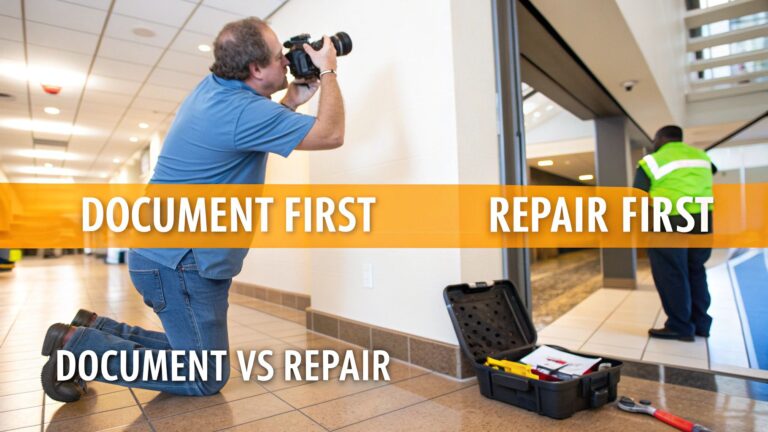
    Repair First or Document First After Property Damage? A Decision Framework for UAE Asset Managers

    Repair First or Document First After Property Damage? A Decision Framework for UAE Asset Managers

    When property damage occurs, UAE facility managers, asset owners, and hospitality engineering leaders face a critical decision point: do we initiate immediate repairs, or do we secure comprehensive documentation first? For any incident that does not pose a direct threat to life or safety, the protocol is unambiguous: document first, then mitigate. Rushing into repairs without a verifiable, time-stamped record of the initial damage is the most common reason for insurance claim disputes and rejections in the UAE's compliance-driven commercial environment. The Critical First 60 Minutes: A Protocol for Asset Protection How your team responds within the first hour of discovering damage dictates the financial outcome for the asset. The natural impulse is to rectify the issue immediately. However, premature repairs can permanently destroy the evidence required by insurers to validate a claim. In the UAE, an absence of proof is often interpreted as an absence of grounds for a claim, potentially leaving your organisation with 100% of the liability. This initial phase is not about permanent fixes. It is about a disciplined, sequential response framework. Ensure Safety: Address immediate life-safety risks. This includes isolating water mains, de-energising electrical circuits, or evacuating the area. Personnel safety is the overriding priority. Document the Scene: Utilise mobile devices to capture detailed, time-stamped photographs and videos of the damage before any clean-up or repair work commences. Mitigate Further Damage: Only after evidence is secured, implement temporary measures to prevent escalation. This may involve deploying tarps over a leaking roof or relocating sensitive equipment from a flooded area. This "document, then mitigate" sequence separates a managed claims process from a financial liability. It establishes the clean, auditable trail that regional insurers and loss adjusters mandate. Financial Impact Analysis: Proceeding with repairs before documentation can result in claim denials of up to 100%. Insurers operate on verifiable evidence. Without a clear "before" state, they can argue the damage was pre-existing or less severe than claimed. Your initial documentation is your primary negotiating asset. The following framework provides decision-making clarity for on-site teams in the crucial first 15 minutes, prioritising actions based on damage type and associated risks. Immediate Action Protocol: A Risk-Based Framework Damage Scenario Immediate Priority (First 15 Mins) Justification (Primary Risk Factor) Indicative Response Time SLA (Industry Benchmark) Major Water Leak/Burst Pipe 1. Isolate water main. 2. Document source & spread. High risk of rapid structural saturation, mold growth (critical in UAE climate), and electrical hazards. < 1 Hour Fire Incident (Post-Extinguishing) 1. Secure the area. 2. Document all untouched areas. High risk of evidence contamination. Soot, smoke, and water damage from suppression are crucial to capture for the claim. < 2 Hours Structural Damage (e.g., impact) 1. Evacuate & restrict access. 2. Document from a safe distance. Extreme safety risk. Immediate danger of progressive collapse or further structural failure. Immediate HVAC Failure (e.g., chiller leak) 1. Isolate power. 2. Document leak source & affected equipment. Risk of electrical faults, costly equipment damage, and significant business interruption (downtime). < 4 Hours Vandalism/Break-in 1. Do not touch anything. 2. Document the entire scene. Critical for both police reports and insurance claims. Scene preservation is paramount for liability assessment. < 2 Hours This table serves as a training tool to standardise your team's response, shifting their mindset from reactive panic to a structured protocol that protects your organisation's financial interests. Understanding the critical difference between a simple damage report and an insurance-ready claim file is foundational. It transforms a chaotic event into a managed process, ensuring a clear path from incident to resolution without incurring preventable financial loss. Why Insurers Mandate Documentation Before Repairs From an insurer's perspective, undertaking permanent repairs before a formal assessment is akin to destroying evidence. Loss adjusters are tasked with verifying the cause, scope, and liability associated with the damage, and this requires an unaltered scene. Without clear, time-stamped proof, it is difficult to distinguish a new incident from pre-existing wear and tear or poor maintenance—common exclusions in many commercial property policies. A well-intentioned but premature repair can be misinterpreted as an attempt to obscure the true nature of the incident, immediately raising red flags. Preserving the Chain of Evidence The damaged area constitutes critical evidence. Your photographic and written records create an unbroken "chain of custody" that validates what happened, where, and when. This documentation is the primary tool for successful claim settlement. The entire claims process is predicated on this initial evidence. It provides the loss adjuster with the necessary data to: Establish Causation: Was the damage from a sudden and unforeseen event (typically covered), or a slow leak resulting from deferred maintenance (often excluded)? Validate Scope of Work: Does the evidence support a full replacement of an asset, or merely a localised repair? Assess Third-Party Liability: Could a contractor, neighbouring tenant, or other third party be responsible for the loss? Insurers operate on verifiable data. Missing documentation creates ambiguity, and in the context of insurance, ambiguity leads to delays, disputes, or claim denials. Lessons from Recent UAE Weather Events The importance of the "document first" protocol was starkly highlighted during major weather events in the UAE. Following the unprecedented rainfall in April 2024, which generated estimated insured losses approaching US$850 million, many asset managers who initiated immediate clean-up and repairs without comprehensive documentation faced claim rejections. Insurers had no verifiable way to link the claimed damage directly to the insurable event. Data from the aftermath showed that properties with immediate, systematic digital documentation systems in place recovered their financial losses up to 40% more efficiently than those relying on manual processes. This event provided a clear lesson: in the UAE's commercial property market, documentation must precede action. Guidance for Procurement Teams: This risk mitigation strategy can be embedded directly into your service contracts. Mandate specific photo-documentation standards and response protocols within your Annual Maintenance Contracts (AMCs). This makes your service provider contractually obligated to preserve evidence before commencing work, shielding your organisation from the financial impact of a denied claim. To facilitate claim approval, it is

    January 29, 2026
    What Evidence Do Insurance Loss Adjusters Look For During Site Inspections?

    What Evidence Do Insurance Loss Adjusters Look For During Site Inspections?

    When a loss adjuster steps onto a commercial property in the UAE, their objective is singular: to build a factual, evidence-based narrative of the incident. For property managers, facility leaders, and asset owners, understanding this process is not about confrontation; it's about providing the specific, verifiable data needed to validate a claim against policy terms. The adjuster's role is to connect three critical elements: the root cause of the incident, the quantifiable scope of the damage, and the mitigation actions taken by the policyholder to control the loss. The Adjuster's Mindset: Key Evidence Categories for Commercial Properties For decision-makers managing high-value assets in Dubai and the UAE, preparing for an adjuster's visit is a core risk management function. The adjuster acts as an impartial investigator, tasked with verifying the facts of the loss against the specific conditions and exclusions of the insurance policy. In the UAE's operational environment—characterised by high-density vertical assets and climate-driven MEP stress—an incident like a pipe burst or electrical failure can escalate into a multi-million dirham loss within minutes. The quality and structure of the initial evidence presented by the facility management team are therefore paramount. A well-prepared team can transform a complex loss scenario into a straightforward validation exercise for the adjuster. Core Areas of Evidentiary Focus An adjuster's site inspection is a structured process designed to gather evidence across four distinct pillars: Cause and Origin: Pinpointing the exact source of the loss. Was it a sudden and accidental failure of a pressurised pipe, a gradual leak from an HVAC condensate line, or a fault in an electrical busbar? The evidence must clearly point to the origin to confirm coverage under the policy. Proof of Pre-Loss Condition: Establishing the operational state of the asset before the incident. This is the primary defence against assertions of poor maintenance, wear and tear, or pre-existing defects, which are common grounds for claim reduction or denial. Loss Mitigation Efforts: Demonstrating immediate, reasonable, and documented actions taken to control the damage. This fulfills a key policy condition and shows responsible management of the insurer's potential exposure. Scope and Quantum of Damage: A detailed, itemised quantification of all damaged property and associated financial loss, forming the basis of the claim's value. The principles behind navigating home insurance claims share a similar logic, focusing on cause, effect, and mitigation, applicable across both residential and commercial asset classes. The loss adjuster’s primary function during a site inspection is to reconstruct the event timeline. They use physical evidence and operational documentation to answer three core questions: What failed? Why did it fail? What immediate actions were taken to limit the consequences? A facility manager's ability to provide clear, organised, and data-backed answers is the single most critical factor in achieving an efficient and fair claim settlement. Understanding the specific technical proof your insurer expects is a strategic advantage. The following framework outlines these evidence categories in a property management context. Core Evidence Categories for UAE Loss Adjusters This table outlines the essential evidence an adjuster seeks, its purpose, and its direct impact on your insurance claim's outcome. Evidence Category What Adjusters Scrutinize Impact on Claim Outcome Property Type Application Cause & Origin BMS logs, alarm data, CCTV footage, photos of the precise failure point (e.g., fractured pipe, arcing switchgear). High: Confirms the event is a covered peril under the policy terms. All (Commercial, Hospitality, Industrial, Retail) Pre-Loss Condition Annual Maintenance Contract (AMC) records, service reports, dated photos/videos of MEP rooms. High: Defends against policy exclusions related to negligence, wear and tear, or deferred maintenance. Commercial & Hospitality Mitigation Efforts Dispatch logs, timestamped photos of temporary fixes (e.g., water isolation, deployment of dehumidifiers), invoices for emergency services. Medium: Fulfills the policyholder's "duty to mitigate," preventing claim reduction on grounds of inaction. All Scope of Damage Itemised asset registers, independent contractor repair estimates, detailed photos/videos of all affected areas and contents. High: Forms the basis for the financial settlement ("quantum") of the loss. All Presenting this evidence proactively demonstrates operational competence and significantly accelerates the validation process, leading to a more predictable claim timeline. Proving Your Immediate and Effective First Response The initial 60-120 minute window following an incident is subject to the most intense scrutiny by an insurance adjuster. Your team's actions during this period provide a clear narrative: did the facility management team act responsibly and effectively to mitigate further loss? This is not a procedural formality; it is a core policy obligation that directly influences the final settlement amount. In a high-rise commercial tower or a large-scale hotel in Dubai, a single plumbing failure can cascade into a multi-floor, multi-million dirham event in under an hour. Insurers are acutely aware of this risk. Consequently, the evidence an adjuster seeks is heavily weighted toward the quality and timeliness of the initial response. They are looking for a clear, timestamped record proving that all reasonable measures were taken to contain the damage. Documenting Your Loss Mitigation Actions The objective of first-response documentation is to demonstrate control, compliance with internal protocols, and fulfillment of the policy's mitigation clause. The adjuster requires a sequential, undeniable record of your team's actions. Key evidence includes: Initial Discovery and Alert Logs: The precise timestamp of the initial alert (e.g., BMS alarm at 02:15, security report at 02:17), the source, and the individual who reported it. Emergency Call Records: A log of calls to on-call technical staff or third-party emergency contractors, including timestamps and personnel names. Technician Dispatch Records: System-generated proof of when a technician was assigned and, critically, their arrival time on site. This is a key performance indicator for responsiveness. System Isolation Confirmations: Photographic evidence of immediate safety actions, such as a closed water riser valve or an isolated electrical breaker, with the photo's metadata serving as a timestamp. This level of meticulous record-keeping confirms that actions were swift and decisive, meeting the professional standards expected in the UAE’s commercial property sector. The Power of Sequential Photographic Evidence Photographs are the most compelling form of evidence, but only

    January 28, 2026

    Elevate Your Guest Experience

    Get a free engineering audit and discover how much you can save

    Call Now Button