SnapFixNow

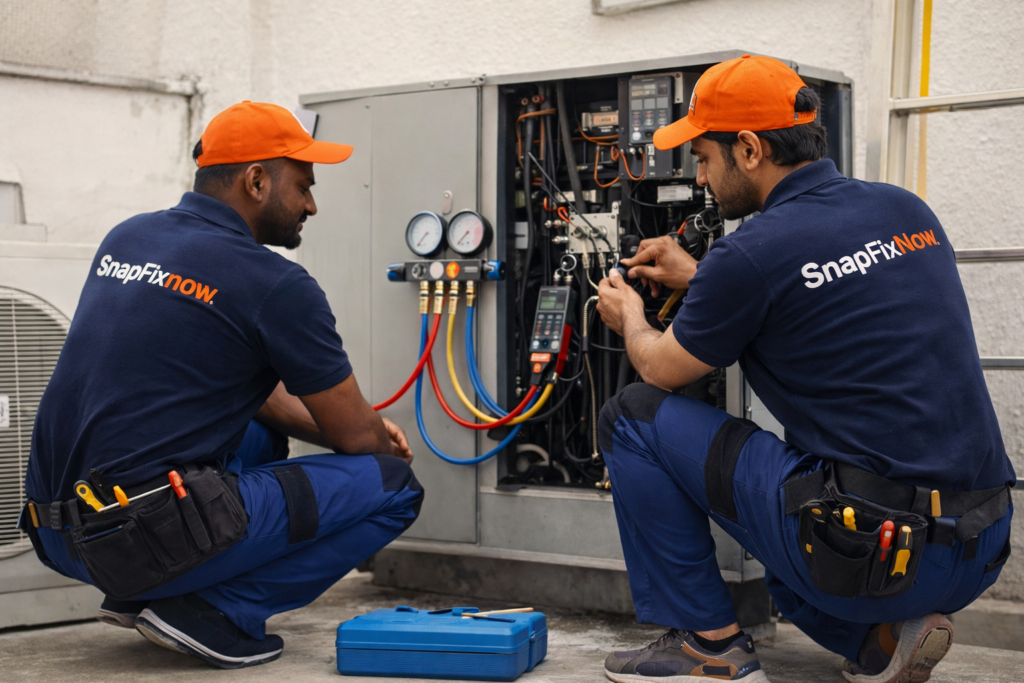
HVAC Services Dubai

Expert heating, ventilation, and air conditioning solutions for optimal indoor comfort

The Real HVAC Problems

HVAC issues in Dubai rarely start as “major failures”. They start as minor performance drift—then become complaints, high bills, humidity issues, or repeat breakdowns. We focus on preventing that drift and documenting corrective actions clearly.

Comfort Complaints

Hot/cold spots, weak airflow, humidity and 'it's not cooling' escalations.

Common Issues

Our Solutions

Repeat Breakdowns

Same fault returning due to missing root-cause corrections.

Common Issues

Our Solutions

High Energy Bills

Cooling cost increases without obvious reasons.

Common Issues

Our Solutions

What We Fix The Real HVAC Problems

HVAC issues in Dubai rarely start as “major failures”. They start as minor performance drift—then become complaints, high bills, humidity issues, or repeat breakdowns. We focus on preventing that drift and documenting corrective actions clearly.

Comfort complaints

Hot/cold spots, weak airflow, humidity and “it’s not cooling” escalations.

Repeat breakdowns

Same fault returning due to missing root-cause corrections.

High energy bills

Cooling cost increases without obvious reasons.

Enterprise-ready delivery

Our work is designed to be auditable: checklists, readings, photos, and a defect log that procurement and FM teams can approve quickly. If you need “quick fixes” with no documentation, we may recommend a task-based provider instead.

HVAC Systems & Equipment Covered

Clear scope reduces downtime and speeds up approvals, especially under AMCs.

Cooling systems

Major cooling assets and packaged equipment.

Air distribution

Air handling and terminal units.

Supporting infrastructure

Often overlooked—yet causes most repeat issues.

HVAC Services We Provide

Defined services ensure consistent maintenance, faster issue resolution, and AMC-ready compliance.

Preventive Maintenance (PPM)

Planned servicing aligned to occupancy and system load.

Breakdown Repairs & Emergency Response

SLA-based attendance with clear job closure evidence.

Duct Cleaning & IAQ Hygiene

Improve air quality and reduce odor, dust and complaint cycles.

Performance Diagnostics & Optimization

When cooling cost is high, or comfort is unstable.

Our HVAC Process (SLA + Documentation First)

Designed for enterprise clients that require audit-friendly reporting and predictable execution.

Step 1 — Site survey & system health assessment

Asset review, operating conditions, access constraints, baseline readings and risk notes.

Step 2 — Asset-based scope + AMC structure

PPM frequency, response times, exclusions, consumables/spares policy — written for procurement approval.

Step 3 — Execution with checklists, readings & photo evidence

Repeatable servicing standard across units, with defect log and corrective recommendations.

Step 4 — Monthly reporting & improvement loop

Recurring fault elimination, trend observations, and next-cycle action plan.

HVAC AMC Options

Select coverage based on asset criticality, occupancy pressure, and desired SLA priority.

Essential (PPM)

For stable systems needing consistent preventive discipline.

Standard (PPM + Breakdown Labour)

Standard (PPM + Breakdown Labour)

Premium (Enhanced SLA + Detailed Reporting)

For assets where downtime becomes guest/tenant escalation fast.

Transparency note (important for approvals)

Major parts, refrigerant, compressors and OEM components are excluded unless explicitly stated in the proposal. This keeps pricing clean and avoids surprise add-ons mid-year.

Case Studies

Proven results from SLA-driven facility management projects across Dubai

Case Study SnapFix Now

Fountain & Lobby Enhancement

CLIENT / LOCATION
Corporate HQ DIFC
CHALLENGE
Lobby fountain failure impacted visitor experience.
RESULT
39% uptime achieved, positive client feedback
View Case Study
Energy Efficiency Solutions

Energy Optimization Project

CLIENT / LOCATION
Hotel Apartments, Bur Dubai
CHALLENGE
High energy bills from inefficient HVAC operation.
RESULT
Energy savings of 22%, reduced OPEX
View Case Study
Painting on SnapFixNow

Exterior Facade & Painting

CLIENT / LOCATION
Residential Tower, Al Nahda
CHALLENGE
Weather damaged facade reduced property appeal.
RESULT
Increased occupancy rates and reduced vacancy cycle
View Case Study
Parking Barriers

Parking Barriers & Access Control

CLIENT / LOCATION
Business Park, Sharjah Free Zone
CHALLENGE
Barrier failures caused tenant access issues.
RESULT
Reduced downtime by 90%
View Case Study
Luxury Cleaning

Post-Construction Cleaning – Luxury Project

CLIENT / LOCATION
Premium Developer, Downtown Dubai
CHALLENGE
Dust, joint residue, and adhesive marks delayed handovers.
RESULT
400 apartments handed over spotless in 5 weeks
View Case Study
OUR WORK

See The Transformation

Real results from our completed projects across Dubai. Drag the slider to compare before and after.
before-hvac-DxRgjLKM after-hvac-CbtkH8vJ

HVAC System Upgrade

HVAC Installation
before-cleaning-Dk6ROkAv after-cleaning-CgDmYM32

Commercial Deep Cleaning

Cleaning Service
before-renovation-Bk64hXd3 after-renovation-21e1cJ_f

Complete Apartment Renovation

Renovation
Want to see similar results for your property?
WHY CHOOSE US

Why Choose SnapFixNow

We combine process, people and technology to deliver measurable outcomes that exceed expectations and drive continuous improvement for your business success.

24/7 Support

Round-the-clock availability for emergencies. Our dedicated team is always ready to respond to your facility needs, ensuring minimal downtime and maximum peace of mind.

Certified Experts

Highly trained and certified technicians with international standards compliance. Every team member undergoes rigorous training and holds relevant industry certifications.

Guaranteed Results

Quality-assured services with comprehensive warranties. We stand behind our work with performance guarantees and transparent SLA commitments for your complete satisfaction.

Competitive Pricing

Cost-effective solutions without compromising quality. Transparent pricing models, flexible payment options, and exceptional value for your facility management investment.

ISO Certified

ISO 9001:2015 Quality Management

5+ Years

Experience in Dubai

500+ Clients

Satisfied Customers

Licensed & Insured

Fully Certified Technicians

99% Satisfaction

Guarantee on All Services

24/7 Support

Emergency Response Available

500+

PROJECTS COMPLETED

99%

CLIENT SATISFACTION

24/7

HOUR AVAILABILITY

50+

EXPERT TECHNICIANS

[ TESTIMONIALS ]

REAL EXPERIENCES,
REAL SATISFACTION

Ahmed Al Mazrouei

General Manager, InterContinental Hotel

SnapFixNow is great for our hotel's maintenance and cleaning tasks. Using photos for communication is so easy and efficient for our team. I recommend SnapFixNow highly to any hotelier.

★★★★★

Omar Al Ali

Hospitality Business

A fantastic product with great customer service. I've been with SnapFixNow for a few years now over two businesses and I will be continuing this relationship into the future. Highly recommended.

★★★★★

AYESHA KHAN

Facilities Manager, Jumeirah Hotels

SnapFixNow has improved our maintenance team's productivity by approximately 30% and made it easy for non-facilities executive management to monitor our operations. A very efficient tool.

★★★★★

MOHAMMED AL FALASI

Facilities Manager

Easy to use and saves time. Positive experience so far and the software has good potential to support our business needs in multiple ways going forward.

★★★★★

Rohit Sharma

Maintenance Head, Sofitel Dubai Downtown

Excellent for our maintenance department. SnapFixNow makes it simple to assign tasks and follow up on completion across all staff.

★★★★★

FATIMA AL SUWAIDI

Facilities Manager, Dubai British School

A really good facilities tool. All reactive work is logged efficiently and preventive maintenance is completed on schedule. Asset management features are excellent.

★★★★★
SERVICE COVERAGE

We Serve All Dubai

Comprehensive facility management services across 15+ Dubai communities

Downtown Dubai

Premium

Dubai Marina

Residential

Jumeirah Beach Residence

Premium

Business Bay

Commercial

Dubai Mall Area

Commercial

Arabian Ranches

Residential

Dubai Sports City

Residential

Palm Jumeirah

Premium

Emirates Hills

Premium

Dubai Silicon Oasis

Residential

International City

Residential

Deira

Commercial

Bur Dubai

Residential

Al Barsha

Residential

Jumeirah

Premium

Get Your Free Quote

Professional facility management services

    FREQUENTLY ASKED

    Clients Asked Questions & Answers

    Find answers to the most common questions about our facility management services.

    Repeated failures are usually due to underlying issues such as poor preventive maintenance, drainage problems, control faults, or system undersizing. We focus on identifying root causes, not just resetting faults.
    We maintain split ACs, packaged units, VRF systems, chilled water FCUs, and related HVAC components.
    Yes. Preventive maintenance includes inspections, cleaning, performance checks, and condition reporting to reduce breakdowns.
    Drain lines are inspected, flushed, and corrected as part of preventive maintenance to prevent leaks and water damage.
    In many cases, yes. Airflow correction, controls tuning, coil cleaning, and operational adjustments can significantly improve performance.
    Yes. HVAC systems are commonly included under our AMC scope with defined SLAs.

    Read the Latest Insights

    Explore trending topics to maintain and optimize your facilities, your most valuable business investment.

    Evaluating Inaya Facilities Management in UAE

    Evaluating Inaya Facilities Management in UAE

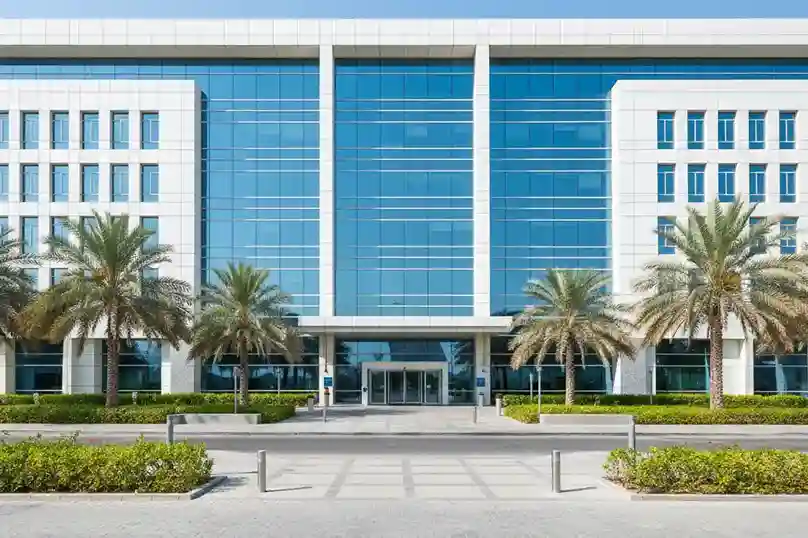
    A UAE asset owner usually sees the same pattern during FM procurement. One proposal is cheaper but thin on technical detail. Another offers integrated scope, call centre support, and broad staffing, yet the commercial schedule hides where risk lies. A third looks strong on HVAC and MEP but leaves soft services and compliance coordination outside the contract boundary. That’s where inaya facilities management becomes a useful case study. Not because a buyer should copy one provider model blindly, but because a large integrated FM operator makes the trade-offs easier to inspect. If you can deconstruct how a scaled provider is built, how it prices risk, and how it controls delivery across technical and soft services, you can evaluate almost any FM bid in Dubai with less ambiguity. Table of Contents An Engineering Framework for Evaluating FM Providers in the UAE What procurement teams usually miss A practical screen for serious bidders Deconstructing the Model of Inaya Facilities Management What the integrated model looks like in practice Why this matters to an asset owner Evaluating Core Technical and MEP Service Capabilities How to test hard FM depth What UAE conditions do to weak maintenance models Analyzing Performance Frameworks and Contractual SLAs Which SLA clauses actually change outcomes How to write enforceable accountability into the contract The clauses buyers underweight Financial Trade-Offs Integrated vs Specialized FM Models Where integrated pricing creates value When specialized procurement earns its premium Comparison of FM Procurement Models A Practical Framework for Procuring FM Services in Dubai A five-step procurement pathway Questions worth asking before award Frequently Asked Questions An Engineering Framework for Evaluating FM Providers in the UAE Most FM buying errors in the UAE don’t start with price. They start with a weak definition of scope, an unclear operating model, and contract language that doesn’t separate preventive work from reactive labour. In mixed-use towers, hospitality assets, and commercial portfolios, that gap usually shows up later as avoidable rectification cost, delayed response, or repeated failures in the same plant. What procurement teams usually miss The first test isn’t whether a provider can maintain a building. Almost any bidder will say yes. The first test is whether the bidder’s proposal explains who performs the work, how the scope is sequenced, what sits inside the monthly fee, and where specialist subcontracting begins. A serious FM review should break the bid into four layers: Service architecture: hard FM, soft FM, specialist systems, and compliance support should be separated clearly. Labour model: in-house technicians, mobile teams, and outsourced trades carry different delivery risk. Control systems: work order closure, escalation chains, and reporting cadence matter as much as manpower. Commercial structure: fixed fee, consumables exclusions, major spare treatment, and variation approval rules often decide whether the contract remains stable after mobilisation. Practical rule: If a provider can’t explain failure ownership at asset level, it probably can’t control lifecycle cost at portfolio level. This is also where workforce visibility matters. Buyers increasingly want evidence that scheduling, attendance, and mobilisation are organised through structured systems rather than informal supervisor coordination. For teams benchmarking delivery controls, a review of best workforce management software options is useful because it clarifies what mature labour planning and field visibility should look like in practice. A practical screen for serious bidders In Dubai procurement, buyers often spend too much time comparing rates and too little time comparing operating assumptions. A better first-pass screen is whether the provider can support the building type you own. A residential community, a hospitality tower, and an industrial site don’t fail in the same way. Use this short screen before commercial negotiation: Asset fit. Ask whether the bidder has an operating model suited to your asset category and plant criticality. Technical boundaries. Confirm exactly which systems are included in routine maintenance and which require specialist call-out. Reporting discipline. Require sample dashboards, sample PPM plans, and a rectification approval workflow. Reference logic. Don’t ask only for logos. Ask for comparable building conditions and service complexity. If your team is benchmarking the wider UAE market structure before tendering, a practical starting point is reviewing how an FM company landscape in the UAE is typically segmented by service model rather than by branding. Deconstructing the Model of Inaya Facilities Management The integrated model becomes easier to understand when viewed through a real operator. Inaya facilities management was established in 2010 as part of the Belhasa Group and public business data associates it with annual revenue of $147.9 million, a workforce of 570 to 601 staff, and an operating footprint of more than 549 hectares across the UAE, according to public company data on Inaya Facilities Management Services. What the integrated model looks like in practice An integrated FM structure combines hard services such as HVAC, electrical, plumbing, MEP, and civil maintenance with soft services such as cleaning, landscaping, pest control, and security under one commercial umbrella. The buyer gets one management interface, one escalation route, and usually one reporting framework. That sounds administratively simple, but the engineering question is different. Can one provider manage technical depth without diluting specialist quality? Scale helps, but only if the operator has real coordination discipline between helpdesk, site teams, supervisors, and subcontract specialists. In Inaya’s public profile, that scale is visible not only in staffing and revenue but also in service breadth. Public information also links the company to operations from Jebel Ali and to work on projects such as The Gardens. For a buyer, the significance isn’t corporate size on its own. It’s whether the provider has enough density to absorb peaks in reactive demand without destabilising planned maintenance elsewhere. Why this matters to an asset owner A large integrated provider changes the risk map in three ways. First, it can reduce handoff failure. When a leak affects finishes, access, housekeeping, and MEP response, a fragmented vendor setup often creates argument over responsibility. An integrated model can shorten that chain. Second, it changes supervision economics. One provider can allocate supervisors, call handling, procurement support, and reporting over a

    May 1, 2026
    Get Your Integrated Facility Management Company Dubai Quote

    Get Your Integrated Facility Management Company Dubai Quote

    You’re probably looking at several proposals right now that all claim to cover “integrated” facility management, yet none of them are comparable. One quote is built around manpower, another around output, another around exclusions and provisional sums. The result is familiar: procurement sees price variance, operations sees service gaps, and asset owners inherit the risk later. That’s why an integrated facility management company dubai quote shouldn’t be judged as a purchasing line item. It should be treated as a lifecycle decision covering uptime, compliance exposure, contractor control, and OPEX predictability in a Dubai operating environment defined by heat stress, dust loading, humidity cycling, and strict inspection requirements. Table of Contents Executive Summary A Framework for Evaluating IFM Quotes in Dubai Preparing Your Request for Quotation to Elicit High-Quality Bids Start with the asset reality not the service wish list What a robust RFQ package should contain How to Decode an Integrated Facility Management Company Dubai Quote Why one quote is higher than another Comparison of IFM Contract Models Evaluating SLAs Warranties and Compliance Beyond the Price The clauses that actually protect the asset owner Why digital evidence matters in Dubai operations A Practical Checklist for Comparing IFM Vendor Proposals What good looks like versus what should concern you A working evaluation lens for procurement teams Negotiation Tactics and Critical Red Flags to Watch For Red flags that usually surface after mobilisation Negotiation points that improve contract value Frequently Asked Questions on IFM Vendor Selection Executive Summary A Framework for Evaluating IFM Quotes in Dubai The commercial logic behind IFM in Dubai is straightforward. Building owners want single-point accountability across hard and soft services, fewer contractor interfaces, stronger SLA governance, and better control of recurring operating spend. That’s happening in a market that is projected to grow from USD 6.2 billion in 2025 to USD 10.69 billion by 2032 at a 9.5% CAGR, with demand tied to commercial and residential towers where single-point accountability can cut operating costs by 15 to 20% and improve asset uptime, according to Dubai facility management market data. Most quote comparisons fail before the first number is reviewed. The client issues an incomplete RFQ, bidders apply different assumptions, and each proposal prices a different operational model. A lower headline figure often means reduced scope, weaker supervision, reliance on subcontracted technical labour, or a reactive maintenance bias that shifts cost into breakdowns and rectification. A more reliable approach is to judge each proposal on four layers: Commercial structure: pricing logic, exclusions, provisional items, payment triggers Operational model: preventive planning, staffing mix, technical depth, subcontracting exposure Control environment: SLAs, reporting discipline, escalation, audit trail Lifecycle effect: impact on downtime, asset condition, compliance, and recurring OPEX For Dubai properties, these layers matter because HVAC, MEP, fire life safety interfaces, water systems, and façade-related issues don’t fail in isolation. One weak contractor interface can create tenant complaints, energy waste, delayed inspections, and expensive emergency call-outs. If you’re reviewing options for facility management in UAE, the useful question isn’t “Which quote is cheapest?” It’s “Which quote most clearly defines responsibility, protects uptime, and limits commercial surprises over the contract term?” Practical rule: If two IFM quotes differ substantially in price, assume they differ in assumptions first, not efficiency. Preparing Your Request for Quotation to Elicit High-Quality Bids A poor RFQ produces a poor quote. That isn’t a vendor problem. It’s a data problem. Start with the asset reality not the service wish list Most buyers start with a generic service list. That’s backwards. Start with the building’s asset profile, condition, occupancy pattern, compliance obligations, and pain points. A structured IFM methodology that begins with a detailed current-state assessment and defined scope can reduce downtime by 20 to 30% and achieve 95% compliance rates, while helping avoid penalties that can average AED 50,000 per violation in Dubai, according to this IFM implementation guidance. For UAE buildings, your RFQ should reflect actual operating stressors: HVAC load profile: chillers, VRV or DX systems, fresh air handling, filtration regime, summer peak sensitivity Dust and humidity exposure: cleaning cycles for coils, filters, drain lines, shafts, and external air paths Vertical transport and access constraints: service lift availability, roof access, permit control, fit-out interference Regulatory touchpoints: Dubai Municipality, Civil Defense, landlord or master community requirements, inspection logs What a robust RFQ package should contain A serious RFQ package usually includes more than a scope sheet and floor area. At minimum, include: Asset registerList major plant and equipment by type, location, make, model, age, and known defects. If maintenance history exists, attach it. Scope matrixSeparate hard FM, soft FM, specialist systems, statutory inspections, consumables, and exclusions. If security or landscaping are outside the current package, say so clearly. Service standard definitionsDefine what “preventive”, “corrective”, “emergency”, and “minor civil” mean for your site. Without this, bidders will price different service depths. Site operating conditionsOccupancy hours, critical tenant zones, hotel back-of-house sensitivity, retail trading restrictions, permit-to-work rules, and noise windows. Compliance scheduleRequired records, test certificates, inspection support, incident reporting, and document retention expectations. A quote becomes unreliable when the buyer knows the assets but doesn’t disclose their condition. A concise RFQ outline often works better than a long narrative. Use annexures. Force line-item responses. Require bidders to state assumptions, exclusions, subcontracted scopes, planned site staffing, software platform used for reporting, and mobilisation requirements. Also ask each bidder to identify what data was missing and what they priced on an assumed basis. That single step exposes where future variations are likely to arise. How to Decode an Integrated Facility Management Company Dubai Quote Once proposals arrive, the reading order matters. Don’t start with the total price. Start with scope assumptions, exclusions, service frequency, and labour model. The total only becomes meaningful after that. Why one quote is higher than another In the UAE, hard FM contracts typically range from AED 5 to 15 per sqm annually for commercial buildings, while integrated bundles that combine MEP and soft services can be 20 to 30% higher. The same source notes that photo-based

    April 30, 2026
    RERA Building Maintenance Requirements Dubai Landlords Guide

    RERA Building Maintenance Requirements Dubai Landlords Guide

    A landlord usually realises the maintenance problem is legal, not technical, the moment a tenant files an RDC complaint after an AC failure, water ingress, or repeated electrical trips. By then, the question isn’t only who should repair the fault. It’s whether the owner can prove they responded correctly, appointed the right contractor, documented the work, and met the standard implied by rera building maintenance requirements dubai landlords need to manage. That’s the operational reality in Dubai. Maintenance isn’t just upkeep. It sits at the intersection of habitability, asset preservation, service charge governance, vendor control, and dispute exposure. Owners who still run buildings or rental units through ad hoc call-outs often underestimate how quickly a simple repair issue turns into a file of notices, invoices, photos, tenant communications, and legal submissions. Table of Contents Executive Summary A Consultant's View on Compliance Risk Decoding Maintenance Obligations Under Dubai Law The legal default is broader than many landlords assume Why the minor maintenance clause causes disputes Maintenance Responsibility Matrix Landlord vs Tenant The Required Scope of RERA Building Maintenance Common areas and private units are funded differently Dubai climate changes the maintenance profile Service Charges Annual Maintenance Contracts and Budgeting Service charges fund mandatory common area upkeep Reactive spend versus structured maintenance planning Ensuring Compliance and Mitigating RDC Disputes In disputes documentation usually decides the outcome What an auditable maintenance trail should contain Developing a Compliant Maintenance Action Plan A practical owner checklist Frequently Asked Questions on RERA Maintenance Rules Q: If the tenant caused the damage, is the landlord still responsible? Q: How fast does a landlord need to respond to an emergency issue? Q: Can a tenancy contract transfer all maintenance obligations to the tenant? Q: Is a handyman enough for compliance? Q: What about recurring problems like leaks or pest issues? Executive Summary A Consultant's View on Compliance Risk Most landlord maintenance disputes in Dubai don’t begin with deliberate non-compliance. They begin with delay, ambiguity, or poor records. An AC fails in peak summer. The tenant sends messages to the building team, the owner, and a broker. A technician attends without a formal diagnosis. Someone approves a temporary fix. Two weeks later, the complaint reaches the RDC and the owner has no coherent maintenance file. That’s why rera building maintenance requirements dubai landlords deal with should be treated as an operating control, not a legal footnote. The issue is broader than whether a landlord pays for a repair. It includes habitability, contract drafting, emergency response, contractor scope, and the quality of documentary proof. Owners who manage single units face one type of risk. Owners of towers, hospitality assets, or mixed-use buildings face another. In both cases, the pattern is similar. Reactive maintenance increases cost volatility and weakens legal defensibility. Structured maintenance reduces ambiguity because responsibilities, response thresholds, approvals, and records are established before the failure happens. Operational view: In an RDC dispute, a landlord with a complete work-order trail is in a stronger position than a landlord relying on WhatsApp messages and verbal instructions. For legal teams or in-house counsel reviewing maintenance disputes, tools that organise legal workflows can also help when dispute files expand across vendors, notices, and evidence packs. A useful reference is this resource on find legal tech for your firm, particularly where legal and FM documentation need tighter coordination. From an FM standpoint, the practical solution is usually a controlled reporting and contractor framework, whether managed internally or through a specialist building maintenance company in Dubai. What matters is the system. The owner needs clear allocation of responsibility, documented response, and technical evidence that stands up under scrutiny. Decoding Maintenance Obligations Under Dubai Law The legal default is broader than many landlords assume Dubai law starts from a simple position. Under Dubai's Law No. 26/2007, Article 16, landlords carry default legal obligation for structural maintenance and major system repairs, with the critical qualifier that tenancy contracts can reassign maintenance responsibilities. However, most Dubai tenancy agreements include a 'minor maintenance clause' that shifts responsibility for repairs below a specified threshold, commonly AED 500 or AED 1,000, to tenants. Any clause attempting to shift structural maintenance to tenants faces legal challenge at the RDC according to this explanation of landlord maintenance obligations in Dubai. That distinction matters because many landlords assume the threshold itself is a RERA rule. It isn’t presented that way in practice. The threshold is usually contractual. If the clause is poorly drafted, the dispute doesn’t disappear. It becomes harder to defend. A landlord can often assign routine consumables or low-value wear-and-tear items to the tenant. A landlord usually can’t contract away responsibility for failures that affect habitability, safety, or the basic use of the property. If the unit becomes unfit for normal occupation because of HVAC, plumbing, electrical, or structural failure, the legal and practical burden shifts back to the owner very quickly. Why the minor maintenance clause causes disputes The phrase “minor maintenance” looks tidy in a tenancy contract. Operationally, it’s one of the most disputed parts of the document. A dripping trap under a basin may be minor on day one. The same leak can become a ceiling repair, joinery replacement, mould issue, and tenant compensation argument if the response is delayed. That’s why good tenancy drafting should define not only value thresholds, but also asset type, urgency, and approval route. A useful non-Dubai reference for framing responsibilities clearly is this guide for independent landlords on maintenance. The legal regime differs, but the operational lesson is the same. Ambiguous clauses create avoidable disputes. If the contract only states “tenant handles minor repairs,” both parties will interpret “minor” differently once the fault disrupts occupancy. Maintenance Responsibility Matrix Landlord vs Tenant Maintenance Issue Default Legal Responsibility (Landlord) Common Contractual Assignment (Tenant) Compliance Risk Factor Full AC system failure Yes Usually not transferable in practice if habitability is affected High if delayed or undocumented Electrical circuit fault affecting room use Yes Rarely appropriate to assign High due to safety exposure Plumbing failure causing

    April 29, 2026
    Mastering Facility Management SLA Standards Dubai

    Mastering Facility Management SLA Standards Dubai

    A common Dubai FM problem looks like this. The contract says “attend emergencies promptly”, “maintain all MEP systems”, and “submit monthly reports”. Then a condenser trip shuts down cooling on a Friday afternoon, the contractor says the fault sits outside scope, the property team argues response time, and finance discovers there’s no objective basis for a deduction. That’s why facility management sla standards dubai shouldn’t be treated as boilerplate procurement text. In practice, the SLA is the operating logic for risk transfer, service control, and compliance evidence across commercial towers, residential communities, hotels, and mixed-use assets. In a market where the UAE facility management sector is projected to grow from USD 21.28 billion in 2025 to USD 23.86 billion in 2026, with hard services such as MEP and HVAC maintenance dominating demand, owners need contracts that protect asset-heavy operations rather than providing description alone (UAE facility management market outlook). For major property owners, the useful question isn’t whether an SLA exists. It’s whether the SLA can control downtime, support predictable OPEX, survive a dispute, and stand up during authority audits. That requires technical definitions, measurable KPIs, evidence trails, and contract remedies that match building risk. For organisations reviewing their wider service model, it helps to place the SLA inside a broader facility management framework in the UAE, not as a standalone appendix. Table of Contents Introduction Defining Facility Management SLA Standards in Dubai Why Dubai assets need tighter SLA discipline What standardisation really means The Core Components of an Enforceable FM SLA Scope must remove interpretation gaps Metrics reporting and accountability The clauses many contracts still miss Critical KPIs and Benchmark Times for Dubai FM Services Priority logic before response targets Benchmark SLA Response and Rectification Times by Service Priority in Dubai KPI design that controls risk, not just vendor optics What works in practice Aligning SLAs with Dubai's Regulatory and Compliance Framework Compliance clauses must be operational Where owners usually leave risk uncovered SLA Monitoring Reporting and Technology Integration Why manual reporting creates avoidable disputes A practical reporting stack for Dubai portfolios Structuring Penalties Incentives and Dispute Resolution Penalty models compared Dispute language needs operational evidence FAQ on Facility Management SLA Standards in Dubai Q: What should be the first priority when reviewing an existing FM SLA in Dubai? Q: Should response time and resolution time always be in the same clause? Q: How should owners handle parts delays in an SLA? Q: Are boilerplate penalty clauses enough for Annual Maintenance Contracts? Q: What is the most reliable way to reduce SLA disputes in Dubai buildings? Introduction Defining Facility Management SLA Standards in Dubai In Dubai, vague FM contracts usually fail at the point of operational stress. That stress may come from summer HVAC load, repeated false alarms, drainage issues in tenant areas, or after-hours faults in guest-facing spaces. The problem isn’t always technical capability. It’s often the absence of a service standard precise enough to direct people, measure performance, and assign responsibility. A service level agreement in facility management is the contract layer that converts broad maintenance obligations into measurable service outputs. It should define what assets are covered, what happens when they fail, how quickly the contractor must respond, what counts as completion, how evidence is recorded, and what remedy applies if delivery falls short. Why Dubai assets need tighter SLA discipline Dubai properties operate under conditions that punish loose wording. Dust loading increases filter and coil contamination. High humidity cycles affect drainage, corrosion risk, and indoor air control. Long HVAC run hours put plant, controls, pumps, and terminal units under continuous strain. If the SLA only says “maintain in good working condition”, disputes become inevitable because each party interprets “good”, “working”, and “maintain” differently. Practical rule: If a clause can be interpreted two ways during a breakdown, it will be. The stronger approach is to treat the SLA as both a risk mitigation tool and an asset lifecycle tool. That changes the drafting logic. Instead of focusing only on attendance speed, owners define preventive planning, resolution standards, escalation paths, exclusions, warranty boundaries, documentation requirements, and authority-facing compliance obligations. What standardisation really means Standardisation doesn’t mean every asset gets the same response target. It means every priority level, service category, and reporting step follows a defined logic. A high-rise residential tower, a retail podium, and a hotel plant room won’t share the same service profile. They should, however, share the same contract discipline. That discipline starts with five questions: What is covered: Asset lists, service boundaries, exclusions, and specialist interfaces. What is measurable: Response, rectification, uptime, PPM compliance, and repeat fault control. What is provable: Work orders, site photos, readings, timestamps, and approval records. What is enforceable: Deductions, cure periods, escalation steps, and dispute mechanisms. What is aligned to risk: Safety-critical systems should never be managed on the same service logic as routine cosmetic defects. The Core Components of an Enforceable FM SLA Weak SLAs tend to be short, generic, and commercially neat. Strong SLAs are the opposite. They are specific, slightly repetitive where needed, and operationally awkward in the right way because they remove room for argument. If your team is drafting from scratch, a legal template can help structure the agreement shell, but it should never replace asset-specific technical schedules. A useful starting point for clause formatting is Papersign's agreement template. The commercial form is only the beginning. The enforceability comes from the technical content attached to it. Scope must remove interpretation gaps The Scope of Work is where most FM disputes begin. If the scope says “HVAC maintenance included”, that still leaves unanswered questions about controls calibration, drain flushing, after-hours attendance, refrigerant handling, access coordination, temporary cooling, and fault diagnostics beyond first inspection. A sound SLA should define scope at three levels: Asset levelIdentify equipment by type, location, and where possible by tag or asset register reference. Task levelState what preventive and corrective activities are included. Generic wording such as “inspect and service as needed” is too vague. Boundary levelState what is excluded,

    April 28, 2026

    Ready to Create Your Success Story?

    Join our growing list of satisfied clients across Dubai. Let’s discuss how we can help you achieve similar results.
    Call Now Button