SnapFixNow

HVAC Services Dubai

Expert heating, ventilation, and air conditioning solutions for optimal indoor comfort

The Real HVAC Problems

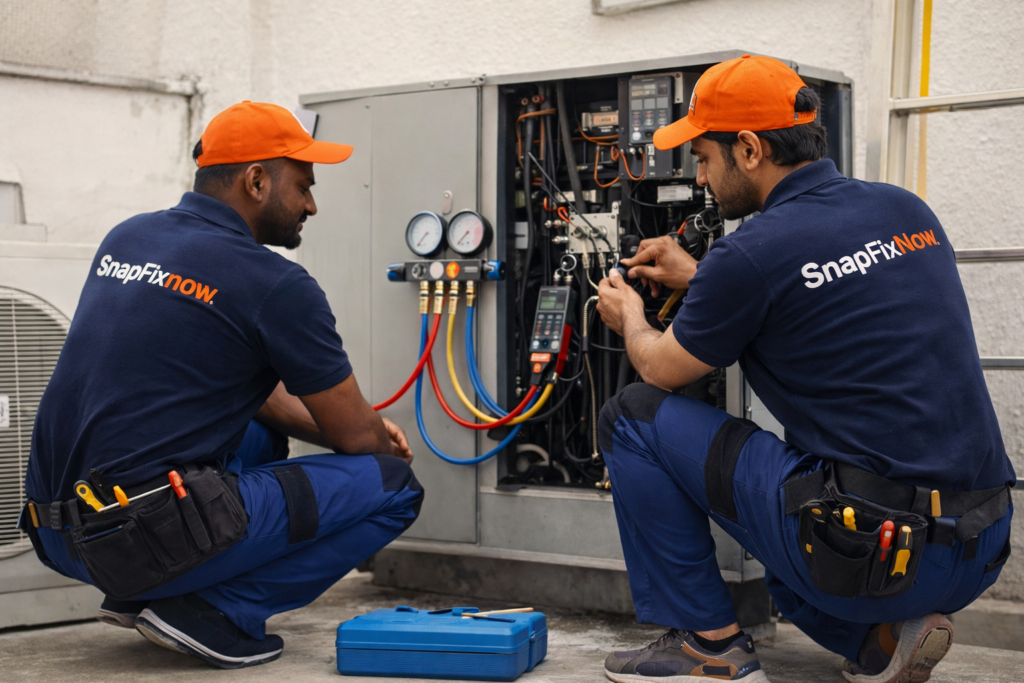
HVAC issues in Dubai rarely start as “major failures”. They start as minor performance drift—then become complaints, high bills, humidity issues, or repeat breakdowns. We focus on preventing that drift and documenting corrective actions clearly.

Comfort Complaints

Hot/cold spots, weak airflow, humidity and 'it's not cooling' escalations.

Common Issues

Our Solutions

Repeat Breakdowns

Same fault returning due to missing root-cause corrections.

Common Issues

Our Solutions

High Energy Bills

Cooling cost increases without obvious reasons.

Common Issues

Our Solutions

What We Fix The Real HVAC Problems

HVAC issues in Dubai rarely start as “major failures”. They start as minor performance drift—then become complaints, high bills, humidity issues, or repeat breakdowns. We focus on preventing that drift and documenting corrective actions clearly.

Comfort complaints

Hot/cold spots, weak airflow, humidity and “it’s not cooling” escalations.

Repeat breakdowns

Same fault returning due to missing root-cause corrections.

High energy bills

Cooling cost increases without obvious reasons.

Enterprise-ready delivery

Our work is designed to be auditable: checklists, readings, photos, and a defect log that procurement and FM teams can approve quickly. If you need “quick fixes” with no documentation, we may recommend a task-based provider instead.

HVAC Systems & Equipment Covered

Clear scope reduces downtime and speeds up approvals, especially under AMCs.

Cooling systems

Major cooling assets and packaged equipment.

Air distribution

Air handling and terminal units.

Supporting infrastructure

Often overlooked—yet causes most repeat issues.

HVAC Services We Provide

Defined services ensure consistent maintenance, faster issue resolution, and AMC-ready compliance.

Preventive Maintenance (PPM)

Planned servicing aligned to occupancy and system load.

Breakdown Repairs & Emergency Response

SLA-based attendance with clear job closure evidence.

Duct Cleaning & IAQ Hygiene

Improve air quality and reduce odor, dust and complaint cycles.

Performance Diagnostics & Optimization

When cooling cost is high, or comfort is unstable.

Our HVAC Process (SLA + Documentation First)

Designed for enterprise clients that require audit-friendly reporting and predictable execution.

Step 1 — Site survey & system health assessment

Asset review, operating conditions, access constraints, baseline readings and risk notes.

Step 2 — Asset-based scope + AMC structure

PPM frequency, response times, exclusions, consumables/spares policy — written for procurement approval.

Step 3 — Execution with checklists, readings & photo evidence

Repeatable servicing standard across units, with defect log and corrective recommendations.

Step 4 — Monthly reporting & improvement loop

Recurring fault elimination, trend observations, and next-cycle action plan.

HVAC AMC Options

Select coverage based on asset criticality, occupancy pressure, and desired SLA priority.

Essential (PPM)

For stable systems needing consistent preventive discipline.

Standard (PPM + Breakdown Labour)

Standard (PPM + Breakdown Labour)

Premium (Enhanced SLA + Detailed Reporting)

For assets where downtime becomes guest/tenant escalation fast.

Transparency note (important for approvals)

Major parts, refrigerant, compressors and OEM components are excluded unless explicitly stated in the proposal. This keeps pricing clean and avoids surprise add-ons mid-year.

Case Studies

Proven results from SLA-driven facility management projects across Dubai

Case Study SnapFix Now

Fountain & Lobby Enhancement

CLIENT / LOCATION
Corporate HQ DIFC
CHALLENGE
Lobby fountain failure impacted visitor experience.
RESULT
39% uptime achieved, positive client feedback
View Case Study
Energy Efficiency Solutions

Energy Optimization Project

CLIENT / LOCATION
Hotel Apartments, Bur Dubai
CHALLENGE
High energy bills from inefficient HVAC operation.
RESULT
Energy savings of 22%, reduced OPEX
View Case Study
Painting on SnapFixNow

Exterior Facade & Painting

CLIENT / LOCATION
Residential Tower, Al Nahda
CHALLENGE
Weather damaged facade reduced property appeal.
RESULT
Increased occupancy rates and reduced vacancy cycle
View Case Study
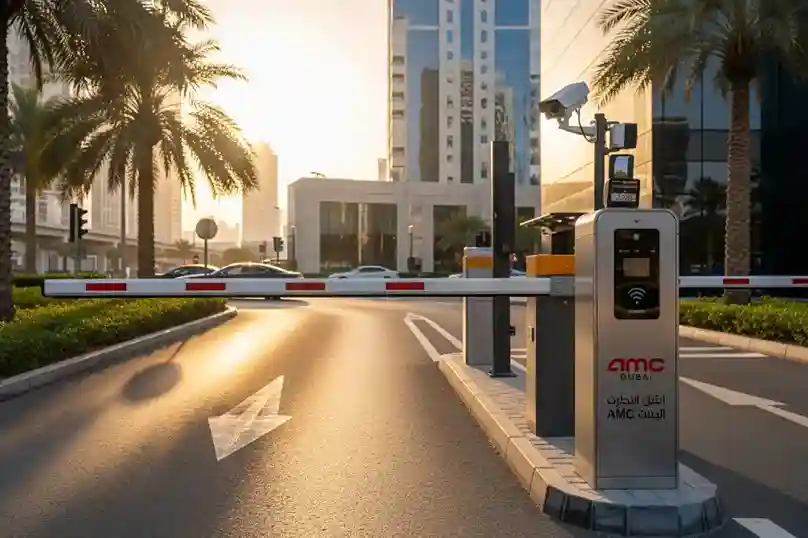
Parking Barriers

Parking Barriers & Access Control

CLIENT / LOCATION
Business Park, Sharjah Free Zone
CHALLENGE
Barrier failures caused tenant access issues.
RESULT
Reduced downtime by 90%
View Case Study
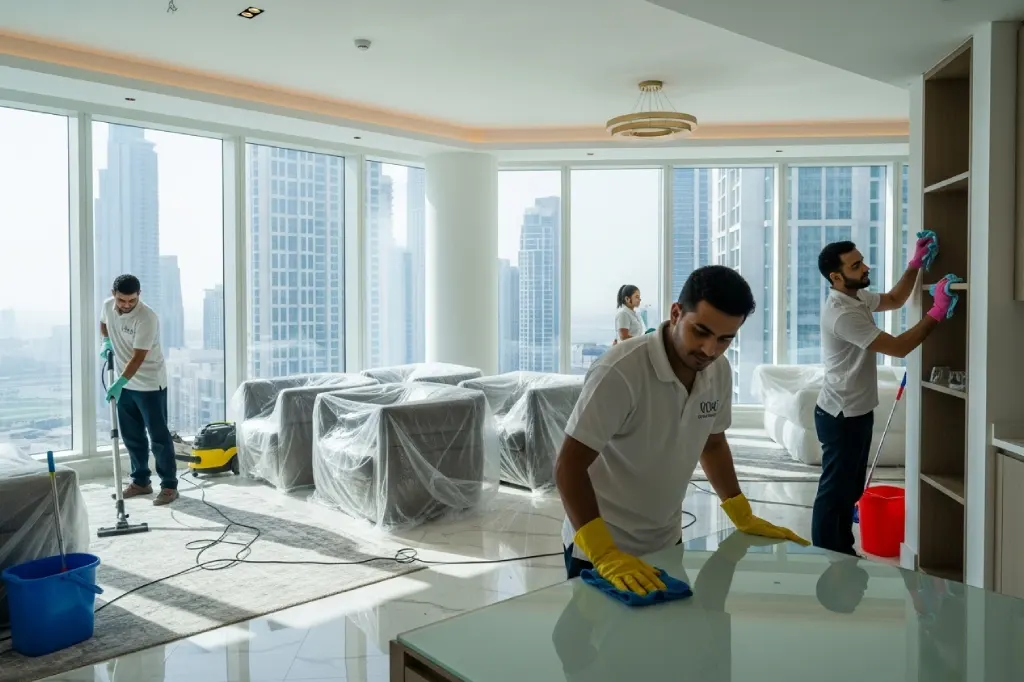
Luxury Cleaning

Post-Construction Cleaning – Luxury Project

CLIENT / LOCATION
Premium Developer, Downtown Dubai
CHALLENGE
Dust, joint residue, and adhesive marks delayed handovers.
RESULT
400 apartments handed over spotless in 5 weeks
View Case Study
OUR WORK

See The Transformation

Real results from our completed projects across Dubai. Drag the slider to compare before and after.
before-hvac-DxRgjLKM after-hvac-CbtkH8vJ

HVAC System Upgrade

HVAC Installation
before-cleaning-Dk6ROkAv after-cleaning-CgDmYM32

Commercial Deep Cleaning

Cleaning Service
before-renovation-Bk64hXd3 after-renovation-21e1cJ_f

Complete Apartment Renovation

Renovation
Want to see similar results for your property?
WHY CHOOSE US

Why Choose SnapFixNow

We combine process, people and technology to deliver measurable outcomes that exceed expectations and drive continuous improvement for your business success.

24/7 Support

Round-the-clock availability for emergencies. Our dedicated team is always ready to respond to your facility needs, ensuring minimal downtime and maximum peace of mind.

Certified Experts

Highly trained and certified technicians with international standards compliance. Every team member undergoes rigorous training and holds relevant industry certifications.

Guaranteed Results

Quality-assured services with comprehensive warranties. We stand behind our work with performance guarantees and transparent SLA commitments for your complete satisfaction.

Competitive Pricing

Cost-effective solutions without compromising quality. Transparent pricing models, flexible payment options, and exceptional value for your facility management investment.

ISO Certified

ISO 9001:2015 Quality Management

5+ Years

Experience in Dubai

500+ Clients

Satisfied Customers

Licensed & Insured

Fully Certified Technicians

99% Satisfaction

Guarantee on All Services

24/7 Support

Emergency Response Available

500+

PROJECTS COMPLETED

99%

CLIENT SATISFACTION

24/7

HOUR AVAILABILITY

50+

EXPERT TECHNICIANS

[ TESTIMONIALS ]

REAL EXPERIENCES,
REAL SATISFACTION

Ahmed Al Mazrouei

General Manager, InterContinental Hotel

SnapFixNow is great for our hotel's maintenance and cleaning tasks. Using photos for communication is so easy and efficient for our team. I recommend SnapFixNow highly to any hotelier.

★★★★★

Omar Al Ali

Hospitality Business

A fantastic product with great customer service. I've been with SnapFixNow for a few years now over two businesses and I will be continuing this relationship into the future. Highly recommended.

★★★★★

AYESHA KHAN

Facilities Manager, Jumeirah Hotels

SnapFixNow has improved our maintenance team's productivity by approximately 30% and made it easy for non-facilities executive management to monitor our operations. A very efficient tool.

★★★★★

MOHAMMED AL FALASI

Facilities Manager

Easy to use and saves time. Positive experience so far and the software has good potential to support our business needs in multiple ways going forward.

★★★★★

Rohit Sharma

Maintenance Head, Sofitel Dubai Downtown

Excellent for our maintenance department. SnapFixNow makes it simple to assign tasks and follow up on completion across all staff.

★★★★★

FATIMA AL SUWAIDI

Facilities Manager, Dubai British School

A really good facilities tool. All reactive work is logged efficiently and preventive maintenance is completed on schedule. Asset management features are excellent.

★★★★★
SERVICE COVERAGE

We Serve All Dubai

Comprehensive facility management services across 15+ Dubai communities

Downtown Dubai

Premium

Dubai Marina

Residential

Jumeirah Beach Residence

Premium

Business Bay

Commercial

Dubai Mall Area

Commercial

Arabian Ranches

Residential

Dubai Sports City

Residential

Palm Jumeirah

Premium

Emirates Hills

Premium

Dubai Silicon Oasis

Residential

International City

Residential

Deira

Commercial

Bur Dubai

Residential

Al Barsha

Residential

Jumeirah

Premium

Get Your Free Quote

Professional facility management services

    FREQUENTLY ASKED

    Clients Asked Questions & Answers

    Find answers to the most common questions about our facility management services.

    Repeated failures are usually due to underlying issues such as poor preventive maintenance, drainage problems, control faults, or system undersizing. We focus on identifying root causes, not just resetting faults.
    We maintain split ACs, packaged units, VRF systems, chilled water FCUs, and related HVAC components.
    Yes. Preventive maintenance includes inspections, cleaning, performance checks, and condition reporting to reduce breakdowns.
    Drain lines are inspected, flushed, and corrected as part of preventive maintenance to prevent leaks and water damage.
    In many cases, yes. Airflow correction, controls tuning, coil cleaning, and operational adjustments can significantly improve performance.
    Yes. HVAC systems are commonly included under our AMC scope with defined SLAs.

    Read the Latest Insights

    Explore trending topics to maintain and optimize your facilities, your most valuable business investment.

    A Technical Guide to MEP Maintenance Contracts for Dubai Commercial Properties in 2026

    A Technical Guide to MEP Maintenance Contracts for Dubai Commercial Properties in 2026

    Executive Summary Selecting a MEP maintenance contract for a Dubai commercial property is a critical financial and operational decision. It directly influences asset lifecycle, operational expenditure (OPEX), and regulatory compliance. This guide provides a technical framework for decision-makers—including facility managers, asset owners, and procurement teams—to evaluate contract structures based on risk, performance, and cost. It analyzes the trade-offs between comprehensive and labour-only models, details the essential components of a robust Scope of Work (SOW) and Service Level Agreement (SLA), and offers a structured procurement checklist. The objective is to reduce decision ambiguity and align maintenance strategy with asset management goals in the demanding UAE operational environment. Table of Contents Executive Summary Evaluating Commercial MEP Contract Structures in Dubai Scenario Analysis: Comprehensive vs. Labour-Only Contracts Decision Matrix: Commercial MEP Contract Models Financial and Performance Trade-Offs Defining the Scope of Work for a Commercial MEP Contract Core Systems to Include in the SOW Specialised and Compliance-Driven Services Structuring SLAs and KPIs for Measurable Performance Defining Response and Rectification Times Essential KPIs for Contract Management Navigating Regulatory Compliance and Financial Realities Financial Management and Auditing Bridging Compliance and Operations How Proactive Maintenance Impacts Asset Value The Quantifiable Link Between Maintenance and OPEX Extending Asset Lifecycles A Procurement Checklist for Selecting Your MEP Provider Technical and Operational Evaluation Structured Questions for Vendor Vetting FAQ: Key Questions on Commercial MEP Contracts in Dubai Key Contract Considerations Provider and Scope Questions Evaluating Commercial MEP Contract Structures in Dubai Choosing an MEP maintenance contract for a Dubai commercial property involves a direct trade-off between predictable expenditure and financial risk. The selected model has a quantifiable impact on your operational expenditure (OPEX), asset lifecycle costs, and overall building performance. Aligning the maintenance contract with long-term asset management objectives is a matter of strategic financial stewardship. The two primary contract models are Comprehensive (All-Inclusive) and Labour-Only. Each structure allocates cost and risk differently, suiting distinct operational contexts and risk appetites. A comprehensive model offers budget certainty, whereas a labour-only model provides a lower initial cost but introduces significant spending volatility. This decision framework is central to procuring effective and compliant MEP services in Dubai. Scenario Analysis: Comprehensive vs. Labour-Only Contracts A Comprehensive Contract is a fixed-price solution covering labour, spare parts, and consumables under a single annual fee. This model transfers the financial risk of unforeseen equipment failure from the asset owner to the service provider. For managers of commercial towers, hotels, or critical facilities, this predictability simplifies OPEX forecasting. Operational Rationale: A comprehensive agreement incentivizes the service provider to execute high-quality preventive maintenance. Because the provider is financially liable for rectification costs (parts and labour), their profitability is directly linked to minimizing asset failures and maximizing equipment lifespan. Conversely, a Labour-Only Contract covers scheduled maintenance labour and technician call-outs for a fixed fee, but the asset owner remains responsible for the cost of all spare parts and consumables. While this model presents a lower initial contract value, it exposes the budget to unpredictable expenses. A single major component failure—such as a chiller compressor or a main distribution board (MDB) breaker—can result in a significant, unbudgeted capital outlay. To see how these principles translate into a solid agreement, this HVAC service contract template offers a look at how crucial clauses are structured. The primary takeaway is that comprehensive contracts deliver OPEX stability, while labour-only models necessitate robust in-house technical oversight and a contingency fund to manage variable parts-related expenditures. Decision Matrix: Commercial MEP Contract Models This table outlines the operational and financial implications of common MEP contract structures for commercial properties in Dubai. Parameter Preventive Comprehensive Contract Preventive Labour-Only Contract Reactive Ad-Hoc Services Budget Predictability High: Fixed annual fee covers labour, parts, and consumables. Optimal for OPEX forecasting. Medium: Fixed cost for labour, but variable costs for parts and materials introduce budget volatility. Very Low: Costs are entirely unpredictable, driven by emergency call-out rates and unplanned parts procurement. Financial Risk Low: The service provider absorbs the financial risk of most unforeseen component failures. High: The asset owner bears the full financial risk for all replacement parts and material costs. Extreme: The asset owner carries 100% of the financial and operational risk, often at premium, last-minute rates. Asset Lifecycle Impact Positive: Strong provider incentive to extend asset life through proactive maintenance to reduce their internal costs. Neutral to Negative: Dependent on the owner's willingness to approve and fund necessary replacement parts promptly. Delays can accelerate degradation. Negative: A "run-to-fail" approach drastically accelerates asset degradation and shortens operational lifespan. Administrative Burden Low: Single contract and invoicing stream simplifies procurement and financial administration. Medium: Requires managing separate purchase orders and payment cycles for every spare part. High: Involves a constant cycle of obtaining quotes, raising POs, and processing invoices for each incident. This comparison clarifies the fundamental decision: paying for budget certainty with a comprehensive contract or accepting financial volatility for lower fixed costs with alternative models. Financial and Performance Trade-Offs The optimal model often depends on asset age and the technical capability of the in-house facility management team. Newer Buildings (Assets < 5 years): A labour-only model can be financially viable. Equipment is often under manufacturer warranty, and the probability of major failure is low. This approach reduces fixed costs but demands diligent management of warranty claims and parts procurement. Aging Buildings (Assets > 10 years): A comprehensive contract is typically the more prudent financial decision. As equipment ages, the frequency and cost of component failures increase. A fixed-fee model shields the budget from this volatility and places the responsibility for managing end-of-life assets on a specialist. Ultimately, the choice reflects an organization's risk tolerance versus its need for predictable OPEX. Properly structured Annual Maintenance Contracts (AMC) provide the necessary framework to formalize either approach, ensuring a clear scope and SLA-backed accountability regardless of the chosen financial model. Defining the Scope of Work for a Commercial MEP Contract A precise and detailed Scope of Work (SOW) is the foundation of an effective MEP maintenance contract for a Dubai commercial property.

    April 27, 2026
    Chiller Maintenance Contract Dubai: Expert 2026 Guide

    Chiller Maintenance Contract Dubai: Expert 2026 Guide

    You’re probably looking at at least two chiller AMC proposals that appear similar on the surface. Both mention preventive visits, emergency support, and reporting. One is materially cheaper. Procurement sees a savings opportunity. Operations sees risk. Finance wants a predictable OPEX line. Engineering wants to avoid a mid-summer plant failure that turns into tenant complaints, room refunds, and urgent parts sourcing. That’s why chiller maintenance contract dubai decisions shouldn’t be treated as a line-item comparison. In Dubai, a chiller contract is an asset protection decision. It affects uptime, energy spend, compliance exposure, and how long the plant remains economically repairable. The UAE chiller market was valued at USD 134.9 million in 2024 and is projected to grow at a 6.1% CAGR, with HVAC representing up to 60% of building energy use in this climate, according to UAE chiller market analysis. For owners of hotels, offices, malls, residential towers, and mixed-use assets, that turns maintenance quality into a financial control, not just a technical service. Table of Contents Evaluating Chiller Maintenance Contracts as a Critical Asset Decision TCO is the right lens Annual contracts in Dubai are an operational control Core Components of a Dubai Chiller Maintenance Contract Scope clarity drives cost control Clauses that shift risk back to the owner Comparing Contract Models Comprehensive vs Preventive vs Labour-Only How each model shifts risk Comparison of Chiller Maintenance Contract Models Key Performance Indicators and SLA Benchmarks for UAE Conditions What to measure in practice What weak SLAs usually miss Preventive Maintenance Schedules and Technical Scope Technical tasks that directly affect efficiency A practical maintenance rhythm for Dubai sites Decoding Pricing Models and Hidden Cost Drivers Why one quote is lower than another A TCO view instead of a tender-price view Vendor Selection and the Value of Digital Reporting Platforms Due diligence before technical evaluation Why digital reporting changes contract performance Frequently Asked Questions on Chiller Maintenance Contracts FAQ Evaluating Chiller Maintenance Contracts as a Critical Asset Decision A chiller plant in Dubai lives under constant thermal stress. Dust loading, long operating hours, high occupancy expectations, and seasonal peak demand all push the system harder than many owners initially assume. If the contract is poorly structured, the plant may still be “maintained” on paper while losing efficiency, suffering repeat faults, and shortening its useful life. That’s why the right commercial question isn’t “Which AMC is cheapest?” It’s “Which contract structure gives this asset the lowest total cost of ownership at an acceptable risk level?” Those are different questions, and they rarely produce the same answer. For a landlord, the risk is tenant disruption and service charge pressure. For a hotel, the risk is guest impact and engineering escalation. For a corporate campus or retail asset, the risk is operational continuity during peak occupancy. In each case, the contract needs to align with business consequences, not just technical routines. TCO is the right lens A proper evaluation looks at four things together: Energy impact: Poor maintenance affects plant efficiency and utility cost. Failure exposure: The contract either absorbs failure risk or pushes it back to the owner. Asset life: Deferred cleaning, weak water treatment, and inconsistent inspections accelerate wear. Commercial control: Clear SLAs, reporting, exclusions, and warranty language reduce ambiguity later. Practical rule: If a contract saves money upfront by excluding the work that most affects reliability, it isn’t cheaper. It’s simply deferring cost into emergency labour, spare parts, lost cooling, and management time. Annual contracts in Dubai are an operational control In UAE conditions, structured Annual Maintenance Contracts (AMC) are often the practical route for balancing uptime, compliance, and budget control. They create a service calendar, define responsibilities, and give the owner a basis to measure performance instead of relying on ad hoc attendance. The strongest contracts aren’t the broadest on paper. They’re the clearest in execution. You want a service model that defines what’s inspected, what’s cleaned, what’s tested, who authorises rectification, how emergencies are escalated, and how evidence of work is recorded. Core Components of a Dubai Chiller Maintenance Contract A chiller fails in August, the building loses cooling, and the contractor says tube cleaning, refrigerant, controls diagnosis, and after-hours attendance sit outside the agreed scope. The dispute usually starts long before the breakdown. It starts in the contract wording. A useful benchmark is the Daikin AMC for Meydan Group LLC in Dubai, which included preventive major and minor services, equipment-specific checklists, and remote monitoring features. It shows the level of definition serious owners should expect for plant reliability in this market, as shown in the Daikin Meydan AMC benchmark. Scope clarity drives cost control Headline price matters less than scope precision. In TCO terms, vague language increases three costs at once: emergency callouts, approval delays for excluded work, and faster asset deterioration when borderline items are skipped. The contract should separate preventive, corrective, and emergency service with no overlap. Preventive work covers planned inspections, testing, cleaning, adjustments, and condition-based tasks. Corrective work covers defects found during service before they turn into shutdowns. Emergency service applies when the plant has lost capacity, tripped repeatedly, or is operating in an unstable condition. If those categories are left loose, the owner carries more commercial risk than the annual fee suggests. Core scope items to verify Preventive service frequency: Major and minor service intervals should be stated clearly, with seasonal timing that reflects Dubai cooling demand. Asset register: Every chiller, pump, heat exchanger, panel, sensor, valve, and control interface should be listed by tag number or location. Task-level detail: Checklists should match the actual equipment type, refrigerant circuit, controls package, and condenser arrangement. Emergency attendance definition: The contract should define what qualifies as an emergency, who can log it, and what response window applies. Reporting requirement: Each visit should record readings, observations, faults found, actions taken, and rectification recommendations. Clauses that shift risk back to the owner The expensive parts of a contract are often hidden in exclusions, not rates. Parts and consumables need a clear commercial split. Labour-only and preventive contracts

    April 26, 2026
    A Technical Guide to Building Maintenance in Dubai South for 2026

    A Technical Guide to Building Maintenance in Dubai South for 2026

    Executive Summary For facility managers, asset owners, and procurement teams in Dubai South, building maintenance is a technical discipline requiring a structured, risk-based approach. The district's rapid growth and harsh climate place extreme stress on building systems, making reactive "fix-on-fail" models financially and operationally untenable. Effective maintenance hinges on selecting the correct contract structure (comprehensive vs. labour-only), defining quantifiable Service Level Agreements (SLAs), and implementing a robust preventive maintenance (PM) plan. This guide provides an engineering-led framework for evaluating service models, mitigating operational risks, and optimising asset lifecycle value in Dubai South's unique environment. Table of Contents Executive Summary The Operational Case for Structured Building Maintenance in Dubai South Climate Impact vs. Regulatory Demands: A Technical Analysis Critical Environmental Stressors in Dubai South The Regulatory and Compliance Overlay Selecting the Right Maintenance Contract Model: A Decision Framework Scenario Comparison: Comprehensive vs. Non-Comprehensive AMC Decision Matrix: AMC Model Financial and Operational Trade-offs Application Framework for Contract Selection Defining Performance: Translating SLAs and KPIs into Operational Reality Core KPIs for Building Maintenance Contracts Aligning SLAs with Business Objectives The Financial Impact of Proactive vs. Reactive Maintenance Models Financial and Operational Gains from a Proactive Stance Sample PM Task Schedule: Commercial AHU/FCU A Procurement Checklist for Selecting Your Maintenance Partner Technical and Operational Due Diligence Compliance and Risk Management Framework Frequently Asked Questions (FAQ) The Operational Case for Structured Building Maintenance in Dubai South In a district defined by high-value assets and significant logistical importance, effective building maintenance in Dubai South is a core operational function, not a discretionary expense. The primary objective is to shift from a reactive cost centre to a proactive strategy that preserves asset value, controls operating expenses (OPEX), and ensures regulatory compliance. Downtime in this economic zone directly impacts revenue and tenant retention, elevating the stakes for maintenance planning. The rapid commercial absorption rate—with recent years showing office space leasing increasing by as much as 300% annually—places immense and continuous pressure on critical infrastructure. A structured maintenance programme is the primary defence against these pressures. Its function is to: Mitigate Environmental Risk: Proactively manage the degradation of MEP systems caused by high ambient temperatures, humidity cycles, and significant dust loading. Ensure Regulatory Compliance: Systematically meet the stringent compliance standards set by authorities such as Trakhees, Dubai Municipality, and Dubai Civil Defence. Optimise OPEX: Transition expenditure from high-cost, unpredictable emergency rectification works to planned, preventive maintenance that extends asset lifecycles and improves budget certainty. A Building and Energy Management System (BEMS) often serves as the central control for optimising system performance. However, it is the maintenance contract that provides the operational framework. Understanding the area's specific demands, as detailed in guides on facility management for free zones in Dubai, is the first step in turning maintenance into a strategic tool for asset value protection. Climate Impact vs. Regulatory Demands: A Technical Analysis Managing a property in Dubai South involves navigating the intersection of severe environmental stressors and a complex regulatory landscape. A generic maintenance plan is insufficient; the operational strategy must be engineered to address these two core pressures directly. Critical Environmental Stressors in Dubai South The local climate imposes a continuous and aggressive toll on building systems. HVAC System Strain: Extreme ambient heat and high humidity create a near-constant, high-load condition for HVAC systems. This accelerates wear on compressors, coils, and refrigerant systems, increasing failure risk and energy consumption if not managed through a rigorous PM schedule. We cover this in our guide on seasonal HVAC maintenance scheduling for Dubai's climate. High Dust and Particulate Loading: Fine airborne dust and sand clog air filters, reducing indoor air quality and increasing the static pressure on HVAC fans, leading to higher energy draw. Filter replacement frequencies in Dubai South are significantly higher than in temperate climates. Building Envelope Degradation: High UV exposure and wide diurnal temperature ranges accelerate the degradation of sealants, gaskets, and exterior coatings. This can lead to water ingress and compromised thermal insulation, resulting in costly rectification works. The Regulatory and Compliance Overlay Simultaneously, a multi-layered regulatory framework dictates maintenance activities. Non-compliance carries severe financial and operational penalties. Trakhees: As the regulatory arm for many free zones, Trakhees enforces its own specific Environmental, Health, and Safety (EHS) standards. Dubai Municipality (DM): DM enforces building codes covering structural integrity, public health, and sanitation standards. Dubai Civil Defense (DCD): DCD mandates strict, non-negotiable inspection and maintenance schedules for all fire safety and life support systems, which must be executed by DCD-approved vendors. With the high density of assets in the area, industry practice often shows that over 60% of building maintenance is outsourced to specialist third-party vendors to manage these complex requirements. For any facility manager, this reinforces that professional MEP services in Dubai are not a discretionary spend but the foundation of a sound risk management strategy. Selecting the Right Maintenance Contract Model: A Decision Framework The choice of maintenance contract model is a critical financial and operational decision. It directly determines risk allocation, budget predictability, and the long-term total cost of ownership for building assets. An evaluation based solely on the initial price is a common error that typically leads to inflated OPEX and premature asset failure. The primary decision point is between a Comprehensive and a Non-Comprehensive (or Labour-Only) contract. Scenario Comparison: Comprehensive vs. Non-Comprehensive AMC A Comprehensive Annual Maintenance Contract (AMC) is an all-inclusive model. The fixed fee covers scheduled labour, emergency call-outs, and all spare parts required for rectification works. This model provides maximum budget predictability by transferring the financial risk of component failure to the service provider. It is the standard for mission-critical systems where downtime has severe operational or financial consequences. A Non-Comprehensive AMC, often termed a "labour-only" contract, covers the technician's time for planned and reactive service. The cost of all spare parts is billed separately to the asset owner. While the initial contract fee is lower, this model introduces significant budget volatility, as a single major component failure can erase any perceived savings. From an engineering perspective, a Comprehensive

    April 25, 2026
    AMC Services JLT Dubai: Expert AMC Services JLT Dubai: Your

    AMC Services JLT Dubai: Expert AMC Services JLT Dubai: Your

    A property manager in JLT usually doesn’t start looking at amc services jlt dubai because everything is running well. The search starts after a pattern appears. Repeated AC complaints from tenants. Too many emergency call-outs. Budget variance caused by unplanned spare parts. Compliance pressure from auditors or ownership. At that point, the contract decision isn’t about finding a vendor. It’s about regaining control over uptime, OPEX, and risk. In Jumeirah Lakes Towers, that pressure is amplified by mixed-use density, long HVAC run hours, heavy MEP dependency, and the operational expectations that come with commercial towers, retail podiums, clinics, and hospitality assets. A workable AMC in this environment needs a defined scope, measurable SLAs, compliance discipline, and a contract model that matches the building’s actual risk profile. Table of Contents Executive Summary: A Framework for AMC Procurement in JLT Defining the Technical Scope for JLT Building Assets Start with asset criticality, not a generic checklist Build the scope around failure consequences Comparing AMC Contract Models: Comprehensive vs Labour-Only Where comprehensive contracts work better Where labour-only contracts can still fit Comparison of AMC Contract Models Decoding SLAs and KPIs for AMC Services JLT Dubai The SLA metrics that actually matter How to make KPI reporting usable Navigating Compliance and Warranties in Dubai Compliance failures usually start in the contract Warranty language must be operational, not vague Vendor Evaluation and Implementation Framework What to verify before award What to control during mobilisation Frequently Asked Questions Q: What should be included in amc services jlt dubai for a mixed-use tower? Q: Is a comprehensive AMC always better than labour-only? Q: What SLA response time is reasonable for critical MEP issues in Dubai? Q: How important is ISO 9001:2015 in AMC procurement? Q: How can a property manager reduce dispute risk after AMC award? Executive Summary: A Framework for AMC Procurement in JLT If reactive maintenance is rising in your tower, the underlying issue usually isn’t technician effort. It’s procurement structure. Buildings in JLT often carry a broad mix of HVAC, electrical, plumbing, pumps, controls, life-safety interfaces, and interior civil assets. When those systems are maintained under a vague contract, failures move from isolated events to a pattern. JLT hosts over 100,000 residents and 15,000 businesses as of 2023, and 78% of JLT-based facilities managers prioritise AMC for preventive maintenance, with reported outcomes of reducing downtime by up to 40% and OPEX by 25%, according to data cited by CubeZix on AMC demand in JLT. That matters because density changes the cost of delay. A failed FCU in a low-use area is a maintenance event. A failed system in a high-occupancy office or tenant-facing retail zone becomes an operational incident. A practical procurement framework starts with four questions: What assets are included: If the scope doesn’t list equipment and service boundaries clearly, exclusions will appear later as variation claims. What risk is being transferred: Labour-only and all-inclusive models behave very differently during repeated failures. What performance is measurable: Response time alone isn’t enough. You need resolution logic, PPM completion evidence, and repeat-fault tracking. What compliance obligations sit inside the contract: In Dubai, maintenance is tied to inspection readiness, documentation, and quality system control. Practical rule: If the AMC can’t tell you which assets are covered, how performance is measured, and who owns compliance documentation, it isn’t reducing risk. It’s only deferring it. For many property teams, the most stable approach is to treat the AMC as an operating control mechanism, not a purchasing exercise. That means engineering review first, tender second. It also means using a technically structured partner model similar to what’s common in a technical services company in the UAE, where service delivery is organised around asset criticality rather than ad hoc complaints. Defining the Technical Scope for JLT Building Assets A good contract starts before pricing. If the scope is generic, every bid looks comparable on paper and behaves differently on site. In JLT, where towers often combine offices, residential floors, parking decks, shared amenities, and podium retail, the scope has to reflect how the building operates. Start with asset criticality, not a generic checklist Most weak AMCs group assets by trade only. HVAC, plumbing, electrical, civil. That’s too broad. The better approach is to classify each asset by consequence of failure. A practical sequence looks like this: Create a full asset register using tag numbers, locations, model references, and maintainability status. Classify by operational criticality, such as tenant-facing, safety-related, business-continuity related, or non-critical. Record condition and defect history before tender issue. Separate routine maintenance from rectification backlog so bidders don’t hide inherited defects inside annual pricing. For older handover files or fragmented records, an AI real estate inspection report analyzer can help teams extract defects, recurring observations, and missing documentation from prior inspection reports before finalising the scope. Build the scope around failure consequences In UAE conditions, dust loading, humidity cycles, and extended cooling demand affect how often systems need attention. That doesn’t mean every asset needs the same frequency or service depth. Use the scope to define service intensity by asset class: HVAC systems: Cover chillers where applicable, AHUs, FCUs, pumps, controls, valves, strainers, drain lines, thermostats, and ventilation points. Include coil cleaning logic, filter regime, drain testing, vibration checks, and control calibration. Electrical systems: Include DBs, MCCs, cabling terminations, breakers, isolators, timers, and common-area lighting circuits. Require thermal inspection and tightening protocols where relevant. Plumbing and drainage: Cover booster pumps, transfer pumps, PRVs, pipework, drainage stacks, traps, tank accessories, and leak investigation boundaries. Civil and support items: Define whether doors, locks, sealants, ceilings, minor masonry, waterproofing touch-ups, and fit-out rectification sit inside or outside the AMC. A risk-based scope is easier to tender when the service boundaries are explicit. If one bidder includes controls calibration and another excludes it, the price difference is not efficiency. It’s a scope gap. Buildings don’t fail by trade category. They fail at the point where one neglected asset disrupts occupancy, comfort, or compliance. For that reason, many property teams use MEP contractors

    April 24, 2026

    Ready to Create Your Success Story?

    Join our growing list of satisfied clients across Dubai. Let’s discuss how we can help you achieve similar results.
    Call Now Button