SnapFixNow

HVAC Services Dubai

Expert heating, ventilation, and air conditioning solutions for optimal indoor comfort

The Real HVAC Problems

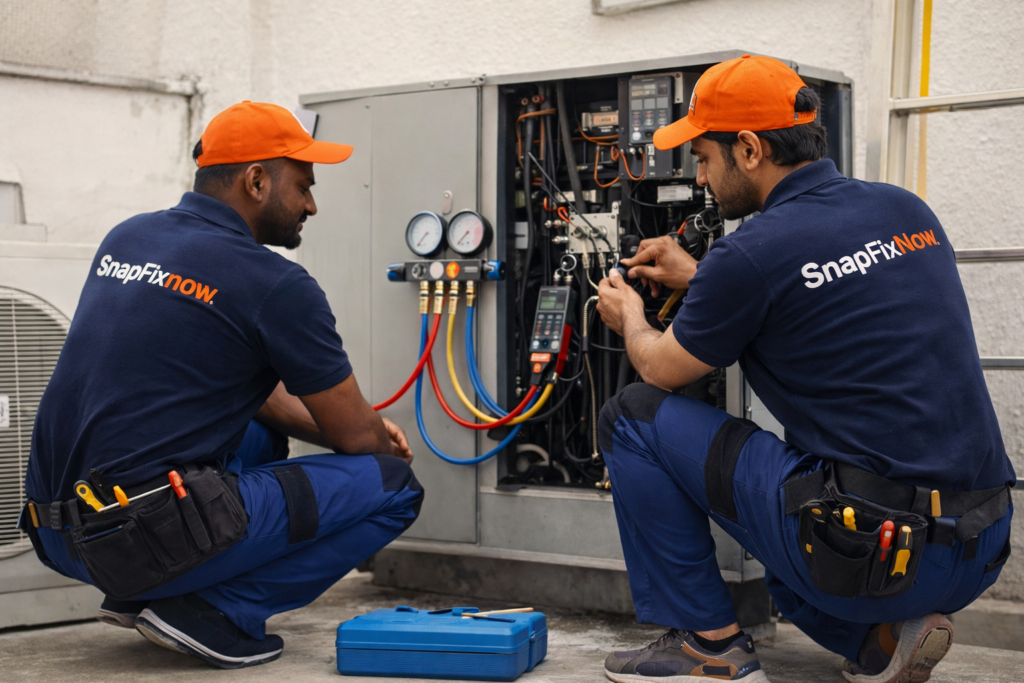
HVAC issues in Dubai rarely start as “major failures”. They start as minor performance drift—then become complaints, high bills, humidity issues, or repeat breakdowns. We focus on preventing that drift and documenting corrective actions clearly.

Comfort Complaints

Hot/cold spots, weak airflow, humidity and 'it's not cooling' escalations.

Common Issues

Our Solutions

Repeat Breakdowns

Same fault returning due to missing root-cause corrections.

Common Issues

Our Solutions

High Energy Bills

Cooling cost increases without obvious reasons.

Common Issues

Our Solutions

What We Fix The Real HVAC Problems

HVAC issues in Dubai rarely start as “major failures”. They start as minor performance drift—then become complaints, high bills, humidity issues, or repeat breakdowns. We focus on preventing that drift and documenting corrective actions clearly.

Comfort complaints

Hot/cold spots, weak airflow, humidity and “it’s not cooling” escalations.

Repeat breakdowns

Same fault returning due to missing root-cause corrections.

High energy bills

Cooling cost increases without obvious reasons.

Enterprise-ready delivery

Our work is designed to be auditable: checklists, readings, photos, and a defect log that procurement and FM teams can approve quickly. If you need “quick fixes” with no documentation, we may recommend a task-based provider instead.

HVAC Systems & Equipment Covered

Clear scope reduces downtime and speeds up approvals, especially under AMCs.

Cooling systems

Major cooling assets and packaged equipment.

Air distribution

Air handling and terminal units.

Supporting infrastructure

Often overlooked—yet causes most repeat issues.

HVAC Services We Provide

Defined services ensure consistent maintenance, faster issue resolution, and AMC-ready compliance.

Preventive Maintenance (PPM)

Planned servicing aligned to occupancy and system load.

Breakdown Repairs & Emergency Response

SLA-based attendance with clear job closure evidence.

Duct Cleaning & IAQ Hygiene

Improve air quality and reduce odor, dust and complaint cycles.

Performance Diagnostics & Optimization

When cooling cost is high, or comfort is unstable.

Our HVAC Process (SLA + Documentation First)

Designed for enterprise clients that require audit-friendly reporting and predictable execution.

Step 1 — Site survey & system health assessment

Asset review, operating conditions, access constraints, baseline readings and risk notes.

Step 2 — Asset-based scope + AMC structure

PPM frequency, response times, exclusions, consumables/spares policy — written for procurement approval.

Step 3 — Execution with checklists, readings & photo evidence

Repeatable servicing standard across units, with defect log and corrective recommendations.

Step 4 — Monthly reporting & improvement loop

Recurring fault elimination, trend observations, and next-cycle action plan.

HVAC AMC Options

Select coverage based on asset criticality, occupancy pressure, and desired SLA priority.

Essential (PPM)

For stable systems needing consistent preventive discipline.

Standard (PPM + Breakdown Labour)

Standard (PPM + Breakdown Labour)

Premium (Enhanced SLA + Detailed Reporting)

For assets where downtime becomes guest/tenant escalation fast.

Transparency note (important for approvals)

Major parts, refrigerant, compressors and OEM components are excluded unless explicitly stated in the proposal. This keeps pricing clean and avoids surprise add-ons mid-year.

Case Studies

Proven results from SLA-driven facility management projects across Dubai

Case Study SnapFix Now

Fountain & Lobby Enhancement

CLIENT / LOCATION
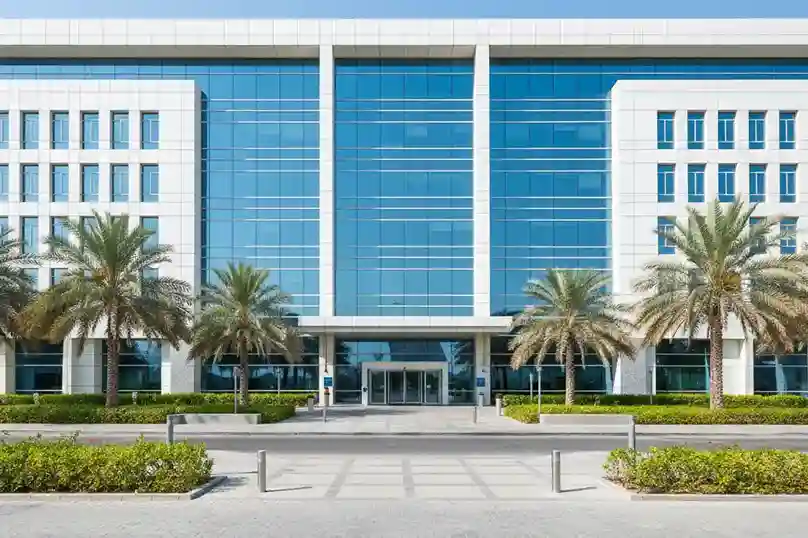
Corporate HQ DIFC
CHALLENGE
Lobby fountain failure impacted visitor experience.
RESULT
39% uptime achieved, positive client feedback
View Case Study
Energy Efficiency Solutions

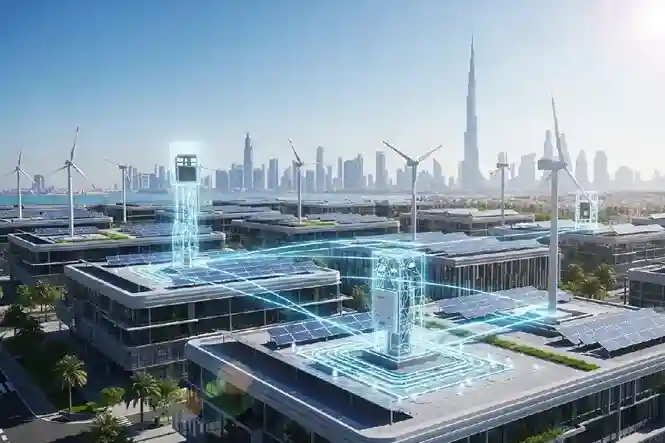
Energy Optimization Project

CLIENT / LOCATION
Hotel Apartments, Bur Dubai
CHALLENGE
High energy bills from inefficient HVAC operation.
RESULT
Energy savings of 22%, reduced OPEX
View Case Study
Painting on SnapFixNow

Exterior Facade & Painting

CLIENT / LOCATION
Residential Tower, Al Nahda
CHALLENGE
Weather damaged facade reduced property appeal.
RESULT
Increased occupancy rates and reduced vacancy cycle
View Case Study
Parking Barriers

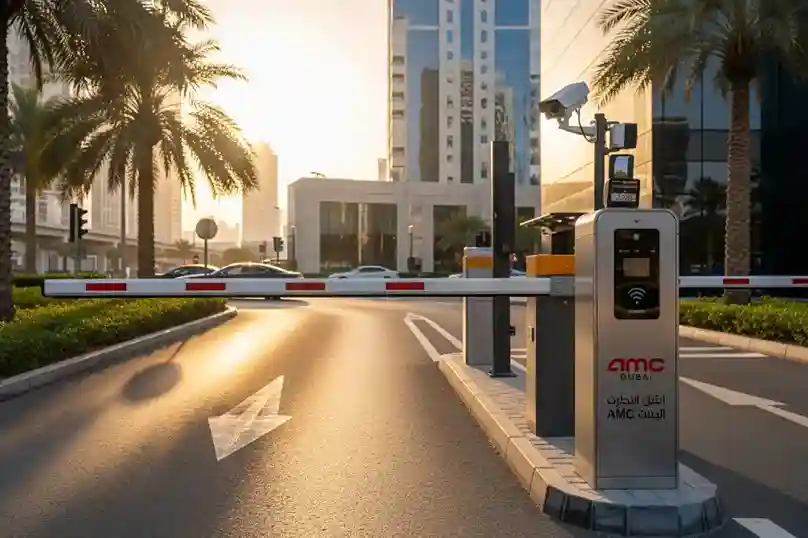
Parking Barriers & Access Control

CLIENT / LOCATION
Business Park, Sharjah Free Zone
CHALLENGE
Barrier failures caused tenant access issues.
RESULT
Reduced downtime by 90%
View Case Study
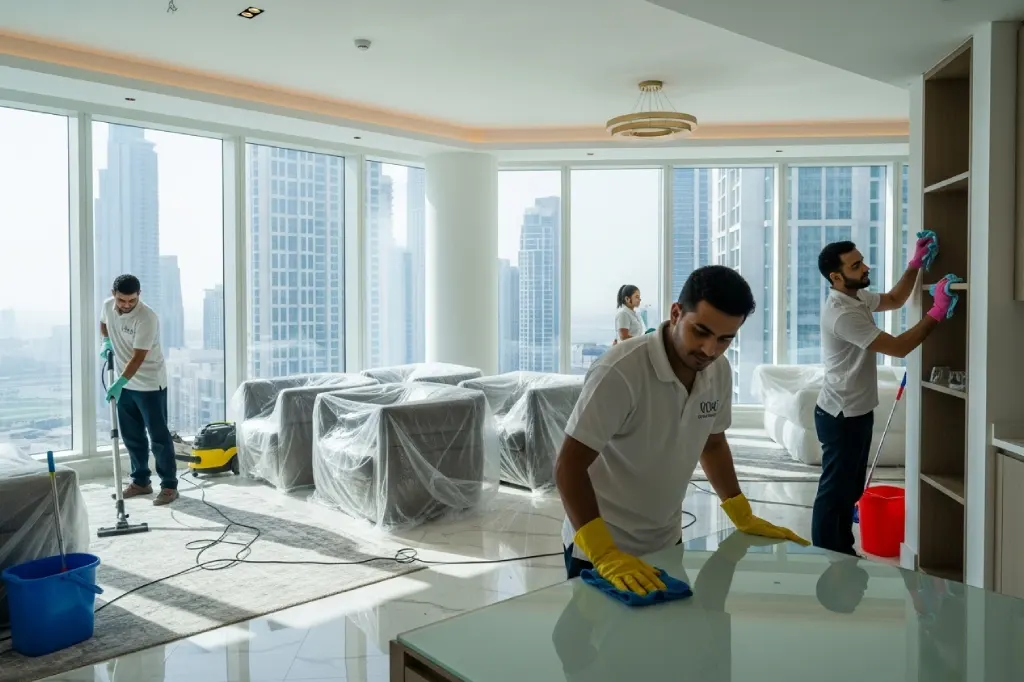
Luxury Cleaning

Post-Construction Cleaning – Luxury Project

CLIENT / LOCATION
Premium Developer, Downtown Dubai
CHALLENGE
Dust, joint residue, and adhesive marks delayed handovers.
RESULT
400 apartments handed over spotless in 5 weeks
View Case Study
OUR WORK

See The Transformation

Real results from our completed projects across Dubai. Drag the slider to compare before and after.
before-hvac-DxRgjLKM after-hvac-CbtkH8vJ

HVAC System Upgrade

HVAC Installation
before-cleaning-Dk6ROkAv after-cleaning-CgDmYM32

Commercial Deep Cleaning

Cleaning Service
before-renovation-Bk64hXd3 after-renovation-21e1cJ_f

Complete Apartment Renovation

Renovation
Want to see similar results for your property?
WHY CHOOSE US

Why Choose SnapFixNow

We combine process, people and technology to deliver measurable outcomes that exceed expectations and drive continuous improvement for your business success.

24/7 Support

Round-the-clock availability for emergencies. Our dedicated team is always ready to respond to your facility needs, ensuring minimal downtime and maximum peace of mind.

Certified Experts

Highly trained and certified technicians with international standards compliance. Every team member undergoes rigorous training and holds relevant industry certifications.

Guaranteed Results

Quality-assured services with comprehensive warranties. We stand behind our work with performance guarantees and transparent SLA commitments for your complete satisfaction.

Competitive Pricing

Cost-effective solutions without compromising quality. Transparent pricing models, flexible payment options, and exceptional value for your facility management investment.

ISO Certified

ISO 9001:2015 Quality Management

5+ Years

Experience in Dubai

500+ Clients

Satisfied Customers

Licensed & Insured

Fully Certified Technicians

99% Satisfaction

Guarantee on All Services

24/7 Support

Emergency Response Available

500+

PROJECTS COMPLETED

99%

CLIENT SATISFACTION

24/7

HOUR AVAILABILITY

50+

EXPERT TECHNICIANS

[ TESTIMONIALS ]

REAL EXPERIENCES,
REAL SATISFACTION

Ahmed Al Mazrouei

General Manager, InterContinental Hotel

SnapFixNow is great for our hotel's maintenance and cleaning tasks. Using photos for communication is so easy and efficient for our team. I recommend SnapFixNow highly to any hotelier.

★★★★★

Omar Al Ali

Hospitality Business

A fantastic product with great customer service. I've been with SnapFixNow for a few years now over two businesses and I will be continuing this relationship into the future. Highly recommended.

★★★★★

AYESHA KHAN

Facilities Manager, Jumeirah Hotels

SnapFixNow has improved our maintenance team's productivity by approximately 30% and made it easy for non-facilities executive management to monitor our operations. A very efficient tool.

★★★★★

MOHAMMED AL FALASI

Facilities Manager

Easy to use and saves time. Positive experience so far and the software has good potential to support our business needs in multiple ways going forward.

★★★★★

Rohit Sharma

Maintenance Head, Sofitel Dubai Downtown

Excellent for our maintenance department. SnapFixNow makes it simple to assign tasks and follow up on completion across all staff.

★★★★★

FATIMA AL SUWAIDI

Facilities Manager, Dubai British School

A really good facilities tool. All reactive work is logged efficiently and preventive maintenance is completed on schedule. Asset management features are excellent.

★★★★★
SERVICE COVERAGE

We Serve All Dubai

Comprehensive facility management services across 15+ Dubai communities

Downtown Dubai

Premium

Dubai Marina

Residential

Jumeirah Beach Residence

Premium

Business Bay

Commercial

Dubai Mall Area

Commercial

Arabian Ranches

Residential

Dubai Sports City

Residential

Palm Jumeirah

Premium

Emirates Hills

Premium

Dubai Silicon Oasis

Residential

International City

Residential

Deira

Commercial

Bur Dubai

Residential

Al Barsha

Residential

Jumeirah

Premium

Get Your Free Quote

Professional facility management services

    FREQUENTLY ASKED

    Clients Asked Questions & Answers

    Find answers to the most common questions about our facility management services.

    Repeated failures are usually due to underlying issues such as poor preventive maintenance, drainage problems, control faults, or system undersizing. We focus on identifying root causes, not just resetting faults.
    We maintain split ACs, packaged units, VRF systems, chilled water FCUs, and related HVAC components.
    Yes. Preventive maintenance includes inspections, cleaning, performance checks, and condition reporting to reduce breakdowns.
    Drain lines are inspected, flushed, and corrected as part of preventive maintenance to prevent leaks and water damage.
    In many cases, yes. Airflow correction, controls tuning, coil cleaning, and operational adjustments can significantly improve performance.
    Yes. HVAC systems are commonly included under our AMC scope with defined SLAs.

    Read the Latest Insights

    Explore trending topics to maintain and optimize your facilities, your most valuable business investment.

    A Technical Guide to Facilities Management in Abu Dhabi for 2026

    A Technical Guide to Facilities Management in Abu Dhabi for 2026

    Executive Summary Effective facilities management in Abu Dhabi is a strategic imperative, not an operational expense. For asset owners, property managers, and procurement leaders, the primary objective is to transition from a reactive, cost-centric model to a proactive, risk-based framework. This guide provides a technical foundation for evaluating FM contracts, defining meaningful Service Level Agreements (SLAs), and ensuring compliance with Abu Dhabi's stringent regulatory landscape. The focus is on protecting asset value, ensuring operational continuity, and achieving predictable operating expenditure (OPEX) through structured, engineering-led maintenance planning. Table of Contents Executive Summary The Role of Strategic Facilities Management in Abu Dhabi Defining the Scope of Hard and Soft FM Services Core Components of Hard FM The Role of Soft FM Navigating Abu Dhabi's Regulatory and Compliance Framework The Central Role of Estidama Translating Regulations into Daily FM Tasks A Decision Framework for FM Contract and SLA Structures Scenario Comparison: FM Contract Models Defining SLAs and KPIs for Operational Control Benchmarking Costs and Evaluating Vendor Proposals Assessing a Vendor's Operational Maturity Indicative Cost Benchmarks Integrating Technology and Sustainability in Modern FM How Technology Directly Impacts FM Performance Frequently Asked Questions (FAQ) The Role of Strategic Facilities Management in Abu Dhabi Strategic facilities management moves beyond the reactive "fix-it-when-it-breaks" approach. It positions FM as a core business function that actively manages asset value and mitigates operational risk. For entities operating in Abu Dhabi's demanding environment, this translates to a sharp focus on minimizing downtime, controlling operating expenditure (OPEX), and maintaining full compliance with local authorities like the Abu Dhabi Municipality and Civil Defence. The primary goal is to shift how FM is perceived—from a mandatory cost center to a source of measurable, predictable value. This is achieved through preventive planning that extends the lifecycle of critical assets, optimizes energy consumption, and maintains operational integrity. A robust FM strategy is built on three operational pillars: Asset Performance & Lifecycle Management: This involves ensuring the building’s systems, particularly HVAC units under constant high thermal load, operate at specified efficiency levels. The objective is to prevent premature failure and defer capital replacement costs through rigorous preventive planning. Regulatory & Compliance Adherence: Meeting all mandates from bodies like the Abu Dhabi Civil Defence (ADCD) and adhering to the Estidama Pearl Rating System for sustainability is non-negotiable. Compliance is a direct measure of operational discipline. Financial Control & OPEX Predictability: This is achieved by structuring contracts, such as a comprehensive Annual Maintenance Contract (AMC), to fix OPEX and eliminate the financial volatility associated with emergency rectification works. This methodology requires a deep, engineering-led understanding of Abu Dhabi’s specific operational challenges. For a broader regional perspective, our analysis of facilities management in the UAE provides wider context. Defining the Scope of Hard and Soft FM Services In facilities management, service delivery is bifurcated into two core streams: Hard FM and Soft FM. A clear definition of scope is the first step in constructing a maintenance contract that effectively mitigates risk and aligns with budgetary goals. Hard FM encompasses the technical, engineering-led services required to maintain a building’s core infrastructure—its mechanical, electrical, and plumbing (MEP) systems. Soft FM, conversely, includes the labor-intensive services focused on the user experience, such as cleaning, security, and waste management. Given Abu Dhabi’s climate and the complexity of its built environment, Hard FM services are critical for operational continuity and asset integrity. They are physically integrated into the building and are essential for safety, compliance, and functionality. Market data confirms this focus. The UAE's facility management market is projected to reach USD 33.64 billion by 2030, with hard services consistently accounting for over 60% of total contract value. For assets on the scale of the 30 million square meters of government-managed space in Abu Dhabi, the technical maintenance burden is immense. Further market analysis can be found in this industry report. Core Components of Hard FM Hard FM is centered on asset lifecycle management, preventive planning, and regulatory compliance. Execution requires certified technicians, and services are typically governed by structured Annual Maintenance Contracts (AMC) to preempt failures. Key services include: Mechanical Systems: Primarily HVAC (Heating, Ventilation, and Air Conditioning). In Abu Dhabi’s climate, HVAC is a life-support system. Maintenance is focused on managing extreme heat stress and humidity to prevent system failure, which can render a building uninhabitable. Electrical Systems: This covers power distribution, lighting, backup generators, and Uninterruptible Power Supply (UPS) systems. The objective is to ensure 100% power availability and quality for critical business operations. Plumbing & Water Systems: Involves the maintenance of water pumps, tanks, drainage, and sanitation infrastructure to meet Abu Dhabi’s stringent public health and safety regulations. The Role of Soft FM If Hard FM is the building’s engineering core, Soft FM addresses the human interface. These are people-centric services that directly influence occupant satisfaction and the property's operational standard. Operational Integration: In practice, Hard and Soft FM are intrinsically linked. A burst pipe (a Hard FM failure) immediately triggers a Soft FM requirement: water cleanup, area cordoning, and safety management. An integrated FM model, where a single provider manages both scopes, is critical for seamless incident response and clear accountability. Key Soft FM services include: Cleaning and Janitorial Services: Routine and deep cleaning, façade maintenance. Security Services: Access control management, CCTV monitoring, and on-site personnel. Landscaping and Grounds Maintenance: Upkeep of all external areas. The most operationally resilient facilities integrate both Hard and Soft FM under a unified management structure to ensure clear communication and accountability. Navigating Abu Dhabi's Regulatory and Compliance Framework In Abu Dhabi, compliance is a core operational function, not an administrative task. The capital's regulatory environment is prescriptive, with government bodies dictating standards for safety, public health, and sustainability. An FM provider's fluency in this landscape is a primary defense against operational risk. Three key authorities define the compliance reality for any building: Abu Dhabi Municipality: Governs building codes, structural works, and public health standards, including waste disposal and pest control protocols. Abu Dhabi Civil Defence (ADCD): Holds ultimate authority on fire and life

    April 19, 2026
    Preventive Maintenance Checklist Guide for UAE Facilities

    Preventive Maintenance Checklist Guide for UAE Facilities

    A lift trips repeatedly in a residential tower. Guest room temperatures drift in a hotel wing. An electrical panel shows signs of overheating, but the log sheet says the last inspection was completed. In such instances, most Dubai asset teams frequently lose time and money. The problem usually isn’t a lack of maintenance activity. It’s a lack of structured, verifiable preventive control. A proper preventive maintenance checklist gives building operators something paper-heavy maintenance systems often fail to provide: a repeatable standard for execution, evidence for compliance, and a usable record for asset decisions. In UAE conditions, that matters more than many owners initially assume. Heat, dust, humidity cycles, and local compliance requirements punish vague maintenance routines very quickly. Table of Contents From Reactive Failures to Proactive Control Why reactive maintenance distorts cost control What a checklist actually controls Anatomy of a Professional Preventive Maintenance Checklist The fields that belong on every serious checklist Basic versus audit-ready checklist design System-Specific Checklists for Commercial & Mixed-Use Buildings HVAC systems Electrical systems Plumbing systems Fire and life safety systems Adapting Checklists for UAE Climate and Compliance Climate loading changes maintenance intervals Compliance evidence must be built into the template Integrating Checklists into Digital Workflows and AMCs Why paper checklists fail under scrutiny How digital checklists support AMC delivery Frequently Asked Questions From Reactive Failures to Proactive Control When an asset manager relies on reactive maintenance, the maintenance team spends its day chasing symptoms. Technicians move from complaint to complaint. Procurement gets rushed into emergency buying. Site managers lose confidence in the service records because the same assets keep failing. That operating model is common, but it isn’t stable. Why reactive maintenance distorts cost control Structured PM changes the economics. Organisations adopting structured preventive maintenance programmes report 52.7% less unplanned downtime than those relying on reactive maintenance, and downtime for major MEP systems in Dubai can cost upwards of $125,000 per hour. The same benchmark notes that each dollar invested in preventive maintenance typically saves an average of $5 in future repairs according to maintenance statistics on planned versus reactive work. That matters in offices, malls, hotels, and mixed-use towers because the direct repair cost is only one part of the problem. The larger risk sits in business interruption, SLA breaches, tenant dissatisfaction, temporary shutdowns, and accelerated asset degradation. A chiller that runs inefficiently for months before failure doesn’t just break once. It consumes budget long before the breakdown is visible. Practical rule: If a task can't be checked, evidenced, and trended, it usually isn't being controlled. A preventive maintenance checklist is often misunderstood as an administrative form. In practice, it’s a control document. It defines what must be inspected, what acceptable condition looks like, who signed off, what readings were taken, and whether rectification is needed. What a checklist actually controls The strongest checklists reduce ambiguity in four areas: Task execution: Technicians follow the same sequence every cycle, instead of relying on memory. Risk visibility: Supervisors can identify failed steps, deferred items, and recurring defects. Commercial accountability: Service providers can be measured against scope, frequency, and SLA. Asset value protection: Owners get a maintenance history that supports lifecycle planning and warranty discussions. For Dubai portfolios, this is the practical shift. You move from “was maintenance done?” to “was the correct maintenance completed, on time, to standard, with evidence?” That’s the threshold that separates a functioning PM regime from a collection of service visits. Asset teams reviewing service models often find it useful to compare preventive vs reactive maintenance cost analysis for different property types because the decision isn’t only technical. It’s financial, operational, and contractual. Anatomy of a Professional Preventive Maintenance Checklist A professional checklist isn’t a list of generic tasks like “check AHU” or “inspect panel”. That kind of template creates false confidence. Technicians tick boxes, but the owner still has no reliable record of actual condition, compliance status, or pending risk. The fields that belong on every serious checklist At minimum, a usable preventive maintenance checklist for UAE facilities should include: Asset identification: Asset ID, asset type, make, model, and exact location. “Pump room” is too vague in a large property. Maintenance frequency: Daily, weekly, monthly, quarterly, bi-annual, or annual coding tied to the PM planner. Task sequence: Step-by-step instructions in the right order, especially where shutdown and restart procedures matter. Safety controls: PPE requirement, isolation point, and Lockout/Tagout reference where applicable. Pass or fail criteria: Observable standards, readings, tolerance bands, or defect descriptions. Compliance reference: Space to note relevant Dubai Municipality, Civil Defence, building code, or internal SOP requirement. Technician evidence: Name, time stamp, signature, and where possible, photos or meter readings. Follow-up action: Defect category, urgency, rectification note, and whether a corrective work order was raised. These fields turn a checklist into an operating record. Without them, the document has little value in an audit, dispute, warranty review, or root-cause analysis. A checklist should tell a supervisor what was done, tell an auditor what was verified, and tell an asset manager what needs funding next. Basic versus audit-ready checklist design The difference is usually obvious in one site visit. Field Basic Checklist Comprehensive (Audit-Ready) Checklist Asset reference Asset name only Asset ID, location, make, model Task detail Generic task title Sequential steps with clear criteria Safety “Use PPE” Specific isolation and LOTO requirements Measurements Rarely included Readings, tolerances, observations Compliance Not referenced Regulation or SOP reference included Evidence Tick mark only Time stamp, technician name, photo, comments Defect handling Separate verbal note Built-in rectification and escalation field Reporting use Limited Suitable for SLA, audit, and trend review A useful way to think about this is to compare it with other asset-heavy industries. Even outside building services, technical teams use structured schedules because maintenance quality collapses when task sequencing and proof of completion are weak. For a practical example of how maintenance templates are structured in another operational environment, the drone preventive maintenance schedule template is worth reviewing. The asset type is different, but the discipline is the same:

    April 18, 2026
    Global Facility Management: A Guide for UAE Asset Owners

    Global Facility Management: A Guide for UAE Asset Owners

    For a UAE asset owner, the most useful way to think about global facility management isn’t as a larger version of local maintenance. It’s a control system for cost, risk, compliance, and asset performance across multiple sites, vendors, and service lines. That distinction matters because the UAE FM market was valued at approximately USD 5.2 billion in 2023 and is projected to reach USD 8.7 billion by 2028, with hard services accounting for 55% of contracts, according to 6Wresearch’s facility management market analysis. In practice, that means portfolio decisions in Dubai are increasingly shaped by engineering depth, contract design, and reporting discipline rather than by call-out rates alone. A global FM framework can standardise how your sites handle HVAC, MEP, compliance, and service escalation. But unless that framework is adapted to UAE operating conditions, especially climate stress, labour constraints, and local authority requirements, it can fail at site level even if it looks efficient on paper. Table of Contents Executive Summary An Engineering Perspective on Global FM Defining the Scope and Scale of Global Facility Management What global FM covers at portfolio level Hard FM and soft FM serve different risk profiles Governance Frameworks ISO Standards and SLAs Why governance matters more when OPEX is under pressure How to build SLAs that control outcomes Comparing Global FM Operating Models A Decision Matrix Why outsourcing has expanded in the UAE Comparison of Facility Management Operating Models How to choose the least risky model for your asset mix The Role of Technology and Data in Modern FM From work orders to asset intelligence What data should reach the asset owner Bridging Global Standards to Dubai and UAE Realities Climate load changes the maintenance logic Compliance in Dubai is operational not theoretical Labour shortages change contract risk A Framework for Vendor Selection and OPEX Optimisation What procurement should test before award How AMC structures improve cost predictability Frequently Asked Questions about Global Facility Management Executive Summary An Engineering Perspective on Global FM For a UAE portfolio, global facility management works when it does three things at once. It standardises service delivery across sites. It creates visibility into risk and cost. It translates engineering activity into business outcomes such as uptime, compliance, and budget predictability. The global context matters because the facility management market is expanding quickly. At the same time, UAE conditions make local execution more demanding than many global models assume. Heat stress on cooling systems, dust loading, high occupancy patterns, and authority-driven compliance mean service quality depends heavily on preventive discipline and technical competence at site level. A useful decision lens is to treat FM as a layered operating model: Strategic layer: portfolio standards, procurement logic, asset lifecycle planning, and reporting. Operational layer: work order handling, planned preventive maintenance, emergency response, and statutory compliance. Commercial layer: risk allocation, exclusions, escalation rules, and OPEX control. Practical rule: If the contract rewards attendance rather than performance, the asset owner usually absorbs the true cost later through repeat failures, tenant disruption, and unplanned rectification. For UAE decision-makers, the commercial signal is clear. Hard FM dominates local demand, and most service failures with financial consequences originate in technical systems rather than in soft services. That shifts procurement away from lowest-price selection and towards capability verification, SLA structure, and evidence-based maintenance planning. The strongest global FM strategy isn’t the one with the broadest scope. It’s the one that matches the building’s technical risk profile, local compliance burden, and internal ability to govern the contract. Defining the Scope and Scale of Global Facility Management Global facility management combines portfolio governance with site execution. The distinction is important because many organisations still run multi-site estates through fragmented local contracts, each with different standards, reporting methods, and escalation paths. That approach can function for low-complexity assets. It becomes unstable once you add hospitality operations, critical MEP systems, or dispersed commercial properties. What global FM covers at portfolio level At portfolio level, global FM is a management system. It aligns service scope, procurement standards, maintenance frequencies, and reporting across multiple properties. It also defines who carries operational risk when equipment fails, when compliance records are missing, or when service response slips below contract thresholds. Typical portfolio decisions include: Asset strategy: deciding which systems require preventive programmes, specialist support, or lifecycle replacement planning. Commercial structure: choosing whether labour, materials, specialist subcontractors, and emergency attendance sit inside or outside the base contract. Governance design: setting approval limits, KPI reviews, escalation procedures, and audit requirements. Data architecture: requiring one reporting method across all sites so engineering history can support capital planning. At site level, the same model becomes practical. A technician receives a work order, verifies the fault, carries out rectification, records photos, updates the defect history, and closes against SLA. That tactical process only delivers value if the portfolio rules behind it are consistent. Hard FM and soft FM serve different risk profiles Asset owners often group all FM services together for procurement convenience. Operationally, that’s a mistake. Hard FM and soft FM create different business risks and need different management logic. Hard FM covers the engineering and statutory side of building operation. In UAE buildings, this usually includes HVAC, electrical systems, plumbing, pumps, controls, and broader MEP service coordination. Failure here can affect safety, tenancy, business continuity, and regulatory exposure. Soft FM usually includes cleaning, security, waste handling, landscaping, and front-of-house support. These services shape user experience and operational order, but their failure modes are usually easier to isolate and rectify. A practical distinction for procurement is this: Service type Main objective Typical failure impact Contract emphasis Hard FM Asset reliability and compliance Downtime, safety exposure, business interruption Competency, technical scope, response, preventive planning Soft FM Occupant support and operational presentation Complaints, service disruption, presentation decline Staffing, supervision, quality checks, routines Global FM only works when the reporting line reflects the engineering reality. Hard FM should be governed by asset risk and compliance requirements, not by generic service administration. That’s why single bundled contracts can look efficient yet hide technical

    April 17, 2026
    Top Facility Management Companies in Sharjah

    Top Facility Management Companies in Sharjah

    If you're reviewing facility management companies in Sharjah, you're probably not struggling to find vendors. You're struggling to separate a low-rate maintenance arrangement from a contract that protects uptime, controls OPEX, and keeps compliance risk from surfacing at the wrong time. That distinction matters more in Sharjah than many buyers first assume. Industrial sites, mixed-use developments, civic facilities, warehouses, hospitality assets, and commercial towers all create different maintenance loads, different failure consequences, and different reporting requirements. A contract that looks efficient on paper can become expensive once exclusions, slow rectification, subcontracting gaps, and weak documentation start affecting operations. Procurement teams and asset owners need a technical filter. The right way to assess facility management companies in Sharjah isn't by brand familiarity or headline pricing. It's by contract structure, in-house technical depth, SLA realism, reporting discipline, and the provider's ability to run preventive maintenance in UAE operating conditions. Table of Contents Executive Summary A Framework for Evaluating Facility Management Partners Understanding the Sharjah Facility Management Landscape Why Sharjah requires a different FM lens What the market data means for buyers Analyzing Core Service Scopes and Contract Models Hard FM and soft FM are priced differently for a reason Comparison of facility management contract models Where buyers usually misread scope Evaluating Technical Competency and Compliance What technical maturity looks like in practice Questions that expose capability gaps Compliance in UAE operating conditions Deconstructing Service Level Agreements and Pricing How to read an SLA beyond the headline response time Why price gaps appear between similar proposals A contract review filter for procurement teams A Practical Selection Framework for FM Companies in Sharjah A due diligence checklist that reduces selection risk Implementation logic after vendor shortlisting Frequently Asked Questions Executive Summary A Framework for Evaluating Facility Management Partners The practical problem with facility management companies in Sharjah isn't availability. It's contract ambiguity. Most proposals look similar at first glance. They mention preventive maintenance, emergency response, helpdesk support, and compliance coverage. The difference sits inside the operating model. Who carries spares risk. Who owns rectification quality. Whether technicians are in-house or mobilised through layers of subcontractors. Whether the provider runs a genuine planned preventive maintenance regime or only documents reactive work more neatly. For a major property owner, three filters matter first. Risk transfer: Does the contract push technical and financial risk onto the FM provider, or does it allow asset failure exposure to remain with the owner? OPEX control: Is pricing predictable across the year, or will exclusions, variation orders, and repeat faults drive budget instability? Lifecycle protection: Does the service model reduce wear on HVAC, electrical, plumbing, fire, and control systems, or does it defer maintenance until breakdown? Sharjah's growth reinforces the need for a structured assessment. Civic infrastructure, industrial occupancy, warehousing, and commercial real estate all increase demand for organised FM delivery rather than ad-hoc trade dispatch. Practical rule: If a provider can't map scope, exclusions, technician ownership, escalation times, and reporting outputs in plain language, the contract probably won't perform well under pressure. A sound evaluation process should test six areas. Scope clarity. Technical competency. Compliance process. SLA design. Pricing logic. Transition capability. That approach gives procurement and FM teams a basis for comparing methods rather than comparing marketing language. Understanding the Sharjah Facility Management Landscape Sharjah is no longer a secondary FM conversation. It has become a procurement and operations market that deserves its own framework. Why Sharjah requires a different FM lens Sharjah and the Northern Emirates are described as an emerging frontier in the UAE facility management market, driven by civic-facility spending that exceeded half of the 2024 federal budget. The same market view places the wider UAE FM sector at USD 23.86 billion in 2026, notes that commercial assets account for 42.96% of revenue, and states that integrated FM is growing at a 12.21% CAGR according to Mordor Intelligence's UAE facility management market analysis. That matters because Sharjah's asset profile isn't identical to central Dubai. It includes stronger industrial, logistics, warehousing, civic, and utility-linked demand. Those facilities typically care less about front-of-house presentation and more about uptime, maintainability, compliance response, and cost control across hard services. In practice, buyers in Sharjah often need providers that can handle: MEP-heavy environments: Warehouses, production support areas, pump systems, ventilation, and high-use mechanical assets. Operational continuity: Sites where delayed rectification affects tenants, stock movement, occupant safety, or process reliability. Transition discipline: Assets moving from developer handover, fragmented subcontracting, or under-documented maintenance histories. The service model also has to reflect UAE climate realities. Dust loading increases filter stress. Heat cycles push HVAC harder for longer periods. Humidity affects corrosion, controls, and condensate performance. That means preventive intervals, coil cleaning discipline, and BMS visibility become operational issues, not optional extras. What the market data means for buyers A growing market usually creates two things at once. Better service capability in some firms. More inconsistency in others. As demand expands, outsourced and integrated models become more common because owners want fewer interfaces and clearer accountability. That can work well. It can also conceal weak delivery if one prime FM contractor is merely coordinating multiple third parties without technical control on site. Buyers should treat Sharjah as a market where maturity varies by provider and by scope package. Strong proposals usually show a clear operating method for helpdesk, preventive planning, asset registers, compliance inspections, and escalation control. Weak proposals tend to stay general. For teams comparing options, it helps to start with a broad baseline such as this guide to understanding facility management services in UAE scope standards cost factors, then narrow the review to Sharjah-specific operating demands. Commercial growth in FM doesn't automatically improve service quality. It increases the importance of contract design and execution control. Another useful market signal is the emphasis on integrated and sustainability-linked operations. Sharjah's built environment increasingly includes assets where energy performance, centralised controls, and coordinated hard and soft services sit under one operating structure. That pushes FM selection away from lowest-cost vendor sourcing and towards managed performance.

    April 16, 2026

    Ready to Create Your Success Story?

    Join our growing list of satisfied clients across Dubai. Let’s discuss how we can help you achieve similar results.
    Call Now Button