SnapFixNow

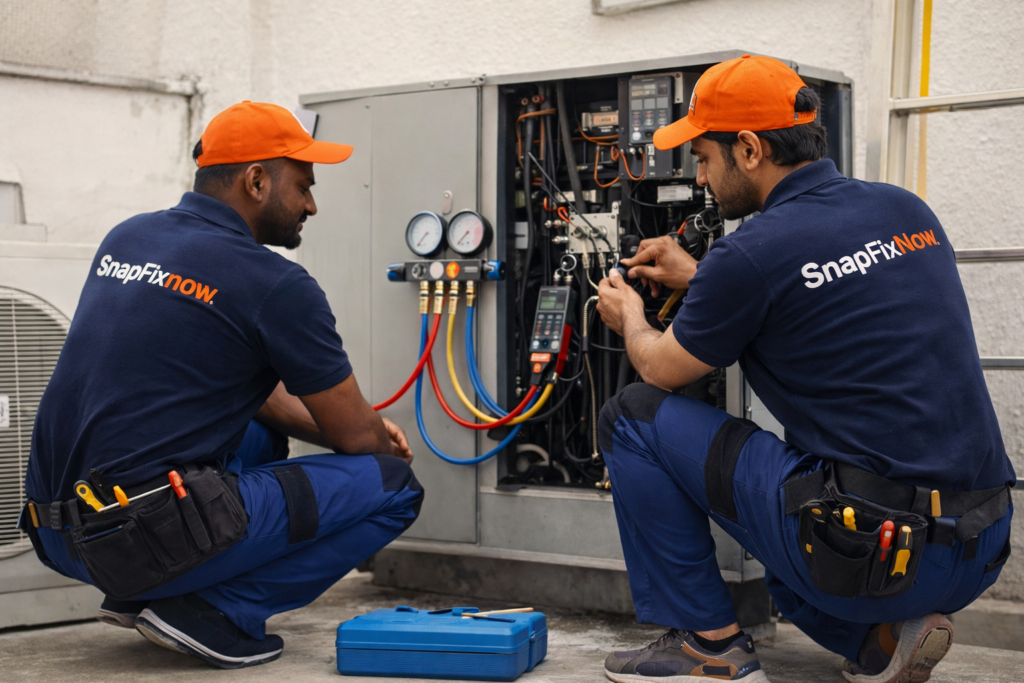
HVAC Services Dubai

Expert heating, ventilation, and air conditioning solutions for optimal indoor comfort

The Real HVAC Problems

HVAC issues in Dubai rarely start as “major failures”. They start as minor performance drift—then become complaints, high bills, humidity issues, or repeat breakdowns. We focus on preventing that drift and documenting corrective actions clearly.

Comfort Complaints

Hot/cold spots, weak airflow, humidity and 'it's not cooling' escalations.

Common Issues

Our Solutions

Repeat Breakdowns

Same fault returning due to missing root-cause corrections.

Common Issues

Our Solutions

High Energy Bills

Cooling cost increases without obvious reasons.

Common Issues

Our Solutions

What We Fix The Real HVAC Problems

HVAC issues in Dubai rarely start as “major failures”. They start as minor performance drift—then become complaints, high bills, humidity issues, or repeat breakdowns. We focus on preventing that drift and documenting corrective actions clearly.

Comfort complaints

Hot/cold spots, weak airflow, humidity and “it’s not cooling” escalations.

Repeat breakdowns

Same fault returning due to missing root-cause corrections.

High energy bills

Cooling cost increases without obvious reasons.

Enterprise-ready delivery

Our work is designed to be auditable: checklists, readings, photos, and a defect log that procurement and FM teams can approve quickly. If you need “quick fixes” with no documentation, we may recommend a task-based provider instead.

HVAC Systems & Equipment Covered

Clear scope reduces downtime and speeds up approvals, especially under AMCs.

Cooling systems

Major cooling assets and packaged equipment.

Air distribution

Air handling and terminal units.

Supporting infrastructure

Often overlooked—yet causes most repeat issues.

HVAC Services We Provide

Defined services ensure consistent maintenance, faster issue resolution, and AMC-ready compliance.

Preventive Maintenance (PPM)

Planned servicing aligned to occupancy and system load.

Breakdown Repairs & Emergency Response

SLA-based attendance with clear job closure evidence.

Duct Cleaning & IAQ Hygiene

Improve air quality and reduce odor, dust and complaint cycles.

Performance Diagnostics & Optimization

When cooling cost is high, or comfort is unstable.

Our HVAC Process (SLA + Documentation First)

Designed for enterprise clients that require audit-friendly reporting and predictable execution.

Step 1 — Site survey & system health assessment

Asset review, operating conditions, access constraints, baseline readings and risk notes.

Step 2 — Asset-based scope + AMC structure

PPM frequency, response times, exclusions, consumables/spares policy — written for procurement approval.

Step 3 — Execution with checklists, readings & photo evidence

Repeatable servicing standard across units, with defect log and corrective recommendations.

Step 4 — Monthly reporting & improvement loop

Recurring fault elimination, trend observations, and next-cycle action plan.

HVAC AMC Options

Select coverage based on asset criticality, occupancy pressure, and desired SLA priority.

Essential (PPM)

For stable systems needing consistent preventive discipline.

Standard (PPM + Breakdown Labour)

Standard (PPM + Breakdown Labour)

Premium (Enhanced SLA + Detailed Reporting)

For assets where downtime becomes guest/tenant escalation fast.

Transparency note (important for approvals)

Major parts, refrigerant, compressors and OEM components are excluded unless explicitly stated in the proposal. This keeps pricing clean and avoids surprise add-ons mid-year.

Case Studies

Proven results from SLA-driven facility management projects across Dubai

Case Study SnapFix Now

Fountain & Lobby Enhancement

CLIENT / LOCATION
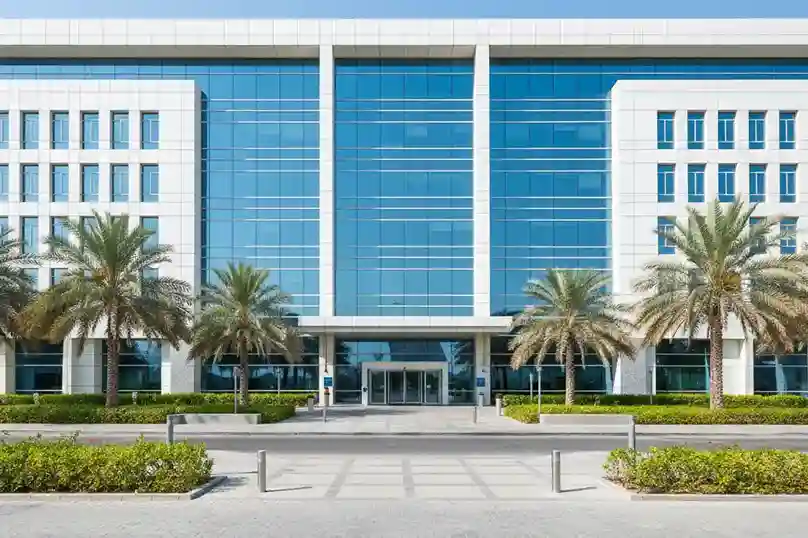
Corporate HQ DIFC
CHALLENGE
Lobby fountain failure impacted visitor experience.
RESULT
39% uptime achieved, positive client feedback
View Case Study
Energy Efficiency Solutions

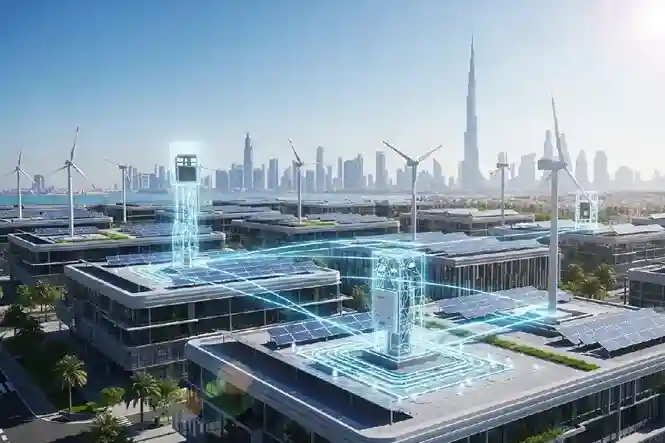
Energy Optimization Project

CLIENT / LOCATION
Hotel Apartments, Bur Dubai
CHALLENGE
High energy bills from inefficient HVAC operation.
RESULT
Energy savings of 22%, reduced OPEX
View Case Study
Painting on SnapFixNow

Exterior Facade & Painting

CLIENT / LOCATION
Residential Tower, Al Nahda
CHALLENGE
Weather damaged facade reduced property appeal.
RESULT
Increased occupancy rates and reduced vacancy cycle
View Case Study
Parking Barriers

Parking Barriers & Access Control

CLIENT / LOCATION
Business Park, Sharjah Free Zone
CHALLENGE
Barrier failures caused tenant access issues.
RESULT
Reduced downtime by 90%
View Case Study
Luxury Cleaning

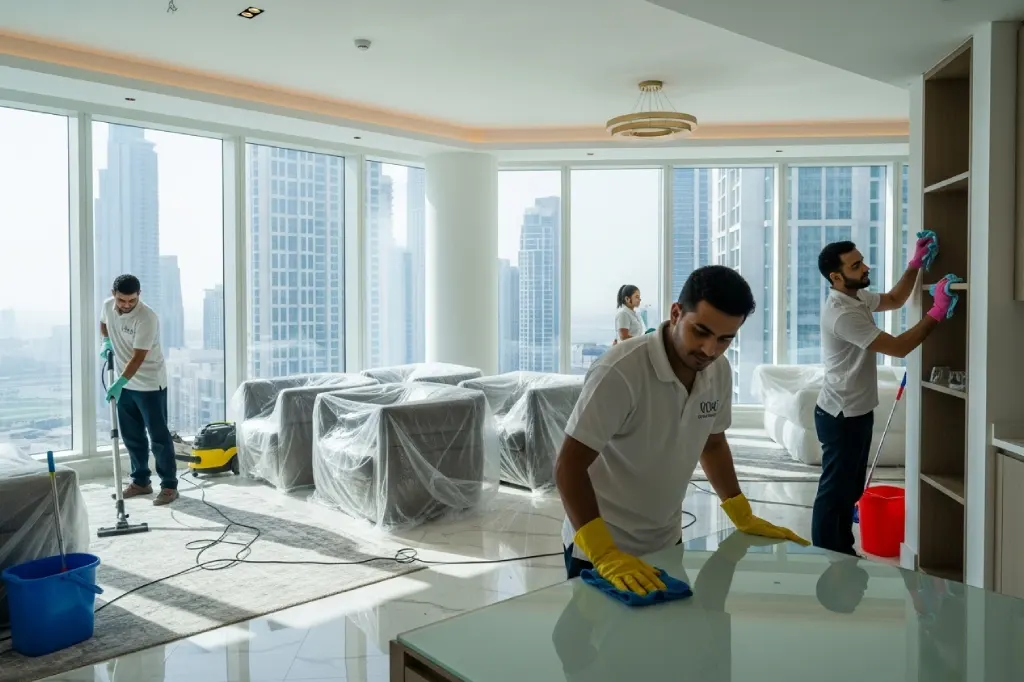
Post-Construction Cleaning – Luxury Project

CLIENT / LOCATION
Premium Developer, Downtown Dubai
CHALLENGE
Dust, joint residue, and adhesive marks delayed handovers.
RESULT
400 apartments handed over spotless in 5 weeks
View Case Study
OUR WORK

See The Transformation

Real results from our completed projects across Dubai. Drag the slider to compare before and after.
before-hvac-DxRgjLKM after-hvac-CbtkH8vJ

HVAC System Upgrade

HVAC Installation
before-cleaning-Dk6ROkAv after-cleaning-CgDmYM32

Commercial Deep Cleaning

Cleaning Service
before-renovation-Bk64hXd3 after-renovation-21e1cJ_f

Complete Apartment Renovation

Renovation
Want to see similar results for your property?
WHY CHOOSE US

Why Choose SnapFixNow

We combine process, people and technology to deliver measurable outcomes that exceed expectations and drive continuous improvement for your business success.

24/7 Support

Round-the-clock availability for emergencies. Our dedicated team is always ready to respond to your facility needs, ensuring minimal downtime and maximum peace of mind.

Certified Experts

Highly trained and certified technicians with international standards compliance. Every team member undergoes rigorous training and holds relevant industry certifications.

Guaranteed Results

Quality-assured services with comprehensive warranties. We stand behind our work with performance guarantees and transparent SLA commitments for your complete satisfaction.

Competitive Pricing

Cost-effective solutions without compromising quality. Transparent pricing models, flexible payment options, and exceptional value for your facility management investment.

ISO Certified

ISO 9001:2015 Quality Management

5+ Years

Experience in Dubai

500+ Clients

Satisfied Customers

Licensed & Insured

Fully Certified Technicians

99% Satisfaction

Guarantee on All Services

24/7 Support

Emergency Response Available

500+

PROJECTS COMPLETED

99%

CLIENT SATISFACTION

24/7

HOUR AVAILABILITY

50+

EXPERT TECHNICIANS

[ TESTIMONIALS ]

REAL EXPERIENCES,
REAL SATISFACTION

Ahmed Al Mazrouei

General Manager, InterContinental Hotel

SnapFixNow is great for our hotel's maintenance and cleaning tasks. Using photos for communication is so easy and efficient for our team. I recommend SnapFixNow highly to any hotelier.

★★★★★

Omar Al Ali

Hospitality Business

A fantastic product with great customer service. I've been with SnapFixNow for a few years now over two businesses and I will be continuing this relationship into the future. Highly recommended.

★★★★★

AYESHA KHAN

Facilities Manager, Jumeirah Hotels

SnapFixNow has improved our maintenance team's productivity by approximately 30% and made it easy for non-facilities executive management to monitor our operations. A very efficient tool.

★★★★★

MOHAMMED AL FALASI

Facilities Manager

Easy to use and saves time. Positive experience so far and the software has good potential to support our business needs in multiple ways going forward.

★★★★★

Rohit Sharma

Maintenance Head, Sofitel Dubai Downtown

Excellent for our maintenance department. SnapFixNow makes it simple to assign tasks and follow up on completion across all staff.

★★★★★

FATIMA AL SUWAIDI

Facilities Manager, Dubai British School

A really good facilities tool. All reactive work is logged efficiently and preventive maintenance is completed on schedule. Asset management features are excellent.

★★★★★
SERVICE COVERAGE

We Serve All Dubai

Comprehensive facility management services across 15+ Dubai communities

Downtown Dubai

Premium

Dubai Marina

Residential

Jumeirah Beach Residence

Premium

Business Bay

Commercial

Dubai Mall Area

Commercial

Arabian Ranches

Residential

Dubai Sports City

Residential

Palm Jumeirah

Premium

Emirates Hills

Premium

Dubai Silicon Oasis

Residential

International City

Residential

Deira

Commercial

Bur Dubai

Residential

Al Barsha

Residential

Jumeirah

Premium

Get Your Free Quote

Professional facility management services

    FREQUENTLY ASKED

    Clients Asked Questions & Answers

    Find answers to the most common questions about our facility management services.

    Repeated failures are usually due to underlying issues such as poor preventive maintenance, drainage problems, control faults, or system undersizing. We focus on identifying root causes, not just resetting faults.
    We maintain split ACs, packaged units, VRF systems, chilled water FCUs, and related HVAC components.
    Yes. Preventive maintenance includes inspections, cleaning, performance checks, and condition reporting to reduce breakdowns.
    Drain lines are inspected, flushed, and corrected as part of preventive maintenance to prevent leaks and water damage.
    In many cases, yes. Airflow correction, controls tuning, coil cleaning, and operational adjustments can significantly improve performance.
    Yes. HVAC systems are commonly included under our AMC scope with defined SLAs.

    Read the Latest Insights

    Explore trending topics to maintain and optimize your facilities, your most valuable business investment.

    A Technical Guide to Selecting an HVAC Service Package for UAE Assets

    A Technical Guide to Selecting an HVAC Service Package for UAE Assets

    For B2B decision-makers in the UAE—including property managers, facility managers, and asset owners—selecting the optimal HVAC service package is a strategic decision governed by technical and financial trade-offs. The objective is to move beyond marketing claims and apply a structured, operational framework to evaluate contract models based on risk allocation, cost structure, and performance outcomes. Executive Summary: A Framework for Evaluating HVAC Service Models Choosing an HVAC service contract directly impacts operational expenditure (OPEX), asset lifecycle, and regulatory compliance. This analysis provides a structured comparison of common service models to support informed decision-making. The UAE climate, characterized by high ambient temperatures, significant dust loading, and high-humidity cycles, places extreme stress on HVAC systems. This environment elevates the choice between service models—Reactive, Preventive, or Comprehensive—to a matter of direct financial consequence. A non-negotiable element for any critical asset is 24/7 technical support for emergencies, often managed through a dedicated HVAC Answering Service to guarantee response initiation. The core operational principle is to transition from a reactive "break-fix" approach to a model of proactive, planned maintenance. This shift is not merely procedural; it yields quantifiable improvements in asset performance and cost control. The UAE HVAC market trends on polarismarketresearch.com project a market size of USD 2.10 billion by 2030. Industry practice shows that structured preventive maintenance via Annual Maintenance Contracts (AMCs) can reduce system downtime by up to 50% and extend equipment lifecycle by 25-40%, directly lowering long-term OPEX. The following table provides a high-level comparison to guide initial evaluation. Parameter Reactive (Call-Out) Model Preventive (AMC) Model Comprehensive Model Cost Structure Pay-per-incident; high OPEX volatility Fixed contract cost for labour; parts billed separately Highest fixed cost; predictable OPEX Risk Profile High operational & financial risk (borne by client) Moderate risk (client bears parts cost liability) Low risk (risk transferred to provider) Asset Lifecycle Impact Potential for accelerated degradation Extended through scheduled preventive maintenance Maximized via proactive component replacement Operational Suitability Non-critical assets; low-use areas Standard commercial & residential buildings Critical facilities; high-value or high-risk assets Scenario Analysis: Reactive vs. Preventive Service Models An effective service model is engineered to shift an asset's maintenance profile from reactive failure management to proactive, planned intervention. This transition delivers measurable financial and operational advantages. Empirical data indicates that transitioning from a reactive approach to a structured preventive strategy can reduce asset downtime by as much as 50%. Furthermore, it can extend the operational lifespan of equipment by up to 30%, deferring major capital replacement expenditure. To facilitate a decision, a detailed breakdown of the three core service models is required. Comparative Analysis of HVAC Service Contract Models The table below provides a technical comparison of the three primary contract structures. It outlines how each model allocates cost, risk, and asset performance obligations, enabling alignment with specific portfolio requirements in the UAE. Parameter Reactive (Call-Out) Model Preventive Maintenance (AMC) Comprehensive / Full-Risk Model Cost Structure Pay-per-incident. No fixed fee. High budget volatility. Fixed annual fee for labour; parts and consumables are typically billable. All-inclusive fixed annual fee covering labour and specified parts. Client Risk Allocation Maximum. Client bears full cost and operational impact of failures. Medium. Client retains financial risk for spare parts and major components. Minimum. Provider assumes the financial risk of component failure. Asset Lifecycle Impact Accelerated depreciation due to unaddressed wear and tear. Extended lifespan and improved efficiency through scheduled servicing. Maximum asset longevity; provider is incentivized to prevent failures. Operational Suitability Non-critical assets (e.g., storage room ventilation fans). Most commercial and residential properties with standard risk tolerance. Mission-critical facilities (e.g., hotels, data centres, industrial plants). This comparison highlights a clear trade-off: as the service model shifts from Reactive to Comprehensive, the fixed contract cost increases, but financial risk and OPEX uncertainty are systematically reduced. The Reactive (Call-Out) Model This is the most fundamental—and highest-risk—model. Service is requested only after a system failure has occurred. Contractually, it involves an agreed-upon rate card for labour and a markup on parts, with no upfront fee. This model introduces significant operational liabilities: Extended Downtime: Rectification begins only after failure is reported, guaranteeing operational disruption. This is operationally untenable for critical environments. Unpredictable OPEX: Maintenance costs are entirely variable and can escalate dramatically with a single major component failure (e.g., compressor, VFD). Budgeting becomes speculative. Accelerated Asset Depreciation: Minor faults are left unattended, often cascading into major breakdowns. This shortens the asset's economic life and precipitates premature capital expenditure. This model is only viable for non-essential assets where downtime carries negligible financial or reputational consequence. The Preventive Maintenance (AMC) Model The Annual Maintenance Contract (AMC) is the industry-standard model for most professionally managed properties in the UAE. It establishes a fixed fee for a predefined number of scheduled preventive maintenance (PM) visits per year. While the contract typically covers labour for both PM tasks and breakdown calls, the cost of spare parts remains the client's liability. Operational implications include: Controlled OPEX: The fixed fee for labour introduces predictability into the maintenance budget. However, the client retains the financial risk for all parts. Reduced Failure Rate: Scheduled servicing addresses wear and tear before it results in failure. In UAE conditions, this includes essential tasks like high-frequency coil cleaning, filter replacement, and refrigerant level checks crucial for operational efficiency. Compliance & Reporting: A structured AMC provides the framework for scheduled service delivery and generates the documentation required for internal audits and compliance with regulatory bodies like Dubai Municipality. The AMC represents a balanced approach to cost and risk allocation. It is a suitable model for most commercial and residential towers where budget predictability is a priority, and the asset owner is prepared to absorb the cost of parts. A deeper examination of this approach is available in this guide to HVAC maintenance in Dubai. A critical detail in AMC proposals is the scope of consumables. Contracts may or may not include items like filters, belts, and cleaning chemicals. Clarifying this point is essential to prevent unforeseen costs. The Comprehensive Contract Model This is the highest tier of service, representing

    March 27, 2026
    A Technical Framework for Evaluating MEP Companies in Abu Dhabi

    A Technical Framework for Evaluating MEP Companies in Abu Dhabi

    Executive Summary: For property managers, asset owners, and engineering leaders in Abu Dhabi, selecting an MEP service provider is a high-stakes decision directly impacting operational expenditure (OPEX), asset lifecycle, and regulatory compliance. This guide presents a technical evaluation framework, moving beyond superficial cost comparisons to focus on risk, performance, and long-term value. It outlines a structured process for vetting providers based on technical capability, analyzing contract models (Comprehensive vs. Non-Comprehensive), and defining enforceable Service Level Agreements (SLAs). The objective is to equip decision-makers with the operational reasoning and quantified benchmarks needed to select a partner that minimizes risk and protects asset value in Abu Dhabi's demanding environment. A Framework for Selecting Your MEP Partner in Abu Dhabi Choosing an MEP service provider is a strategic decision that directly influences operational expenditure (OPEX), asset lifecycle, and business continuity. For professionals managing high-value properties in Abu Dhabi—from facility managers to procurement teams and hospitality engineering directors—a structured evaluation process is critical to mitigate risk. This guide provides a technical consultant’s methodology for vetting and selecting MEP companies in Abu Dhabi using quantifiable metrics. The goal is to eliminate ambiguity by analyzing the trade-offs between risk, cost, and performance. Core Evaluation Pillars This analysis is built on three pillars designed to provide a clear, defensible evaluation process. Technical & Compliance Vetting: This is the initial gate. The process involves verifying trade licenses, ISO certifications (9001, 14001, 45001), and specific Abu Dhabi regulatory approvals (e.g., Civil Defence, Department of Energy). It also requires assessing a provider's in-house expertise versus their reliance on subcontractors, as this directly impacts quality control, accountability, and emergency response mobilization. Contract & Service Model Analysis: This pillar compares contract structures, primarily Comprehensive vs. Non-Comprehensive Annual Maintenance Contracts (AMCs). Understanding the scope of each model is crucial for forecasting OPEX and managing the financial risk of unforeseen rectification works. While the core principles are similar across the UAE, our guide to MEP contractors in Dubai explores some market-specific nuances. Performance & SLA Benchmarking: This pillar focuses on defining success metrics through clear Service Level Agreements (SLAs). Key considerations include establishing realistic response times, defining a robust preventive maintenance plan, and identifying Key Performance Indicators (KPIs) to enforce accountability and protect asset integrity. By focusing on these pillars, the decision shifts from "Who offers the lowest price?" to "Which partner presents the lowest overall operational risk and the best lifecycle value for our asset?" This is the only sound basis for a long-term investment in a building's operational health. Navigating the Abu Dhabi MEP Services Market Selecting an MEP partner in Abu Dhabi requires identifying a firm that understands the unique operational pressures of the local market. The decision must account for the emirate's large-scale infrastructure projects, a harsh climate, and the complex technologies integrated into modern buildings. This choice directly impacts asset value, operational budgets, and long-term resilience. The market is competitive, shaped by rapid growth, requiring a discerning approach to identify providers with proven technical depth. How Abu Dhabi's Growth Shapes MEP Service Requirements The scale of Abu Dhabi's economic expansion is a primary driver of the MEP sector. Every new hotel, airport terminal, and commercial tower introduces a new generation of advanced building systems that demand a higher calibre of technical capability. The UAE MEP services market, valued at $3,025.9 million in 2020, is projected to expand at a compound annual growth rate (CAGR) of 15.7% through 2030. This growth is heavily influenced by developments in hospitality and transportation, directly impacting the availability and quality of MEP contractors. Further details on this trend can be found in the UAE's MEP services market report at psmarketresearch.com. This sustained growth has two direct consequences for asset owners: An influx of new providers necessitates a more rigorous vetting process to differentiate competent firms from opportunistic ones. An MEP partner must have documented experience managing the complex, integrated systems in modern smart buildings, not just basic reactive maintenance skills. The operational reality is that new, high-tech buildings cannot be maintained with outdated methods. A partner must be proficient with modern Building Management Systems (BMS), high-efficiency HVAC technologies, and integrated fire and life safety systems. Climate and Regulatory Compliance in Abu Dhabi The unique environmental conditions in Abu Dhabi place immense stress on mechanical and electrical systems, creating a specific set of challenges that only a skilled MEP provider can properly manage. High Ambient Temperatures & Humidity: HVAC systems operate under near-constant load, accelerating wear on components like compressors, coils, and fans. High humidity cycles create conditions for mould growth in ductwork and air handling units (AHUs), posing significant indoor air quality and compliance risks. Dust and Sand Infiltration: Airborne particulates clog filters and foul coils, increasing energy consumption (OPEX) and potentially causing premature equipment failure if not addressed through a robust preventive maintenance plan. Saline Coastal Environment: For coastal properties, salt-laden air aggressively corrodes external units, electrical panels, and metal components. This requires specialised material selection and protective coatings that a generalist provider might overlook. A provider’s plan for mitigating these environmental factors is a clear indicator of their technical depth. Maintenance checklists must detail specific procedures for deep coil cleaning, corrosion inspections, and duct sanitisation. Furthermore, compliance with regulations from bodies like the Abu Dhabi Department of Energy (DoE) and Abu Dhabi Civil Defence is non-negotiable. An effective MEP partner acts as a compliance shield, ensuring all maintenance and repair activities adhere to current codes, particularly for critical fire safety and electrical systems. Familiarity with sustainability standards like Estidama is another key differentiator, demonstrating their capability to support long-term asset efficiency and performance goals. A Technical Vetting Checklist for MEP Providers Selecting from the various MEP companies in Abu Dhabi is a process of technical due diligence, not a simple cost comparison. A flawed selection can lead to operational disruptions, compliance failures, and significant rectification costs. A structured vetting process is the primary defense against these risks. This framework is designed to assess a provider’s real-world capabilities, operational depth, and specific

    March 26, 2026
    A Facility Manager’s Guide to AC Service and Duct Cleaning

    A Facility Manager’s Guide to AC Service and Duct Cleaning

    For facility managers, asset owners, and procurement teams in the UAE, AC service and duct cleaning is a critical operational function. It directly impacts operating expenditure (OPEX), asset lifecycle, and compliance with local regulations. This is not a simple cleaning task; it is a core component of a building's financial and performance strategy, essential for managing operational risk and controlling costs in a climate defined by high heat and dust loads. Executive Summary: An Engineering Perspective This guide provides a technical framework for decision-makers evaluating AC service and duct cleaning contracts in Dubai and the UAE. It is designed to reduce decision ambiguity by focusing on operational and financial logic, similar to how an independent consultant would advise on risk, cost, and performance trade-offs. The objective is to provide the operational intelligence required to select a service model that aligns with specific asset management and financial goals, thereby improving long-term performance outcomes. Core Focus and Technical Framework The content is structured to assist in procurement decisions and effective oversight. It details the essential technical scope of work required in tender documents and Service Level Agreements (SLAs) for both AC unit servicing and comprehensive duct cleaning. This allows for a true like-for-like comparison of vendor proposals, moving beyond price alone. The analysis breaks down the impact of Dubai's climate—high dust loading, humidity cycles, and heat stress—on HVAC systems, explaining why standard international maintenance schedules are often insufficient for UAE properties. Broader context on this topic can be explored through related insights into facility management in UAE. Contractual and Financial Implications A central theme is the evaluation of different service contracts. The guide provides structured models for comparing common approaches, from reactive, call-out services to comprehensive Annual Maintenance Contracts (AMCs). This comparison facilitates decisions based on risk and total cost of ownership, not just initial contract price. The primary objective is to shift the decision-making process from a cost-centric view to a value-driven one, where maintenance is understood as a strategic investment in asset preservation, operational efficiency, and risk mitigation. By quantifying risks and outlining key cost drivers, this guide demonstrates how a structured preventive maintenance plan directly impacts the bottom line by protecting: Operating Expenditures (OPEX): Through reduced energy consumption and fewer costly emergency repairs. Asset Lifecycle: By preventing premature wear that leads to expensive capital replacement projects. Compliance: By ensuring adherence to technical and safety standards set by bodies like Dubai Municipality. This document serves as a practical reference for procurement teams, engineering leaders, and asset owners to secure services that deliver quantifiable results and protect high-value building systems. The Operational Case for Integrated HVAC Maintenance From an engineering and asset management perspective, treating AC service and duct cleaning as separate, uncoordinated activities is a significant operational misstep. In the UAE's demanding climate, where cooling often represents the largest portion of a building's energy budget, these two tasks are interdependent components of a single critical maintenance requirement. Viewing them in isolation overlooks a fundamental cause-and-effect relationship. Dust-clogged ductwork acts as an insulator, increasing static pressure and forcing the entire HVAC system to work harder to distribute conditioned air. This leads to a direct and quantifiable increase in energy consumption, a major liability for any high-occupancy facility. The Financial Impact of System Strain In the UAE, cooling systems can account for an estimated 60-70% of a building's energy consumption. This statistic underscores that regular AC duct cleaning is not just a maintenance task; it is a critical operational strategy for cost control. When ducts are constricted by dust and debris, the system must overcome increased static pressure, which directly drives up fan motor energy use and inflates utility bills. This constant operational strain has severe mechanical consequences that extend beyond high energy bills. The increased workload places immense stress on high-value components: Compressors and Condenser Coils: Forced to run longer and harder to achieve temperature setpoints, they experience accelerated wear and a higher probability of overheating and premature failure. Fan Motors and Belts: Subjected to constant resistance, their operational life is shortened, leading to more frequent and disruptive rectification works. Refrigerant Lines: The entire system operating outside its designed parameters for extended periods can compromise the integrity of refrigerant lines and connections. This cascade of mechanical stress directly shortens the lifecycle of expensive HVAC equipment. A system engineered for a 15-20 year lifespan may see its viability reduced by 25% or more due to chronic neglect, forcing an early and unbudgeted capital replacement project. From Cost Center to Risk Mitigation Framing integrated maintenance as merely a "cost center" is an outdated and risky financial viewpoint. From a modern operational risk standpoint, planned preventive maintenance is a non-negotiable risk mitigation activity. Its primary function is to protect high-value assets and ensure business continuity by preventing expensive, unplanned downtime. A well-structured preventive plan for AC service and duct cleaning moves an organization from a reactive, high-risk operational state to a proactive, low-risk one. The focus shifts from emergency rectification to scheduled, controlled intervention, which is invariably less expensive and less disruptive. For facility managers seeking a more holistic approach, understanding how an Integrated Workplace Management System can help organize and track various maintenance functions is beneficial. The goal is to build a predictable operational environment where asset performance is stable and financial outlays are planned. Ultimately, the operational case is clear. Unplanned system failures lead to tenant complaints, lost revenue in commercial settings, and expensive emergency call-out fees that disrupt budgets. A comprehensive AC service combined with professional duct cleaning addresses the root cause of numerous performance issues, turning a maintenance budget into a strategic tool for OPEX control and asset preservation. Defining Your Technical Scope of Work A frequent point of failure in service contracts is an ambiguous or incomplete Scope of Work (SOW). For procurement teams and facility managers, a detailed technical checklist is the primary tool for specifying work, verifying completion, and comparing vendor proposals on a true like-for-like basis. Without it, price comparisons are made for potentially different

    March 25, 2026
    Evaluating AC Repair Service Models for Commercial Assets in Ajman

    Evaluating AC Repair Service Models for Commercial Assets in Ajman

    Executive Summary For property managers, facility managers, and asset owners in Ajman, AC repair and maintenance are critical functions that directly impact operational expenditure (OPEX), asset lifecycle, and tenant satisfaction. With HVAC systems accounting for up to 70% of a building's energy consumption in the UAE, managing these assets is a core financial and operational strategy. This guide provides a technical framework for evaluating service models, interpreting service level agreements (SLAs), and deconstructing costs. It is designed to help decision-makers mitigate risk and move from a reactive "break-fix" approach to a structured, preventive maintenance methodology, thereby protecting asset value and ensuring budget predictability. A Strategic Overview for Facility Managers In Ajman, HVAC systems operate under continuous environmental stress from high ambient heat, humidity cycles, and significant airborne dust and sand loading. This accelerates mechanical wear and tear, making system failures an operational certainty. For any facility manager, ensuring system availability through peak summer months is a primary objective. A critical question is whether existing maintenance protocols are sufficient to guarantee asset performance. (Will your A/C make it through Summer). This guide approaches AC maintenance as an operational imperative, focusing on the core considerations for decision-makers tasked with managing large-scale property portfolios in this demanding climate. In Ajman's climate, a reactive, "fix-it-when-it-breaks" approach to AC repair is a direct path to budget overruns, tenant dissatisfaction, and premature asset failure. The operational focus must shift from merely fixing faults to strategic preventive planning and risk mitigation. Making this shift requires a firm grasp of key decision areas: Evaluating Service Models: A comparative analysis of the total cost of ownership (TCO) between reactive, on-demand repairs and structured Annual Maintenance Contracts (AMCs) is essential. Interpreting Cost Structures: Deconstructing service quotes to understand the underlying value of labour rates, call-out fees, and parts mark-ups is necessary for fair market evaluation. Implementing Preventive Planning: The objective is to transition from ad-hoc rectification to a scheduled maintenance program that extends asset life, ensures regulatory compliance, and stabilises OPEX. By understanding the high operational stakes and adopting a clear decision-making framework, managers can implement data-driven maintenance strategies. The following sections provide detailed protocols and comparisons to support this process. Diagnosing Common AC Faults in Ajman's Climate In Ajman, an AC failure is often a predictable outcome of continuous environmental stress. For facility managers, a rapid initial assessment is the first line of defence against extended downtime. Training on-site teams with a basic troubleshooting checklist can significantly reduce rectification times by distinguishing between simple issues (e.g., a tripped breaker) and component failures requiring professional technical intervention for ac repair in Ajman. This prevents unnecessary call-out fees and ensures the service provider is dispatched with preliminary diagnostic information. Initial Triage Checklist for On-Site Teams Before escalating to a service partner, on-site staff should execute a structured diagnostic check to isolate the problem and gather actionable data. Verify Power Supply: Check the circuit breaker at the main distribution board and any local isolators. A tripped breaker may indicate an electrical fault, such as a short-circuited compressor motor or fan, which requires professional diagnosis. Check Thermostat Settings: Confirm the thermostat is set to 'cool', the fan is on 'auto' or 'on', and the setpoint temperature is at least 3-5°C below the current ambient room temperature. Incorrect settings are a common source of erroneous fault reports. Inspect Air Filters: In Ajman's dusty conditions, clogged filters are a primary cause of reduced performance. A blocked filter restricts airflow, reducing cooling capacity and increasing strain on the fan motor. In severe cases, it can cause the evaporator coil to freeze, even in high ambient temperatures. This flowchart maps the logical decision process for an AC unit blowing warm air, from initial checks to professional escalation. Environmental factors directly drive operational costs, making a proactive maintenance plan essential for budget control. Escalating to a Service Provider If initial triage does not restore function, the issue is likely a component failure requiring expert technical support. These scenarios highlight why HVAC systems can fail repeatedly even after repairs. With summer temperatures regularly exceeding 45°C, the demand for skilled AC technicians in Ajman is high. Market data indicates the UAE's HVAC maintenance sector revenue reached USD 1,327.0 million in 2024. The upgrade and replacement segment held a 64.97% share, demonstrating a high rate of system failure and replacement driven by the harsh climate. When contacting a service provider, relay the results of the initial triage. This context helps them dispatch the appropriate technician with a probable list of required spare parts, reducing the Mean Time To Rectify (MTTR). Comparing Reactive vs. Preventive Maintenance Contracts For facility and procurement managers in Ajman, the choice between a reactive service model and a preventive Annual Maintenance Contract (AMC) is a strategic decision that impacts budget predictability, asset lifecycle, and operational stability. One approach involves lower initial commitment but higher risk, while the other provides long-term financial control and operational resilience. A purely reactive model, where a provider is called for ac repair in Ajman only after a failure occurs, can appear cost-effective initially. However, this approach carries significant financial and operational risk. The Financial and Operational Trade-Offs The primary deficiency in a reactive strategy is its focus on cure over prevention, which increases long-term operational expenditure (OPEX). Sudden breakdowns often necessitate emergency call-outs at premium rates, with subsequent repairs being more complex and costly than routine servicing. Understanding the value of regular AC maintenance tune-ups is fundamental to avoiding these high-cost events. Industry practice often shows that a purely reactive maintenance strategy can increase the Total Cost of Ownership for an HVAC asset by up to 30% over its lifecycle. This is driven by increased energy consumption from inefficient units, a higher frequency of major component failures, and premature asset replacement. An AMC is structured around proactive upkeep. Scheduled servicing addresses minor issues—such as dirty filters, loose electrical connections, or low refrigerant levels—before they escalate into system failures. This maintains operational efficiency and asset integrity. A detailed preventive vs. reactive maintenance

    March 24, 2026
    1 2 5 6 7 8 9 35 36

    Ready to Create Your Success Story?

    Join our growing list of satisfied clients across Dubai. Let’s discuss how we can help you achieve similar results.
    Call Now Button