SnapFixNow

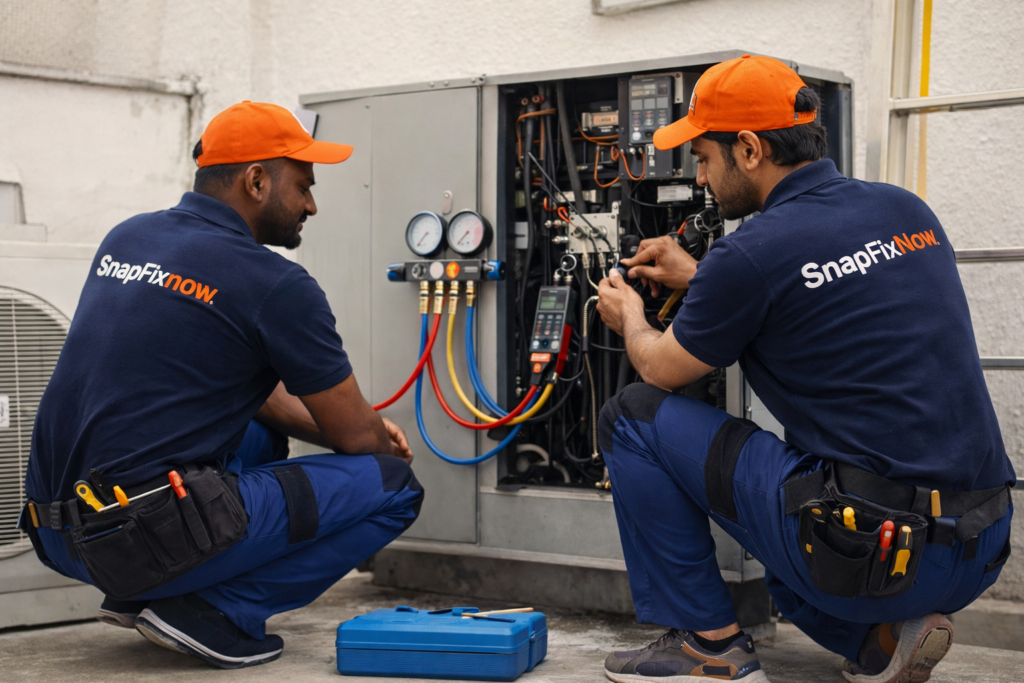
HVAC Services Dubai

Expert heating, ventilation, and air conditioning solutions for optimal indoor comfort

The Real HVAC Problems

HVAC issues in Dubai rarely start as “major failures”. They start as minor performance drift—then become complaints, high bills, humidity issues, or repeat breakdowns. We focus on preventing that drift and documenting corrective actions clearly.

Comfort Complaints

Hot/cold spots, weak airflow, humidity and 'it's not cooling' escalations.

Common Issues

Our Solutions

Repeat Breakdowns

Same fault returning due to missing root-cause corrections.

Common Issues

Our Solutions

High Energy Bills

Cooling cost increases without obvious reasons.

Common Issues

Our Solutions

What We Fix The Real HVAC Problems

HVAC issues in Dubai rarely start as “major failures”. They start as minor performance drift—then become complaints, high bills, humidity issues, or repeat breakdowns. We focus on preventing that drift and documenting corrective actions clearly.

Comfort complaints

Hot/cold spots, weak airflow, humidity and “it’s not cooling” escalations.

Repeat breakdowns

Same fault returning due to missing root-cause corrections.

High energy bills

Cooling cost increases without obvious reasons.

Enterprise-ready delivery

Our work is designed to be auditable: checklists, readings, photos, and a defect log that procurement and FM teams can approve quickly. If you need “quick fixes” with no documentation, we may recommend a task-based provider instead.

HVAC Systems & Equipment Covered

Clear scope reduces downtime and speeds up approvals, especially under AMCs.

Cooling systems

Major cooling assets and packaged equipment.

Air distribution

Air handling and terminal units.

Supporting infrastructure

Often overlooked—yet causes most repeat issues.

HVAC Services We Provide

Defined services ensure consistent maintenance, faster issue resolution, and AMC-ready compliance.

Preventive Maintenance (PPM)

Planned servicing aligned to occupancy and system load.

Breakdown Repairs & Emergency Response

SLA-based attendance with clear job closure evidence.

Duct Cleaning & IAQ Hygiene

Improve air quality and reduce odor, dust and complaint cycles.

Performance Diagnostics & Optimization

When cooling cost is high, or comfort is unstable.

Our HVAC Process (SLA + Documentation First)

Designed for enterprise clients that require audit-friendly reporting and predictable execution.

Step 1 — Site survey & system health assessment

Asset review, operating conditions, access constraints, baseline readings and risk notes.

Step 2 — Asset-based scope + AMC structure

PPM frequency, response times, exclusions, consumables/spares policy — written for procurement approval.

Step 3 — Execution with checklists, readings & photo evidence

Repeatable servicing standard across units, with defect log and corrective recommendations.

Step 4 — Monthly reporting & improvement loop

Recurring fault elimination, trend observations, and next-cycle action plan.

HVAC AMC Options

Select coverage based on asset criticality, occupancy pressure, and desired SLA priority.

Essential (PPM)

For stable systems needing consistent preventive discipline.

Standard (PPM + Breakdown Labour)

Standard (PPM + Breakdown Labour)

Premium (Enhanced SLA + Detailed Reporting)

For assets where downtime becomes guest/tenant escalation fast.

Transparency note (important for approvals)

Major parts, refrigerant, compressors and OEM components are excluded unless explicitly stated in the proposal. This keeps pricing clean and avoids surprise add-ons mid-year.

Case Studies

Proven results from SLA-driven facility management projects across Dubai

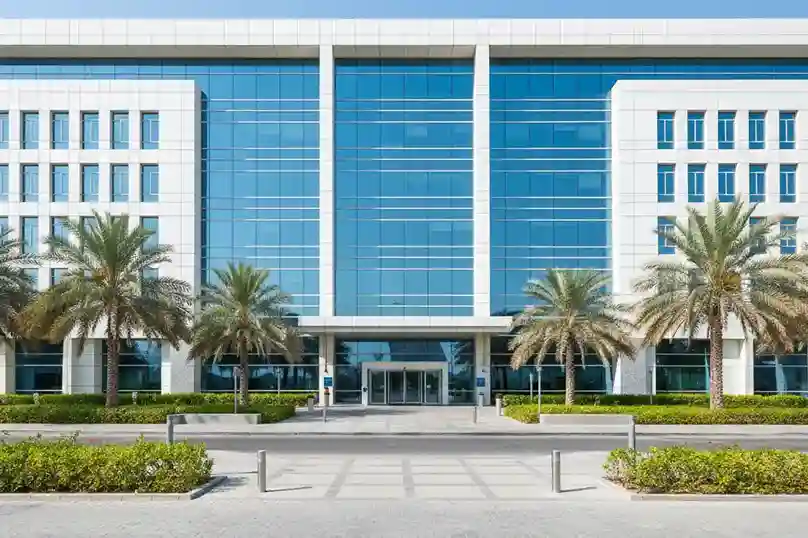
Case Study SnapFix Now

Fountain & Lobby Enhancement

CLIENT / LOCATION
Corporate HQ DIFC
CHALLENGE
Lobby fountain failure impacted visitor experience.
RESULT
39% uptime achieved, positive client feedback
View Case Study
Energy Efficiency Solutions

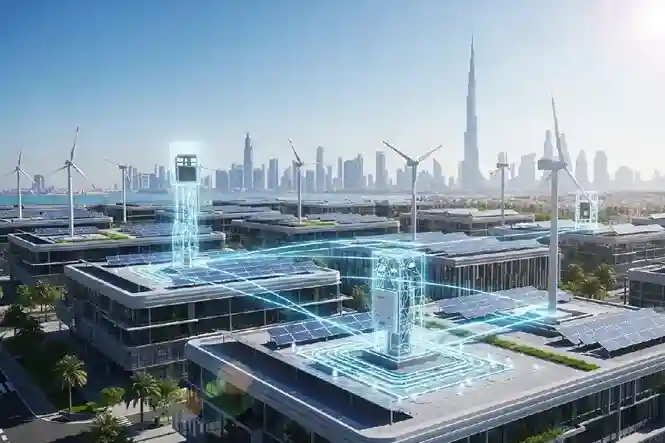
Energy Optimization Project

CLIENT / LOCATION
Hotel Apartments, Bur Dubai
CHALLENGE
High energy bills from inefficient HVAC operation.
RESULT
Energy savings of 22%, reduced OPEX
View Case Study
Painting on SnapFixNow

Exterior Facade & Painting

CLIENT / LOCATION
Residential Tower, Al Nahda
CHALLENGE
Weather damaged facade reduced property appeal.
RESULT
Increased occupancy rates and reduced vacancy cycle
View Case Study
Parking Barriers

Parking Barriers & Access Control

CLIENT / LOCATION
Business Park, Sharjah Free Zone
CHALLENGE
Barrier failures caused tenant access issues.
RESULT
Reduced downtime by 90%
View Case Study
Luxury Cleaning

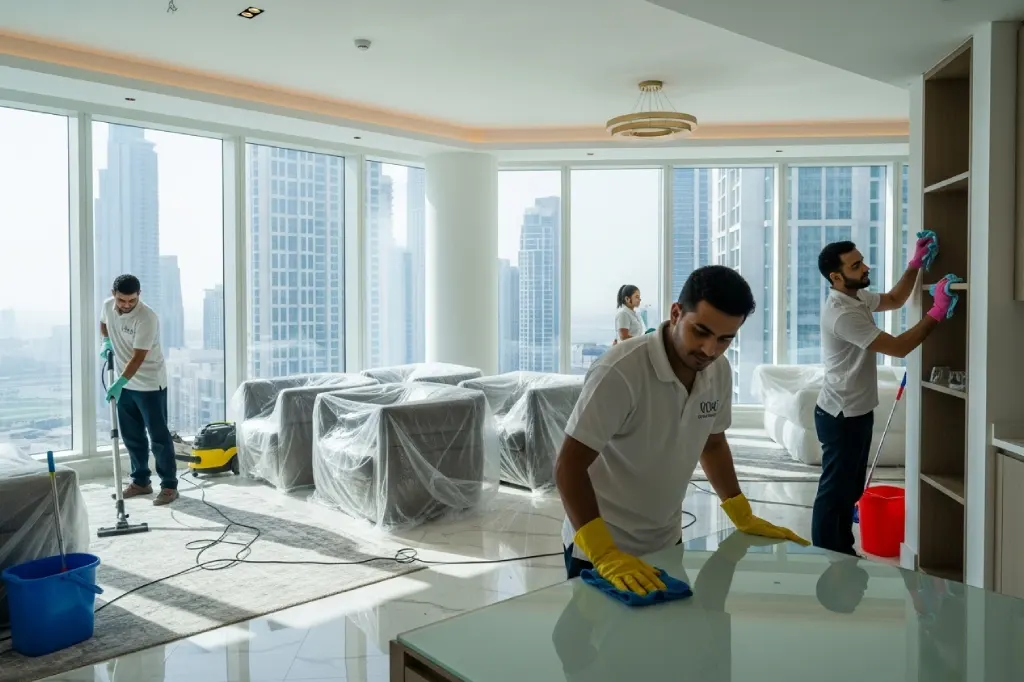
Post-Construction Cleaning – Luxury Project

CLIENT / LOCATION
Premium Developer, Downtown Dubai
CHALLENGE
Dust, joint residue, and adhesive marks delayed handovers.
RESULT
400 apartments handed over spotless in 5 weeks
View Case Study
OUR WORK

See The Transformation

Real results from our completed projects across Dubai. Drag the slider to compare before and after.
before-hvac-DxRgjLKM after-hvac-CbtkH8vJ

HVAC System Upgrade

HVAC Installation
before-cleaning-Dk6ROkAv after-cleaning-CgDmYM32

Commercial Deep Cleaning

Cleaning Service
before-renovation-Bk64hXd3 after-renovation-21e1cJ_f

Complete Apartment Renovation

Renovation
Want to see similar results for your property?
WHY CHOOSE US

Why Choose SnapFixNow

We combine process, people and technology to deliver measurable outcomes that exceed expectations and drive continuous improvement for your business success.

24/7 Support

Round-the-clock availability for emergencies. Our dedicated team is always ready to respond to your facility needs, ensuring minimal downtime and maximum peace of mind.

Certified Experts

Highly trained and certified technicians with international standards compliance. Every team member undergoes rigorous training and holds relevant industry certifications.

Guaranteed Results

Quality-assured services with comprehensive warranties. We stand behind our work with performance guarantees and transparent SLA commitments for your complete satisfaction.

Competitive Pricing

Cost-effective solutions without compromising quality. Transparent pricing models, flexible payment options, and exceptional value for your facility management investment.

ISO Certified

ISO 9001:2015 Quality Management

5+ Years

Experience in Dubai

500+ Clients

Satisfied Customers

Licensed & Insured

Fully Certified Technicians

99% Satisfaction

Guarantee on All Services

24/7 Support

Emergency Response Available

500+

PROJECTS COMPLETED

99%

CLIENT SATISFACTION

24/7

HOUR AVAILABILITY

50+

EXPERT TECHNICIANS

[ TESTIMONIALS ]

REAL EXPERIENCES,
REAL SATISFACTION

Ahmed Al Mazrouei

General Manager, InterContinental Hotel

SnapFixNow is great for our hotel's maintenance and cleaning tasks. Using photos for communication is so easy and efficient for our team. I recommend SnapFixNow highly to any hotelier.

★★★★★

Omar Al Ali

Hospitality Business

A fantastic product with great customer service. I've been with SnapFixNow for a few years now over two businesses and I will be continuing this relationship into the future. Highly recommended.

★★★★★

AYESHA KHAN

Facilities Manager, Jumeirah Hotels

SnapFixNow has improved our maintenance team's productivity by approximately 30% and made it easy for non-facilities executive management to monitor our operations. A very efficient tool.

★★★★★

MOHAMMED AL FALASI

Facilities Manager

Easy to use and saves time. Positive experience so far and the software has good potential to support our business needs in multiple ways going forward.

★★★★★

Rohit Sharma

Maintenance Head, Sofitel Dubai Downtown

Excellent for our maintenance department. SnapFixNow makes it simple to assign tasks and follow up on completion across all staff.

★★★★★

FATIMA AL SUWAIDI

Facilities Manager, Dubai British School

A really good facilities tool. All reactive work is logged efficiently and preventive maintenance is completed on schedule. Asset management features are excellent.

★★★★★
SERVICE COVERAGE

We Serve All Dubai

Comprehensive facility management services across 15+ Dubai communities

Downtown Dubai

Premium

Dubai Marina

Residential

Jumeirah Beach Residence

Premium

Business Bay

Commercial

Dubai Mall Area

Commercial

Arabian Ranches

Residential

Dubai Sports City

Residential

Palm Jumeirah

Premium

Emirates Hills

Premium

Dubai Silicon Oasis

Residential

International City

Residential

Deira

Commercial

Bur Dubai

Residential

Al Barsha

Residential

Jumeirah

Premium

Get Your Free Quote

Professional facility management services

    FREQUENTLY ASKED

    Clients Asked Questions & Answers

    Find answers to the most common questions about our facility management services.

    Repeated failures are usually due to underlying issues such as poor preventive maintenance, drainage problems, control faults, or system undersizing. We focus on identifying root causes, not just resetting faults.
    We maintain split ACs, packaged units, VRF systems, chilled water FCUs, and related HVAC components.
    Yes. Preventive maintenance includes inspections, cleaning, performance checks, and condition reporting to reduce breakdowns.
    Drain lines are inspected, flushed, and corrected as part of preventive maintenance to prevent leaks and water damage.
    In many cases, yes. Airflow correction, controls tuning, coil cleaning, and operational adjustments can significantly improve performance.
    Yes. HVAC systems are commonly included under our AMC scope with defined SLAs.

    Read the Latest Insights

    Explore trending topics to maintain and optimize your facilities, your most valuable business investment.

    Retail Facility Management in Dubai: A Practical Guide for Mall Operations

    Retail Facility Management in Dubai: A Practical Guide for Mall Operations

    Executive Summary For asset owners, property managers, and procurement leaders overseeing Dubai's retail facilities, effective facility management is a critical function for preserving asset value, controlling operational expenditure (OPEX), and ensuring business continuity. This guide provides a technical framework for evaluating service models, structuring contracts, and managing provider performance. It focuses on risk-based reasoning, quantified benchmarks relevant to the UAE climate, and operational decision-making to move beyond simple cost-based procurement. The objective is to equip decision-makers with the tools to assess trade-offs between cost, risk, and performance, aligning facility management strategy with long-term financial and operational goals. Core Principles of Modern Retail Facility Management Shifting from Reactive to Preventive Maintenance The transition from a reactive, "break-fix" model to a preventive maintenance strategy is driven by operational and financial logic. In the UAE's climate, high ambient temperatures, humidity cycles, and significant dust loading place extreme stress on HVAC systems and accelerate the degradation of mechanical and electrical components. A reactive approach guarantees unplanned downtime, high emergency rectification costs, and significant disruption to tenants and customers. A preventive model, by contrast, utilises scheduled inspections, servicing, and data analysis to anticipate and mitigate failures before they occur. This involves using asset performance data to calibrate maintenance schedules based on real-world conditions and operational criticality. The core principle is lifecycle costing. An unplanned chiller failure during peak summer hours can incur costs in emergency repairs and business disruption that exceed the entire annual preventive maintenance budget for that same asset. Key Operational and Financial Concepts Effective mall operations require integrating awareness of specific environmental factors, such as shopping centre security challenges, with core financial and technical principles. Key concepts for facility leaders include: OPEX Optimisation: Strategic maintenance is the primary tool for controlling operational expenditure. It reduces emergency call-out fees and extends asset lifecycle, thereby deferring major capital expenditure (CAPEX) for replacements. SLA-Driven Performance: A Service Level Agreement (SLA) establishes a contract for accountability. It defines clear, measurable metrics for response times, asset uptime, and rectification quality, making vendor performance auditable. Compliance and Risk Mitigation: Proactive management ensures continuous compliance with Dubai Municipality (DM) and Dubai Civil Defence (DCD) regulations. This mitigates the risk of financial penalties or forced operational shutdowns. These principles form the foundation of a resilient operational strategy, protecting profitability and asset value in Dubai’s competitive retail landscape. Structuring Annual Maintenance Contracts (AMCs) That Deliver Value The Annual Maintenance Contract (AMC) is the bedrock of operational stability in Dubai's retail environment. Procuring AMCs based on the lowest bid often leads to value erosion through frequent breakdowns, unplanned downtime, and a shortened asset lifecycle. A well-structured AMC is a strategic instrument for building operational resilience and controlling total cost of ownership. This requires a technical understanding of different contract models and their inherent risk-reward profiles. The UAE market is dominated by three primary structures, each allocating cost and responsibility differently. Differentiating AMC Models: A Risk-Based Comparison A common procurement failure is mismatching the contract model to the mall's operational requirements. For example, applying a low-cost, labour-only contract to a business-critical asset like a central chiller plant transfers nearly all financial risk for parts and major failures to the asset owner, exposing the budget to significant unpredictability. A technical, risk-based comparison of AMC structures is necessary. Understanding essential Service Level Agreements (SLAs) is part of this, as they define the performance outcomes being procured. The following table provides a decision-making framework for aligning contract type with risk appetite. AMC Model Comparison for Dubai Mall Operations AMC Model Typical Cost Structure Responsibility for Spare Parts Risk Exposure for Mall Operator Optimal Use Case Comprehensive Fixed annual fee (highest cost). Typically 10-15% of asset value. Facility Management Company (FMC) covers all labour, consumables, and parts, including major components. Low. Predictable OPEX. The FMC is incentivised to perform high-quality preventive maintenance to avoid costly rectifications. Critical assets where uptime is non-negotiable (e.g., HVAC chillers, main electrical panels, fire and life safety systems). Semi-Comprehensive Moderate fixed annual fee. Typically 5-8% of asset value. Labour and consumables are covered by the FMC. Spare parts are charged to the operator; some minor parts may be included. Medium. Unpredictable costs for major part failures. Risk of disputes over whether a part is a "consumable" or a "spare". Secondary systems (e.g., escalators, automatic doors, specific pump sets) where some budget variance is acceptable. Labour-Only Low fixed annual fee. Typically 2-4% of asset value. FMC provides only technical labour for preventive and corrective maintenance. All parts and consumables are paid for by the operator. High. Significant financial exposure to all component failures. The FMC has minimal incentive to reduce breakdowns. Non-critical assets or areas with low-cost components (e.g., general plumbing fixtures, minor civil works, basic lighting). The selected model has direct financial and operational consequences, balancing upfront cost against long-term risk. Defining a Precise Scope of Work (SOW) An ambiguous Scope of Work (SOW) is a primary source of contractual disputes, service gaps, and unexpected costs. For a Dubai mall, an effective SOW must be granular and asset-specific. A robust SOW includes these key components: Detailed Asset Inventory: A complete register of all covered equipment, including make, model, serial number, and location. This prevents disputes over what is included in the contract. Inclusions and Exclusions: Explicit definition of what is covered (preventive maintenance, emergency call-outs, specific repairs) and what is not (upgrades, damage from tenant misuse, force majeure events). Service Frequencies: Defined frequency of preventive maintenance for each asset, aligned with manufacturer recommendations and adjusted for Dubai’s operating conditions. For example, Air Handling Unit (AHU) filter cleaning should be scheduled monthly, not quarterly, in UAE conditions. A common exclusion to scrutinise is "rectification of latent defects." A provider may use this clause to avoid responsibility for pre-existing issues not identified during their initial survey, transferring significant, unplanned costs to the asset owner. The objective is to structure a contract that aligns the provider's financial interests with the mall's operational goals. A comprehensive AMC, despite its higher upfront cost, incentivises the provider

    March 23, 2026
    Outsourcing Hotel Facility Management: A Guide to Operational and Cost Benefits in the UAE

    Outsourcing Hotel Facility Management: A Guide to Operational and Cost Benefits in the UAE

    Executive Summary For hotel asset owners, procurement teams, and engineering leaders in the UAE, the decision to outsource facility management (FM) is a strategic trade-off analysis of risk, cost, and operational performance. This guide examines the quantitative and qualitative factors influencing this decision. The core value proposition of outsourcing lies in converting unpredictable capital expenditures (CAPEX) tied to asset failure into predictable operational expenditures (OPEX) through comprehensive service contracts. This shifts financial risk from the hotel to the FM provider, aligning incentives toward proactive maintenance and asset longevity. Key decision criteria include the structure of Service Level Agreements (SLAs), the choice between labour-only and comprehensive contract models, and the technical depth of the provider, particularly concerning climate-specific challenges like HVAC stress in Dubai. The objective is to achieve measurable improvements in asset uptime, regulatory compliance, and lifecycle cost, freeing in-house teams to focus on guest-centric initiatives. The Strategic Case for Outsourced Hotel FM in Dubai The choice to engage an external facility management partner is a strategic shift toward securing operational uptime and mitigating financial risk in a market defined by high occupancy and extreme climate conditions. The business case is rooted in enhancing asset performance, ensuring compliance with local regulations, and optimizing long-term cost structures. In the high-pressure environment of the UAE, the operational gains from a specialized FM provider become evident. A dedicated partner brings certified technicians and documented processes that are difficult for a multi-tasking in-house team to replicate at scale, especially for complex MEP (Mechanical, Electrical, and Plumbing) systems. This ensures critical assets remain operational under the constant strain of high ambient temperatures, humidity, and intensive use. Mitigating Climate and Occupancy Pressures Dubai's hospitality sector operates under a unique combination of intense commercial and environmental pressures. Record-breaking tourism figures mean consistently high occupancy, while the climate imposes significant stress on building infrastructure. Last year, Dubai's hotel occupancy reached 80.7% across its 154,000+ rooms. This high-volume usage accelerates asset wear and tear. You can review these tourism performance indicators from Dubai's Department of Economy and Tourism. Delegating facility management to a dedicated partner directly addresses these challenges by: Offloading complex maintenance tasks, allowing core hotel staff to concentrate on guest-facing services and revenue-generating activities. Ensuring the building's technical backbone runs smoothly, with a partner whose primary function is to maintain compliance with Dubai Municipality and Civil Defense standards through structured preventive planning. Converting a fixed in-house cost model into a variable, performance-based service, providing greater financial flexibility when unpredictable asset failures occur. This strategic transfer of responsibility focuses on guaranteeing asset uptime and operational continuity—two factors fundamental to profitability in Dubai’s competitive hotel market. Analyzing the Operational Gains of Outsourced FM For any hotel, a smoothly running operation is a core component of the guest experience and a direct driver of profitability. Outsourcing facility management can transition an engineering department from a reactive "firefighting" model to a structured, proactive one. This shift delivers measurable improvements in asset uptime, compliance assurance, and strategic focus for the in-house team. The most immediate benefit is a reduction in equipment downtime. In a hotel, a critical asset failure—such as a main HVAC chiller in July, a boiler, or a primary water pump—is a significant operational disruption that can lead to room closures, negative guest feedback, and revenue loss. An in-house team managing multiple priorities can face challenges responding with the required speed and specialized expertise. Shifting from Reactive to Proactive Maintenance An outsourced partner, contractually bound by a robust Service Level Agreement (SLA), fundamentally alters this dynamic. Maintenance becomes a planned, data-driven activity rather than a response to failure. Structured Preventive Planning: A specialist FM provider implements a rigorous Planned Preventive Maintenance (PPM) schedule based on OEM (Original Equipment Manufacturer) guidelines and real-world asset data. Activities like eddy current testing on chiller tubes or vibration analysis on pump motors are predictive tasks designed to identify potential failures before they occur, preventing costly breakdowns during peak occupancy. Guaranteed Rectification Times: SLAs are contractual obligations, not suggestions. A typical SLA for a critical system failure in a Dubai hotel might mandate a response time of under 30 minutes and a rectification time of under 60-90 minutes. This level of certainty is difficult for a multi-tasking in-house team to guarantee consistently. Specialized Technical Expertise: An outsourced firm maintains a roster of certified technicians for specialized systems like HVAC, Building Management Systems (BMS), and fire safety. This model reduces the hotel's need to invest in extensive, specialized training for its staff or rely on expensive, last-minute subcontractors for complex repairs. This proactive approach directly extends asset life and enhances operational stability. A well-maintained asset not only fails less frequently but also operates more efficiently, consumes less energy, and postpones the need for major capital replacement. Enhancing Compliance and Strategic Focus Beyond asset maintenance, outsourcing can offload the administrative burden of regulatory compliance. Adherence to codes from Dubai Municipality, Dubai Civil Defence (DCD), and other authorities is non-negotiable and requires constant documentation and vigilance. By delegating the management of compliance logs, PPM schedules, and rectification reports to a specialist, a hotel’s Chief Engineer and their team can be freed from administrative tasks. This allows them to pivot from managing maintenance paperwork to executing high-value, guest-facing engineering projects and strategic energy-saving initiatives. This redirection of skilled internal resources is a significant operational gain. The engineering team can focus on projects that directly improve the guest experience—such as smart room controls, lighting upgrades, or water pressure optimization—instead of being consumed by compliance administration and vendor coordination. Furthermore, sophisticated FM partners can introduce innovations like unmanned building management, which uses automation and remote monitoring to improve efficiency, demonstrating the advanced capabilities an external specialist can provide. The result is a more resilient, compliant, and guest-focused hotel operation. The Financial Impact of Outsourcing Facility Management For hotel asset owners and procurement teams, the decision to outsource FM is ultimately a financial one. It represents a shift in financial strategy, moving from reactive, unpredictable capital expenditures (CAPEX) toward stable, predictable

    March 22, 2026
    MEP/Engineering/Maintenance Outsourcing vs. In-House in Hotel Operations: A Decision Guide

    MEP/Engineering/Maintenance Outsourcing vs. In-House in Hotel Operations: A Decision Guide

    Executive Summary The decision between an in-house engineering team and outsourcing MEP maintenance is a critical trade-off between direct control and specialized, scalable expertise. For hotel operators and asset owners in the UAE, this choice directly impacts operational expenditure (OPEX), risk exposure, regulatory compliance, and asset lifecycle. An in-house model offers familiarity but carries high fixed costs and concentrated risks related to skill gaps and staff turnover. Outsourcing to a qualified provider converts these fixed costs into a predictable, performance-based expense managed via a Service Level Agreement (SLA), transferring significant operational and financial risk. This guide provides a technical framework for evaluating both models based on cost structure, performance metrics, risk management, and the specific operational realities of the UAE hospitality sector. Strategic Overview for Hotel Operations Leaders For engineering leaders and asset owners in Dubai's competitive hospitality market, selecting a maintenance model is a financial and strategic decision. Hotel operations run 24/7, where any failure in MEP (Mechanical, Electrical, Plumbing) systems directly impacts guest satisfaction, revenue, and brand reputation. An in-house team possesses deep property-specific knowledge but also concentrates the full burden of recruitment, training, compliance, and capital investment in specialized diagnostic tools. An outsourced model shifts these burdens to a provider. This strategy converts fixed overheads—such as salaries, visas, and benefits—into a variable, performance-driven expense governed by a Service Level Agreement (SLA). The decision parallels other strategic technology procurements, like selecting an integrated PMS system, where vendor selection can significantly enhance operational efficiency. At its core, the decision is rooted in risk management. A small in-house team may lack the depth to manage concurrent system failures or recover from the sudden departure of a key specialist. An outsourced partner, by design, provides operational resilience through a larger, multi-skilled workforce. The following matrix outlines the fundamental trade-offs: Decision Factor In-House Model Outsourced Model Cost Structure High fixed OPEX (salaries, benefits, insurance, gratuity) Predictable, variable OPEX (based on contract scope) Risk Profile Concentrated risk (skill gaps, staff turnover, compliance liability) Transferred risk (performance & compliance accountability) Technical Expertise Limited to current team's skillset and certifications Access to a broad specialist pool (chiller, BMS, LV/HV) Compliance Full internal responsibility for regulatory adherence (DM, DCD) Shared or fully transferred responsibility, verified by audits Flexibility & Scalability Rigid staffing levels, difficult to scale with demand Scalable resources based on occupancy and operational needs The optimal path depends on the asset's complexity, the owner's risk tolerance, and the overarching strategy—whether to invest in building an internal engineering department or to procure guaranteed outcomes from a technical partner. Total Cost of Ownership: In-House vs. Outsourced Models Evaluating MEP maintenance models requires a Total Cost of Ownership (TCO) analysis, not a simple comparison of a salary sheet versus a contract fee. This approach accounts for all direct, indirect, and hidden costs associated with running a technical team in the UAE, providing a true financial picture. The True OPEX of an In-House Team The budget for an in-house team extends far beyond base salaries, encompassing a range of fixed operational expenditures (OPEX) and potential capital expenditures (CAPEX). Key cost components include: Fixed Labour Costs: The full payroll burden, including mandatory health insurance, visa processing and renewal fees, and the end-of-service gratuity liability that accrues annually for each employee. Variable Labour Costs: Unpredictable expenses such as overtime pay during peak season, emergency call-outs for failures on public holidays, and the cost of temporary staff to cover leave. Recruitment & Training Costs: Sourcing, onboarding, and retaining qualified technicians in a competitive market. This includes recurring expenses for continuous professional development to maintain certifications and compliance with local regulations. Capital & Operational Outlay: The initial CAPEX for specialized diagnostic tools (e.g., thermal imagers, vibration analyzers), their ongoing calibration, personal protective equipment (PPE), and the cost of maintaining a spare parts inventory. In UAE conditions, high staff turnover can be a significant financial drain. Each time a technician resigns, the full cycle of recruitment, visa sponsorship, and training restarts, impacting both budget stability and operational continuity. The Financial Structure of Outsourced Contracts Outsourcing replaces fixed overheads with a predictable, contract-based expense. However, the contract type dictates the level of financial and operational risk transfer. The two primary models are Labour-Only Agreements and Comprehensive Annual Maintenance Contracts (AMCs). A labour-only contract provides technicians, but the hotel remains financially responsible for all spare parts, consumables, and specialized third-party rectification works. This model offers a lower initial fee but retains significant budget unpredictability. A comprehensive AMC bundles labour, spare parts, and consumables into a single, fixed fee. This is a strategic risk transfer mechanism, moving the financial liability of unexpected major failures—such as a main pump or an electrical panel—from the hotel's budget to the service provider. This converts unpredictable OPEX into a stable, manageable line item. This strategic shift is a driver of market growth. The Middle East facility management market is expanding as asset owners seek budget certainty and operational efficiency. Industry practice often shows that a well-executed comprehensive AMC can reduce total maintenance-related OPEX by 15-25% compared to a fully-loaded in-house model. Comparative Cost Structure Analysis Cost Component In-House Model Impact Outsourced Model Impact (Comprehensive AMC) Financial Consideration Technician Salaries & Benefits High, fixed OPEX. Includes visas, insurance, gratuity. Bundled into contract fee. Becomes a variable, predictable OPEX. Outsourcing eliminates direct payroll liabilities and associated administrative burdens. Spare Parts & Consumables Variable OPEX/CAPEX. Budget subject to unpredictable failures. Included in contract. Financial risk of failure is transferred to the provider. A comprehensive AMC provides budget certainty, crucial for financial forecasting. Specialized Tools & Equipment High initial CAPEX and ongoing maintenance costs. No direct cost. Provider absorbs the investment and upkeep. Avoids capital lock-in for assets that may be infrequently used by a single hotel. Training & Certification Recurring OPEX. Internal responsibility to maintain compliance. Included in provider's overhead. Access to certified specialists is guaranteed by the SLA. Ensures technicians are compliant with Dubai Municipality and Civil Defense standards without direct cost. Emergency Rectification Costs Unbudgeted OPEX. Includes overtime and external

    March 21, 2026
    Evaluating Outsourced Property Maintenance for UAE Assets

    Evaluating Outsourced Property Maintenance for UAE Assets

    For asset owners, facility managers, and procurement teams in the UAE, the decision to outsource property maintenance is a strategic choice to shift from a reactive, high-risk cost model to a structured, performance-based partnership. The core objective is converting volatile capital expenditures (CAPEX) for emergency rectification into predictable operational expenses (OPEX), managed through a robust Service Level Agreement (SLA). This guide provides a technical framework for evaluating this decision, focusing on risk, cost, and operational trade-offs specific to the UAE environment. A Strategic Overview of Outsourced Maintenance Choosing between an in-house team and an outsourced provider is a fundamental decision that directly impacts asset value, operational risk, and long-term financial performance. In the UAE context, outsourcing is not merely task delegation but the integration of a structured, engineering-led approach into operations. This transforms maintenance from a perpetual cost centre into a strategic function aimed at maximising asset uptime and lifecycle value. The demanding UAE climate—with its high humidity, extreme heat cycles, and significant dust loading—places immense stress on critical systems. HVAC and MEP infrastructure, in particular, demand specialised preventive planning to operate efficiently and mitigate the risk of catastrophic failures. Outsourcing is a strategic decision to mitigate operational risk and secure long-term asset performance, transferring the burden of complex maintenance and compliance to a specialist partner. Key Operational Drivers for Outsourcing For B2B decision-makers, the logic for outsourcing is rooted in operational and financial clarity. The key drivers include: Predictable OPEX: Transition from unforeseen CAPEX for major failures to a fixed, budgeted OPEX via a comprehensive Annual Maintenance Contract (AMC). Specialised Expertise: Gain on-demand access to certified technicians for complex systems (e.g., chillers, BMS, fire safety) without the fixed overhead of full-time employment. Regulatory Compliance: Offload the responsibility of adhering to evolving standards from Dubai Municipality, Civil Defence, and other regulatory bodies. A competent provider maintains an auditable trail of all maintenance activities. Extended Asset Lifecycle: Implement data-driven preventive maintenance schedules designed for harsh local conditions. Industry practice shows this can significantly reduce wear and tear, extending equipment life. The following table provides a high-level comparison of the two primary maintenance models across critical operational and financial dimensions relevant to UAE asset and facility managers. Operational Model Comparison: In-House Vs. Outsourced Maintenance Metric In-House Maintenance Model Outsourced Maintenance Model Cost Structure Primarily fixed overheads (salaries, benefits, visas) plus unpredictable CAPEX for major repairs and specialised tools. Predictable OPEX based on a fixed-fee contract. Costs are known and budgeted for annually. Technical Expertise Limited to the skills of the hired team, creating potential gaps for specialised systems (e.g., chillers, BMS, elevators). Access to a deep pool of certified specialists for diverse systems. Expertise is available on-demand. Risk & Liability All operational risks, compliance failures, and resulting liabilities are retained internally. Risk is contractually transferred to the service provider, who is accountable for performance and compliance via SLAs. Efficiency & Uptime Dependent on internal team capacity and often driven by reactive repair cycles, leading to potential for extended downtime. Focused on proactive and preventive maintenance to maximise uptime. Performance is typically guaranteed by an SLA. Regulatory Burden The internal team is fully responsible for tracking, executing, and documenting adherence to all local regulations. Compliance management and documentation are offloaded to the provider, who maintains auditable records. Scalability Inflexible. Scaling requires a lengthy and costly hiring or downsizing process. Highly flexible. Service scope can be scaled to match changing property needs or portfolio size. The trade-offs are clear. The in-house model offers direct control but at the cost of high fixed overheads, administrative burden, and significant risk from potential skill gaps. In contrast, a well-selected outsourced partner provides contractual guarantees, specialised knowledge, and operational efficiencies that are difficult to replicate internally, especially for complex commercial, hospitality, or large-scale residential assets. This strategic shift allows internal teams to focus on core business objectives, not daily rectification works. Comparing In-House and Outsourced Maintenance Models For any asset owner in the UAE, the choice between running an in-house maintenance team or partnering with an outsourced provider is a fundamental strategic decision that defines cost structure, operational risk, and the ability to maintain asset performance under the strain of the local climate. This is a classic trade-off: direct control versus specialised capability. An in-house team provides the advantage of direct oversight. Staff are on payroll, dedicated to a specific asset, and immediately available. However, this control comes with significant, and often underestimated, fixed overheads. These costs extend far beyond salaries to encompass visa processing, mandatory health insurance, annual leave, end-of-service gratuity, continuous technical training, and the capital tied up in tools and equipment. This model also tends to cultivate a team of generalists. While effective for routine tasks, they often lack the deep, certified expertise required for today's complex building systems—such as integrated Building Management Systems (BMS), variable refrigerant flow (VRF) HVAC units, or advanced fire safety controls. This knowledge gap creates a serious operational risk. Operational and Financial Realities The outsourced model reframes the financial and operational equation. It converts the fixed, often escalating costs of an in-house team into a predictable, variable expense managed through an Annual Maintenance Contract (AMC). It provides immediate access to a deep bench of certified specialists—from MEP engineers to HVAC technicians—without carrying the full burden of their employment, visas, and professional development. Consider a major HVAC failure in a Dubai commercial tower during peak summer. An in-house team can be quickly overwhelmed. They may lack the specific diagnostic tools, sufficient certified technicians, or the supply chain leverage to procure critical parts rapidly. The result is prolonged, costly downtime and tenant dissatisfaction. An outsourced partner bound by a strict Service Level Agreement (SLA) is contractually obligated to deliver a rapid, specialised response. This structure is designed to mitigate disruption and financial loss by transferring performance risk directly to the provider. Market trends across the region reflect this strategic shift. In the UAE's facility management sector, outsourced services are projected to capture a 64.88% market share by 2025, with the outsourced

    March 20, 2026

    Ready to Create Your Success Story?

    Join our growing list of satisfied clients across Dubai. Let’s discuss how we can help you achieve similar results.
    Call Now Button