SnapFixNow

Specialized Facility Services in Dubai, UAE

Specialized Services: Expert solutions for unique, complex, or technical tasks, ensuring high-quality results and compliance with standards.
Service Specialties Offered

Specialized Services

Tailored Solutions for Your Unique Needs

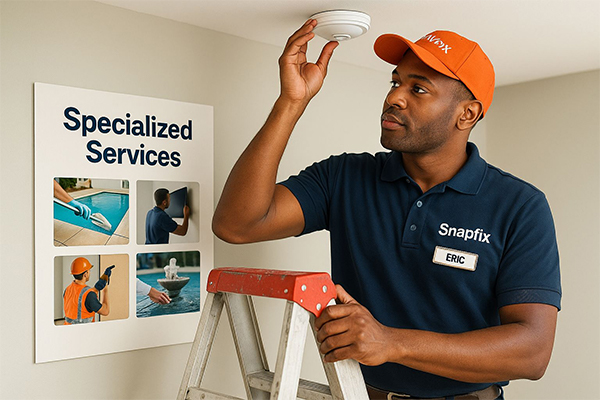
At SnapFixNow, we pride ourselves on offering specialized services that go above and beyond standard maintenance. Whether you need expert pool care, professional installation of audio and visual systems, or maintenance of unique systems like parking barriers or fountains, we’ve got you covered. Our team of skilled professionals in Dubai, UAE is equipped with the expertise and tools to handle a wide variety of specialized services, providing you with exceptional care and tailored solutions to keep your property functioning smoothly and looking great.

Reliable Solutions

Our Specialized Services Include:

Pool Care & Maintenance

A well-maintained pool not only enhances the aesthetics of your property but also provides a safe, clean environment for enjoyment. Our pool care services are designed to keep your pool in top condition, year-round.

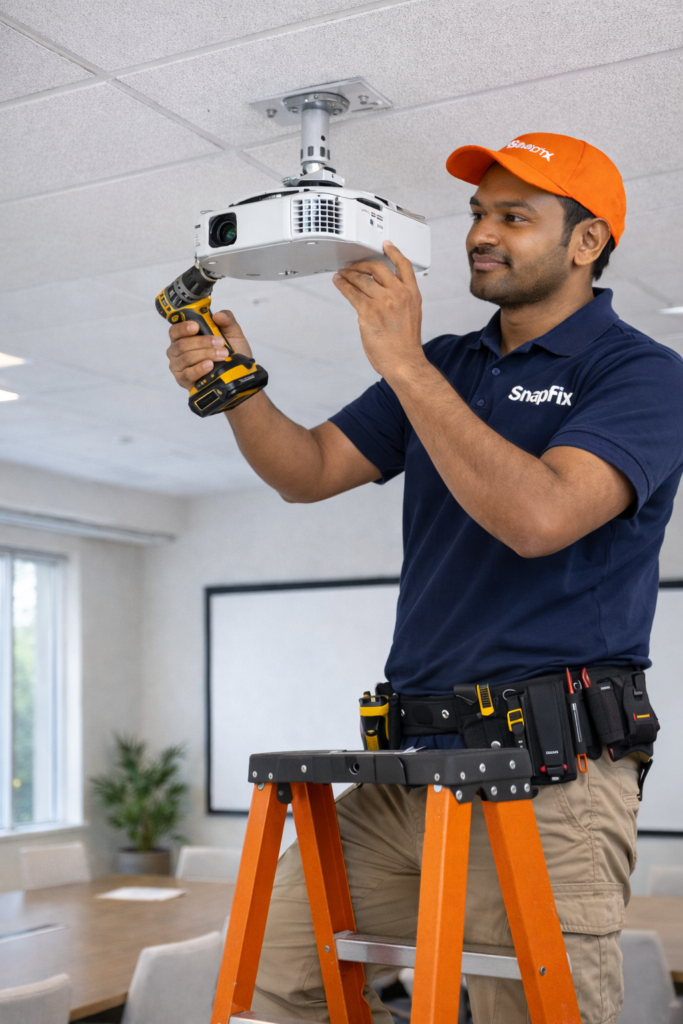
Audio & Visual System Installation & Service

Whether you need to install a home theater, upgrade your office’s audio-visual system, or require maintenance for an existing setup, our team provides comprehensive audio and visual system services.

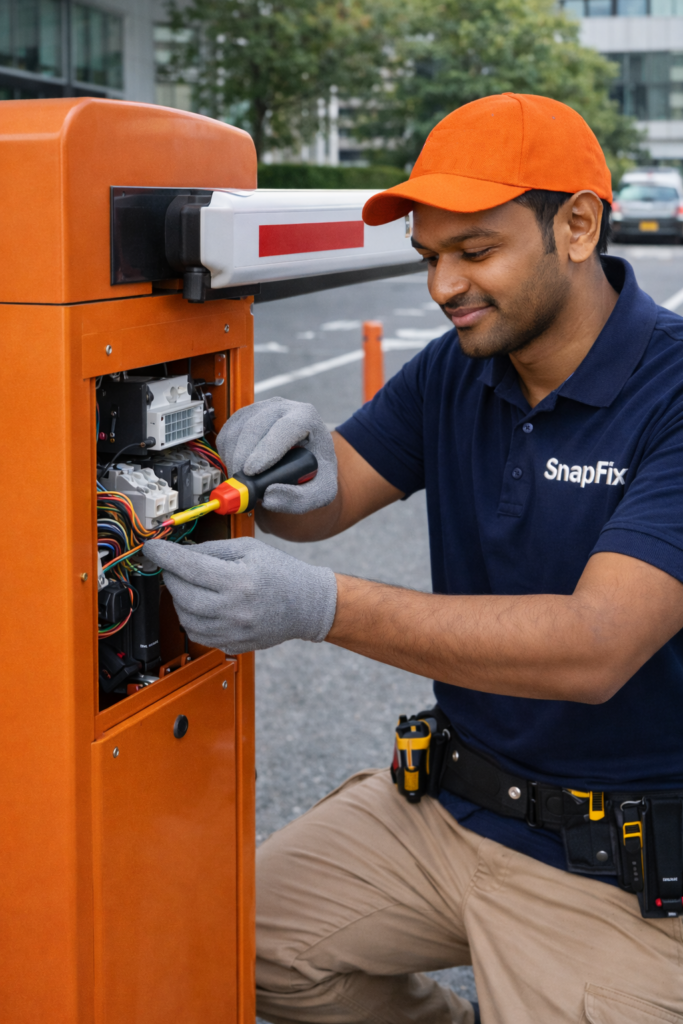
Parking Barrier Maintenance

Efficient parking barrier systems ensure smooth operations in parking lots, garages, and gated communities in Dubai, UAE. Our maintenance services keep your parking barrier systems functioning at their best.

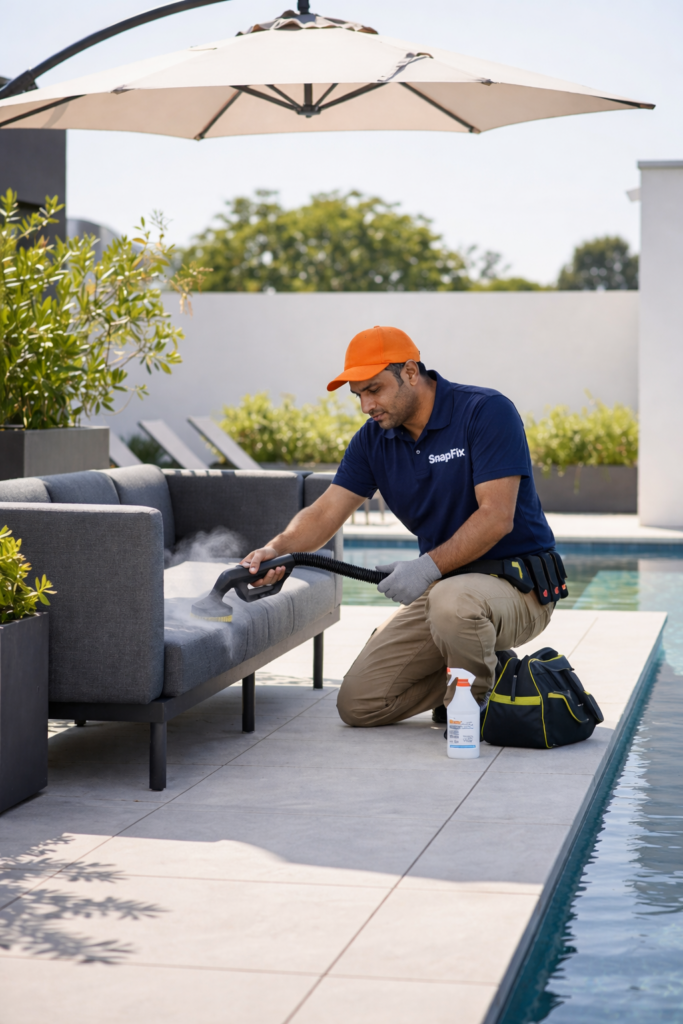
Furniture Upholstery, Pool & Parking Shade Maintenance

Keep your furniture, outdoor poolside areas, and parking shades in pristine condition with our expert services, designed to enhance the longevity and appearance of your property.

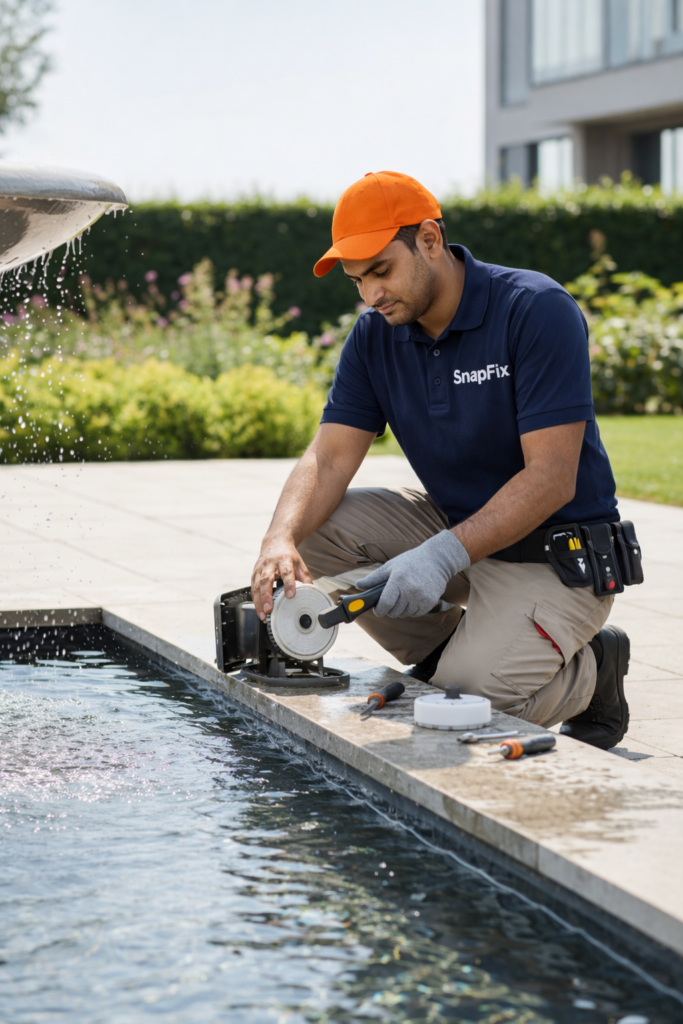
Fountain & Filter Maintenance

Fountains add beauty and tranquility to any space, but they require regular maintenance to ensure they operate efficiently. Our fountain and filter services in Dubai, UAE ensure your outdoor features stay in perfect condition.

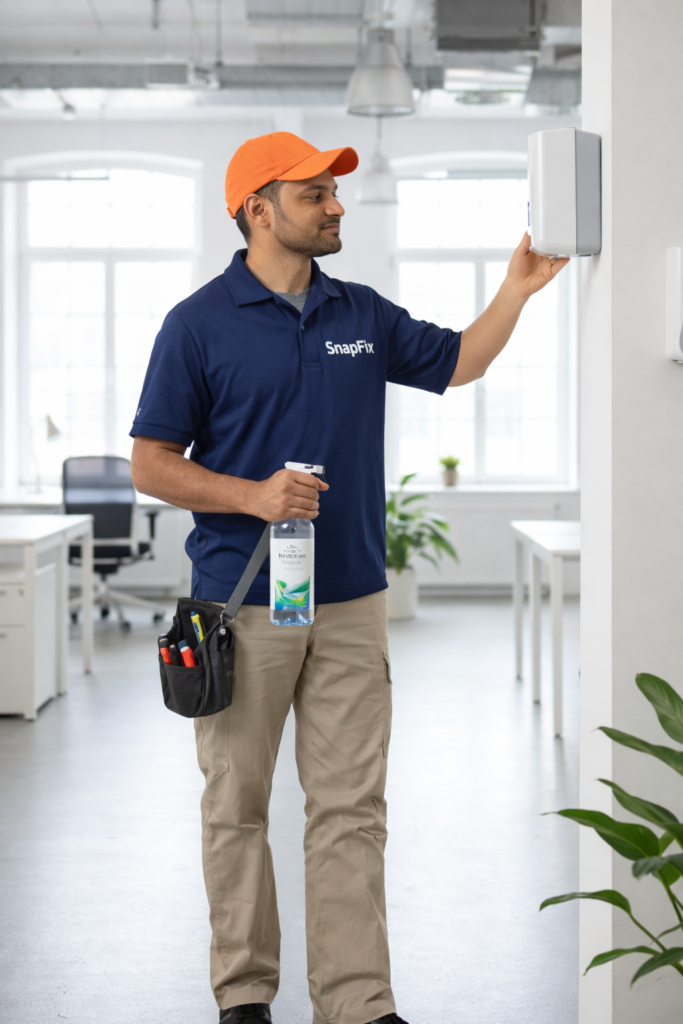
Air Freshener Services

A pleasant-smelling environment contributes to a positive atmosphere, whether in your home, office, or business space. Our air freshener services offer a long-lasting, subtle fragrance that enhances the air quality in your space.
WHY CHOOSE US

Why Choose Our Specialized Management?

Expert Technicians

Each service is handled by professionals with years of experience and specialized training to ensure the highest quality results.

Comprehensive Solutions

From installation to maintenance and repair, we provide end-to-end solutions for all your specialized needs.

Tailored Services

We understand that each client’s needs are unique, which is why we offer flexible, customizable solutions that fit your specific requirements.

Reliability & Efficiency

Our team is committed to delivering timely, reliable, and efficient services, ensuring that all tasks are completed to your satisfaction.

ISO Certified

ISO 9001:2015 Quality Management

5+ Years

Experience in Dubai

500+ Clients

Satisfied Customers

Licensed & Insured

Fully Certified Technicians

99% Satisfaction

Guarantee on All Services

24/7 Support

Emergency Response Available

500+

PROJECTS COMPLETED

99%

CLIENT SATISFACTION

24/7

HOUR AVAILABILITY

50+

EXPERT TECHNICIANS

[ TESTIMONIALS ]

REAL EXPERIENCES,
REAL SATISFACTION

Ahmed Al Mazrouei

General Manager, InterContinental Hotel

SnapFixNow is great for our hotel's maintenance and cleaning tasks. Using photos for communication is so easy and efficient for our team. I recommend SnapFixNow highly to any hotelier.

★★★★★

Omar Al Ali

Hospitality Business

A fantastic product with great customer service. I've been with SnapFixNow for a few years now over two businesses and I will be continuing this relationship into the future. Highly recommended.

★★★★★

AYESHA KHAN

Facilities Manager, Jumeirah Hotels

SnapFixNow has improved our maintenance team's productivity by approximately 30% and made it easy for non-facilities executive management to monitor our operations. A very efficient tool.

★★★★★

MOHAMMED AL FALASI

Facilities Manager

Easy to use and saves time. Positive experience so far and the software has good potential to support our business needs in multiple ways going forward.

★★★★★

Rohit Sharma

Maintenance Head, Sofitel Dubai Downtown

Excellent for our maintenance department. SnapFixNow makes it simple to assign tasks and follow up on completion across all staff.

★★★★★

FATIMA AL SUWAIDI

Facilities Manager, Dubai British School

A really good facilities tool. All reactive work is logged efficiently and preventive maintenance is completed on schedule. Asset management features are excellent.

★★★★★
SERVICE COVERAGE

We Serve All Dubai

Comprehensive facility management services across 15+ Dubai communities

Downtown Dubai

Premium

Dubai Marina

Residential

Jumeirah Beach Residence

Premium

Business Bay

Commercial

Dubai Mall Area

Commercial

Arabian Ranches

Residential

Dubai Sports City

Residential

Palm Jumeirah

Premium

Emirates Hills

Premium

Dubai Silicon Oasis

Residential

International City

Residential

Deira

Commercial

Bur Dubai

Residential

Al Barsha

Residential

Jumeirah

Premium

Get Your Free Quote

Professional facility management services

    FREQUENTLY ASKED

    Clients Asked Questions & Answers

    Find answers to the most common questions about our facility management services.

    Specialized services refer to technical or non-routine works that require specific expertise, tools, or compliance handling beyond standard maintenance.
    Yes. We typically conduct a site inspection or information review to confirm feasibility, scope, and risk factors.
    Most specialized works are quoted separately unless explicitly included in the contract scope.
    Yes, where required. We provide scope clarity and execution approach for planned specialized works.
    Yes. We can arrange and manage certified specialists under controlled supervision.

    Read the Latest Insights

    Explore trending topics to maintain and optimize your facilities, your most valuable business investment.

    A Technical Guide to Procuring AC Maintenance Services in Dubai

    A Technical Guide to Procuring AC Maintenance Services in Dubai

    Executive Summary For asset owners, facility managers, and procurement teams in Dubai, selecting an AC maintenance provider is a critical risk management and operational expenditure (OPEX) decision. This guide provides a technical framework for evaluating service models, contract structures, and provider capabilities. The focus is on moving beyond price-based procurement to a risk-based approach that prioritizes asset lifecycle, regulatory compliance, and Total Cost of Ownership (TCO). Key decision factors include the trade-offs between preventive and reactive maintenance, the structure of Annual Maintenance Contracts (AMCs), and the verification of technical competence and compliance with Dubai Municipality and Civil Defense standards. Strategic Framework for HVAC Asset Maintenance For B2B stakeholders in Dubai, selecting an AC maintenance provider is a core risk management function. The UAE's high ambient temperatures, humidity cycles, and significant airborne dust loading place extreme stress on HVAC systems, accelerating equipment degradation and increasing energy consumption. A structured maintenance strategy is non-negotiable for operational continuity. This guide provides an operational framework for technical due diligence, moving beyond marketing claims to focus on performance metrics. The objective is to equip decision-makers with the tools to assess providers based on technical capability, risk mitigation, and impact on OPEX. Adopting an Asset Management Perspective An asset management approach prioritizes long-term value over short-term cost savings by analyzing how a maintenance contract affects the Total Cost of Ownership (TCO). This includes direct contract fees and indirect costs arising from suboptimal maintenance strategies. Key TCO components include: Energy Inefficiency: A poorly maintained AC unit in Dubai can see energy consumption increase by 15-25%. Premature Asset Failure: Inadequate preventive maintenance can significantly reduce an HVAC system's operational lifecycle. Emergency Rectification Costs: Unplanned, reactive call-outs are consistently more expensive than scheduled preventive maintenance. Business Interruption: In commercial, hospitality, or industrial settings, HVAC downtime directly impacts revenue and tenant satisfaction. A primary objective when evaluating AC maintenance companies in Dubai is to transition from a reactive, cost-centric procurement model to a proactive, risk-based partnership. This shift protects asset value and ensures operational continuity. Scenario Comparison: Maintenance Philosophies The fundamental choice is between a proactive (preventive) and a reactive (break-fix) maintenance model. In the UAE's demanding climate, the operational and financial consequences of this decision are significant. The following table contrasts the impact of each approach on key performance and financial metrics. Metric Proactive (Preventive) Model Reactive (Break-Fix) Model Budget Impact Predictable, fixed OPEX (via AMC) Unpredictable, volatile OPEX with high-cost spikes Asset Lifecycle Lifecycle extended through scheduled servicing Lifecycle shortened due to unaddressed wear and tear Energy Consumption Optimized; typically 15-25% lower Increased due to performance degradation Downtime Risk Minimized; failures anticipated and prevented High; failures are frequent and resolution is delayed Operational Impact Minimal disruption to tenants/operations Significant disruption and potential revenue loss Best Use Case Critical and high-value commercial/residential assets Non-critical assets where downtime has zero impact Decoding AC Maintenance Contract Models Selecting an Annual Maintenance Contract (AMC) in Dubai is a strategic decision that directly influences operational risk, budget stability, and asset lifespan. The contract structure determines the allocation of risk and financial responsibility between the asset owner and the service provider. With ambient summer temperatures regularly exceeding 45°C, the operational strain on HVAC systems is immense. The projected growth of the UAE Air Conditioners Market to USD 282.12 million by 2030 reflects this demanding environment, underscoring the need for a robust maintenance strategy. The Proactive Model: Preventive Maintenance Contracts (PMCs) A Preventive Maintenance Contract (PMC) is a risk mitigation instrument. It transfers the responsibility for system uptime to the service provider through a structured schedule of inspections, servicing, and component health checks. The objective is to identify and rectify potential failures before they escalate into costly breakdowns. A technically sound PMC scope in Dubai must specify: Scheduled Visits: Frequency and timing of inspections, typically quarterly, with pre- and post-summer servicing. Component Servicing: A detailed task list including cleaning of condenser and evaporator coils, filter replacement/cleaning, drain line flushing, and refrigerant pressure checks. Electrical Integrity Checks: Verification of contactors, capacitors, and wiring is critical, as electrical components are common failure points under high thermal stress. Operational data from UAE buildings indicates that a well-executed PMC can reduce emergency breakdowns by up to 70%. This approach also maintains system efficiency, potentially lowering energy consumption by 15-20% compared to a neglected unit. The Reactive Model: High-Risk, High-Cost Alternative The reactive, or "break-fix," model involves engaging an AC maintenance company only after a failure has occurred. While appearing cost-effective due to the absence of a fixed contract fee, it introduces significant operational and financial volatility. This model is only suitable for non-critical assets where downtime carries no financial or operational penalty. The primary risks of a reactive approach include: Unpredictable OPEX Spikes: Emergency repairs are charged at premium rates. Extended Downtime: Sourcing parts and securing technician availability during peak summer demand results in longer resolution times. Accelerated Asset Depreciation: Unaddressed minor faults cascade into major component failures, shortening the equipment's operational life. When reviewing contract terms, tools like an AI legal contract analyzer can assist procurement teams in identifying potential liabilities and scope gaps. The choice of contract model is a calculated decision based on an organization's tolerance for risk versus its investment in operational predictability. Defining and Measuring Service Level Agreements (SLAs) An AMC is an agreement for performance. The Service Level Agreement (SLA) is the mechanism that translates contractual obligations into measurable outcomes, providing a framework for accountability. For any facility manager in Dubai, a technically specific SLA is the primary instrument for managing provider performance. It replaces ambiguous service promises with quantifiable metrics that reflect the operational requirements of the asset. Defining Key Performance Indicators (KPIs) An effective SLA is built on KPIs that are unambiguous and directly measurable. The most critical KPIs for AC maintenance in Dubai include: Response Time: The interval from service request logging to technician arrival on-site. This must be tiered based on issue severity. For a critical failure (e.g., server room cooling loss), a response time of under 2

    March 7, 2026
    A Technical Guide to Facilities Management UAE

    A Technical Guide to Facilities Management UAE

    Executive Summary: For decision-makers in the UAE, facilities management (FM) is a strategic discipline for aligning a building’s physical assets with its operational and financial goals. Effective FM directly shapes asset value, operating expenditure (OPEX), and regulatory compliance. The core challenge is to manage the lifecycle of physical assets—from HVAC systems under extreme heat stress to critical electrical and life safety infrastructure—by balancing preventive planning with reactive rectification. This guide provides a technical framework for evaluating FM service models, financial structures, and provider capabilities to reduce decision ambiguity and align service delivery with asset performance objectives. A Consultant's Overview of the UAE FM Landscape Facilities management (FM) in the UAE has evolved from a basic maintenance function into a strategic necessity, driven by OPEX control pressures and an increasingly stringent regulatory environment. To navigate the local FM market, decision-makers must look beyond surface-level service catalogues to understand the underlying financial and operational mechanics. Modern FM centres on managing the complete lifecycle of physical assets to protect capital investment and ensure business continuity. This requires a balanced approach between preventive maintenance and reactive rectification. A holistic strategy also integrates essential property management security services to secure the asset and its occupants. Key FM Service Categories: Operational Implications The industry categorizes services into distinct types, each with different operational consequences for a property portfolio. Hard FM: This encompasses the engineering-led technical services tied to the building's physical structure and core systems. It includes MEP (Mechanical, Electrical, Plumbing), HVAC maintenance, fire and life safety systems, and structural works. In the UAE, competent Hard FM is non-negotiable for compliance with Dubai Municipality and Civil Defence standards. Soft FM: These services shape the human experience within the building, including cleaning, security, waste management, and landscaping. The quality of Soft FM directly impacts tenant satisfaction, brand perception, and asset valuation. Integrated Facility Management (IFM): An IFM model consolidates multiple Hard and Soft FM services under a single contract and provider. The primary drivers for this model are reduced administrative overhead, a single point of accountability, and potential cost efficiencies through economies of scale. The selection between these models is contingent on asset complexity, organisational risk tolerance, and the desired level of in-house control versus outsourced specialisation. A strategic approach to facilities management in the UAE is the foundation for optimising a property’s financial performance and operational resilience. For a detailed breakdown of service scopes, refer to this guide on understanding facility management services in the UAE. Comparing FM Service Models and Contract Structures Selecting the appropriate service delivery structure is a critical decision that directly influences OPEX, vendor management overhead, and long-term asset health. The correct model aligns with a property's strategic goals, while a misaligned one introduces administrative friction and financial risk. The UAE's facility management market is projected to grow significantly, indicating increasing sophistication. According to market analysis, it could reach nearly USD 40 billion by 2032, up from an estimated USD 18.21 billion in 2023. With commercial and retail properties comprising over 50% of the market, a clear trend towards more strategic, consolidated contracts is evident. For a deeper dive, review this analysis of UAE facility management market growth. This maturation provides asset owners with a spectrum of service delivery options. Hard vs. Soft FM: The Core Service Types Procurement strategy begins with understanding the two fundamental service categories. Hard FM (Hard Services): This is the technical core of a building. Hard FM includes all engineering-led services that ensure the physical asset operates safely and compliantly, such as Mechanical, Electrical, and Plumbing (MEP) systems, HVAC maintenance, and fire and life safety systems. The objective is asset preservation and adherence to standards from authorities like Dubai Civil Defence. Soft FM (Soft Services): This category focuses on the occupant experience. Soft FM services, such as cleaning, security, and waste management, make a building functional and pleasant. High-quality Soft FM directly influences tenant retention and property image. Contract Structures: A Trade-off Analysis The method of procuring and managing these services defines the contract model. Each presents a different balance of cost, control, and administrative load. 1. Single Service Contracts This model involves procuring individual specialists for each service—one for HVAC, another for security, a third for cleaning, etc. Operational Impact: Requires high administrative overhead to manage multiple vendors, contracts, and invoices, complicating coordination. Risk is fragmented; a single vendor failure has a limited blast radius, but the probability of a service gap across the portfolio is high. 2. Bundled Service Contracts This approach groups similar services under a single provider (e.g., all Soft FM with one company, all Hard FM with another). Operational Impact: Simplifies vendor management to a few key relationships. Cost efficiencies can be realised from economies of scale within each bundle. However, the risk is concentrated; failure of a bundled provider has a more significant operational impact. 3. Integrated Facility Management (IFM) This model consolidates all or most Hard and Soft FM services under a single provider, creating one point of contact and total accountability. The rationale for IFM is that a single, accountable partner can drive greater efficiency and strategic value than a collection of disparate vendors. The provider transitions from a contractor to a strategic partner responsible for the holistic performance of the asset. This model is particularly effective for large, complex properties where seamless operation is a primary objective. It aligns with the principles of a comprehensive Annual Maintenance Contract (AMC) covers all critical systems in Dubai. Comparative Analysis of FM Service Models This table outlines the operational and financial implications of each model for a typical commercial asset in the UAE. Parameter Single Service Contract Bundled Service Contract Integrated Facility Management (IFM) Vendor Management High: Requires management of 10-15+ individual vendor relationships and contracts. Medium: Reduces to 2-4 key vendor relationships (e.g., one for Hard FM, one for Soft FM). Low: A single point of contact and one comprehensive contract to manage. Operational Efficiency Low: Siloed teams with no incentive to coordinate. High potential for blame-shifting between vendors.

    March 6, 2026
    A Guide to Procuring Technical Services in the UAE for B2B Stakeholders

    A Guide to Procuring Technical Services in the UAE for B2B Stakeholders

    Executive Summary: Framework for Decision-Making For property managers, facility heads, and asset owners in the UAE, the selection of a technical services partner is a critical operational and financial decision. The objective is to mitigate risk and ensure asset lifecycle value, not simply to secure the lowest bid. An effective procurement process moves beyond price to evaluate a provider's operational depth, risk management capabilities, and alignment with the asset's specific needs. This guide provides a structured framework for defining scope, comparing service models, and evaluating providers based on quantifiable metrics and operational realities specific to the UAE. It focuses on enabling a defensible decision by clarifying the trade-offs between contract structures, cost, and long-term asset performance. Framework for Procuring Technical Services in the UAE Choosing a technical services partner in the UAE is an engineering and risk management exercise, not just a procurement task. Whether managing a Grade A commercial tower in DIFC or a large residential community in Dubai Hills, the objective is to secure a provider who understands the specific operational demands of the asset. The core challenge is achieving a balance between predictable operational expenditure (OPEX) and the long-term health of critical systems. A defensible decision requires a structured evaluation of the trade-offs between risk, cost, and performance. This involves meticulously assessing a potential partner's capacity to maintain assets under the demanding UAE climate, which places significant stress on HVAC and MEP systems due to high humidity, dust loading, and heat. The Strategic Evaluation Process A robust selection process can be structured into three distinct phases: Define, Evaluate, and Select. This methodical approach ensures all operational and compliance requirements are addressed, moving from an internal needs assessment to vetting market providers. As the diagram illustrates, a successful outcome begins with a precise definition of requirements before engaging the market. This initial step is fundamental to preventing contractual ambiguity and operational gaps. The primary objective is managing operational and financial risk. For a high-occupancy commercial building, this may translate to a contract guaranteeing rapid response times for critical failures to ensure business continuity. For a residential community, the focus might be on meticulous preventive planning to maintain asset reliability and control service charges. The key is to match the service model to the asset’s specific risk profile. The true cost of a technical services contract is not its price tag, but its effectiveness in preventing costly downtime and premature asset failure. An agreement that appears cheaper upfront can lead to significantly higher rectification costs and a depreciated asset value over its lifecycle. The evaluation process must probe a provider’s operational depth, focusing on: Preventive Maintenance Planning: How is proactive maintenance planned, executed, and documented? This is critical for HVAC systems battling high dust loads and humidity cycles in the UAE. Compliance and Certification: What is the documented proof of adherence to requirements from Dubai Municipality, Civil Defense, and other relevant authorities? SLA and Reporting: Are the Service Level Agreements (SLAs) specific, measurable, and tied to operational outcomes? Do reports provide transparent insight into work order execution and asset performance KPIs? By employing a methodical framework, decision-makers can confidently select a technical services company in UAE that aligns with long-term asset management and financial objectives. Defining Your Scope of Work for Technical Services An ambiguous Scope of Work (SOW) is a primary point of failure in technical services procurement. It invites vague proposals and creates operational grey areas, exposing the asset to risk. A precise, asset-backed definition of requirements is a prerequisite to engaging any technical services company in UAE. The process must begin with a detailed asset audit. A comprehensive inventory of all equipment requiring maintenance—the asset register—is non-negotiable. This register should detail the make, model, age, and known performance issues for each asset, forming the foundation of the SOW. An SOW stating "HVAC maintenance" is operationally inadequate. A robust SOW specifies, "Quarterly preventive maintenance for 24x Trane CenTraVac chillers, model CVHF, including eddy current testing as per manufacturer guidelines and bi-annual AHU filter replacement." This level of detail eliminates ambiguity and sets a clear standard for performance. Categorising Your Service Needs With a complete asset register, the next step is to group requirements into logical service streams. This structures the SOW and ensures no critical area is overlooked. For most commercial, residential, or hospitality properties in the UAE, the core categories are: Hard FM Services: The engineering backbone, covering all mechanical, electrical, and plumbing (MEP) systems, HVAC (heating, ventilation, and air conditioning), and core building fabric maintenance. The structure of these services is often detailed by leading MEP contractors in Dubai. Specialised Systems: Includes fire safety and life support systems, which mandate certified technicians compliant with Dubai Civil Defence regulations. It also covers building management systems (BMS), access control, and other low-voltage systems. Civil and Masonry Works: This category covers routine rectification works, painting, and minor fit-out adjustments. Neglecting these can impact tenant satisfaction and long-term property value. This categorisation allows for the definition of specific service level expectations for each stream, reflecting their operational importance. Accounting for the UAE Operational Context A generic SOW template is insufficient for assets in Dubai and the wider UAE. The scope must directly address the region’s unique environmental challenges, particularly the climate's impact on mechanical systems. High humidity and extreme ambient temperatures place immense stress on HVAC equipment. Dust loading on coils and filters is a constant operational factor. The SOW must therefore mandate a rigorous preventive planning schedule that exceeds standard manufacturer recommendations. For instance, in UAE conditions, specifying monthly FAHU/AHU filter cleaning and quarterly coil inspection is a practical necessity. This demanding environment underscores the need for specialised engineering expertise. The UAE's broader professional services market reflects this trend, with demand for expert-led hard FM services increasing as facilities become more technologically complex. Finally, the SOW must use scenario-based thinking to define response requirements. Instead of a generic "emergency support" clause, define the operational scenarios: "What is the guaranteed on-site response time for a complete AC failure

    March 5, 2026

    A Technical Guide to Evaluating FM Companies in the UAE

    A Technical Guide to Evaluating FM Companies in the UAE

    Executive Summary for Asset & Procurement Managers This guide provides a technical framework for evaluating facility management (FM) service providers in the UAE. It is intended for property managers, asset owners, and procurement teams who require a decision-making process based on operational risk, lifecycle cost, and performance trade-offs, rather than marketing claims. The analysis focuses on differentiating contract models (Comprehensive vs. Labour-Only), assessing in-house technical capability versus subcontractor reliance, and defining enforceable Service Level Agreements (SLAs). The objective is to move beyond price-based comparisons toward a TCO (Total Cost of Ownership) evaluation that prioritises asset longevity and budget predictability within the demanding UAE operational environment. A Framework For Selecting an FM Service Provider Selecting a Facility Management (FM) partner in the UAE requires a rigorous evaluation framework, not a simple ranking. This framework is designed for property managers, asset owners, and procurement teams to make decisions grounded in risk mitigation, operational efficiency, and long-term asset value—not just the initial contract price. This guide examines the operational trade-offs between an Integrated Facility Management (IFM) model and specialised hard services contracts, contextualised for the UAE's unique operating conditions. Beyond Price-Based Decisions The objective is to provide the operational reasoning to move beyond simplistic price-based comparisons. A low-cost contract often leads to high-cost rectification work. Effective vendor management best practices are foundational to converting a contract into a successful long-term operational partnership that secures asset strategy and prevents volatile spikes in operational expenditure (OPEX). Your evaluation must be rooted in the realities of the UAE market. Key considerations include: Climate Impact: How does the provider's preventive planning address high heat stress on HVAC systems and significant dust loading? A weak strategy here guarantees higher energy consumption and premature equipment failure. In UAE conditions, this is a primary driver of OPEX. Compliance: Can the provider demonstrate documented adherence to mandates from Dubai Municipality, Civil Defence, and other relevant authorities? Non-compliance represents a significant operational and financial liability. Lifecycle Costing: Does the proposed preventive maintenance plan genuinely extend asset life and reduce long-term repair costs, or is it merely a checklist exercise? Demand evidence of lifecycle-focused planning. Understanding these factors allows for a proper technical comparison between the different types of building maintenance companies in the UAE and identifies a partner who delivers measurable value, not just a low initial price. A robust selection process prioritises a provider's ability to mitigate operational risk and protect asset value over securing the lowest initial contract price. This shift in perspective is critical for sustainable facility performance in the demanding UAE environment. This approach ensures the selection of a partner that aligns with the asset management strategy, particularly when considering extreme climate stress on equipment and non-negotiable compliance mandates. Decoding FM Service Models and Contract Structures Choosing the right facility management service model is a strategic decision that defines risk allocation for an asset. The signed contract directly impacts budget predictability, service quality, and the long-term health of the property. In the UAE, the choice often comes down to integrated versus specialised delivery and comprehensive versus labour-only financial terms. The correct model is not universal; it depends on the asset's criticality and the organisation's tolerance for financial risk. An incorrect choice can lead to unbudgeted expenditure, compliance breaches, and accelerated asset degradation. Integrated vs. Specialised Service Delivery An Integrated Facility Management (IFM) model consolidates all hard and soft services under a single provider and agreement. The primary advantage is a single point of accountability, simplifying vendor management and potentially creating cost efficiencies. However, the key test of an IFM provider is the depth of their in-house technical expertise across all disciplines, as opposed to a thin management layer coordinating multiple subcontractors. A heavy reliance on subcontracting can introduce communication delays and dilute accountability, particularly during critical system failures. The alternative is a bundled or single-service approach, engaging a dedicated specialist for a specific function, such as an HVAC contractor or a fire safety company. This may provide a higher level of technical skill in that domain but dramatically increases the coordination burden on the client's facility management team. This model requires the client to manage multiple contracts, divergent SLAs, and several points of contact, and to diagnose cross-disciplinary faults internally. Comprehensive vs. Labour-Only AMCs The Annual Maintenance Contract (AMC) is the financial core of an FM strategy. The structure—comprehensive versus labour-only—fundamentally decides who bears the financial risk when a major component fails. Comprehensive AMC: This model is all-inclusive, covering labour, scheduled preventive maintenance, consumables, and the cost of spare parts required for rectification. It provides high budget predictability. When an AC compressor fails in August, the provider absorbs the cost, not the asset owner. This model transfers asset lifecycle risk to the service provider. Labour-Only AMC: This contract has a lower initial cost as it only covers technician time for maintenance and repairs. The cost of all spare parts and often consumables is borne by the asset owner. This model exposes the budget to high volatility. A single major equipment failure can result in a significant, unplanned capital expense. In this model, the asset owner retains full lifecycle risk. The lower initial cost of a labour-only contract must be weighed against the potential for unpredictable and high-cost reactive repairs. Industry practice often shows that for critical assets, the TCO of a comprehensive model is lower over a 3-5 year period. The choice between these models comes down to risk tolerance versus cost control. The table below outlines the operational and financial trade-offs. Comparison of FM Service Contract Models in the UAE This matrix clarifies the key operational and financial differences between common FM contract structures to guide procurement and facility managers. Attribute Comprehensive AMC (Integrated FM) Labour-Only AMC Reactive / Call-Out Model Cost Structure Fixed annual fee; high predictability. Fixed fee for labour; variable costs for parts. Entirely variable; pay-per-use. Risk Allocation Provider assumes risk for asset failure & parts cost. Client assumes full risk for parts and material costs. Client assumes all risk for failure, parts,

    March 4, 2026

    Ready to Create Your Success Story?

    Join our growing list of satisfied clients across Dubai. Let’s discuss how we can help you achieve similar results.

    Call Now Button