HVAC Dubai: A Manager’s Guide to OPEX, Compliance & Risk
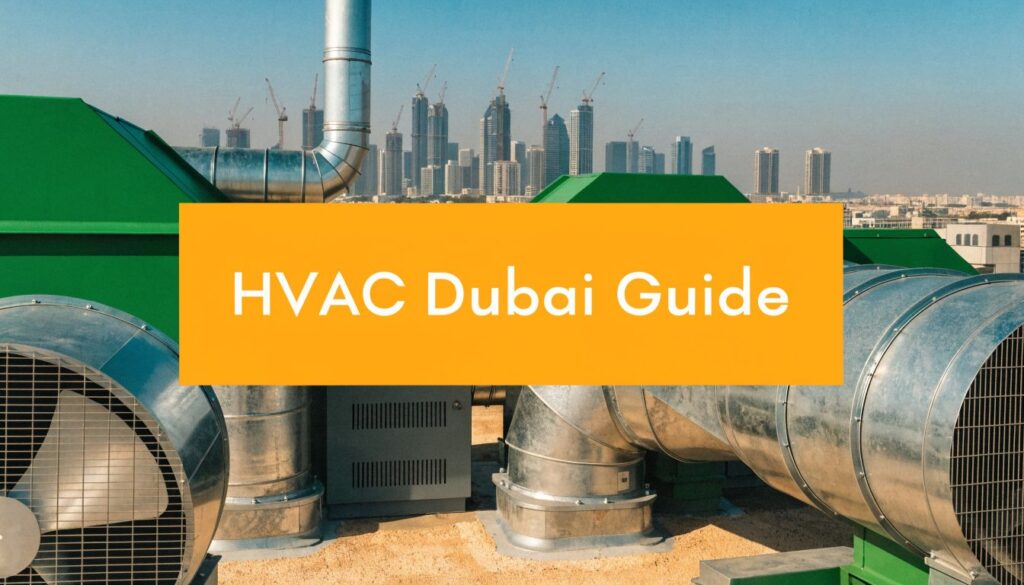
HVAC Dubai decisions usually land on the board table only after something has already gone wrong. A tenant complaint escalates. A hotel floor loses comfort during peak occupancy. A DEWA bill jumps without a clear operational explanation. Procurement receives three maintenance quotes that appear similar on price but are not similar on scope, risk, or lifecycle impact. That’s the context for hvac dubai. In this market, cooling isn’t a convenience line item. It sits directly inside business continuity, compliance exposure, tenant retention, and asset value protection. Dubai’s climate, dust loading, humidity cycles, and regulatory expectations make HVAC strategy a financial decision as much as an engineering one. Table of Contents Executive Summary and Introduction The Operational Context for HVAC in Dubai Core HVAC Services A Technical Breakdown Installation and retrofitting Preventive maintenance Corrective and reactive maintenance Comparing Maintenance Models AMC vs Reactive How the cost logic actually differs A practical comparison matrix Decoding HVAC Costs and Budgeting in Dubai What really drives HVAC cost A budgeting method that holds up under scrutiny SLA and Vendor Selection A Procurement Checklist Vendor questions that matter SLA clauses that reduce disputes Technology for OPEX Reduction and Downtime Mitigation Why visibility changes maintenance outcomes Where technology fits in real operations Energy Efficiency and Asset Lifecycle Planning When to keep repairing and when to retrofit Why system efficiency changes the asset plan Sample HVAC Preventive Maintenance Schedule for Dubai Assets Frequently Asked Questions about HVAC in Dubai Executive Summary and Introduction Dubai asset owners don’t need another generic overview of air conditioning. They need a framework for deciding how to control OPEX, defer avoidable CAPEX, and reduce operational risk without under-maintaining critical systems. The market itself signals why this matters. The UAE HVAC market, with Dubai as its largest hub, is projected to reach USD 3.31 billion in 2025 and grow to USD 5 billion by 2032, driven by major investment in towers, airports, tourism assets, and sustainability regulation under the Energy Strategy 2050 and Green Building Regulations, according to UAE HVAC market analysis. More demand means more systems, more service vendors, and more room for poor procurement decisions. For boards and senior operators, the wrong HVAC strategy usually shows up in four places: Unstable OPEX from emergency call-outs and repeat failures Hidden CAPEX acceleration when neglected assets reach replacement early Compliance risk where maintenance records and system condition don’t support inspections Occupant impact through comfort complaints, IAQ concerns, and downtime Board-level rule: Cheap maintenance isn’t the contract with the lowest fee. It’s the model that produces the lowest total operational cost over the asset’s service life. A sound HVAC decision in Dubai depends on matching service scope, contract structure, SLA design, technology, and retrofit planning to the building’s risk profile. Office towers, hotels, retail centres, and mixed-use communities don’t carry the same failure cost. They shouldn’t be maintained under the same logic either. The Operational Context for HVAC in Dubai At 3:00 p.m. in August, a comfort complaint in Dubai is rarely just a comfort complaint. In a hotel, it becomes reputational risk. In an office tower, it turns into tenant escalation and possible fit-out claims. In a retail asset, it hits dwell time and revenue the same day. HVAC in Dubai operates as a business continuity system, and boards should budget and govern it that way. The local operating conditions are hard on plant. High ambient temperature, sustained humidity, airborne dust, and long annual run hours push equipment far outside the assumptions many owners still use when they buy low-cost maintenance. The result is familiar. Higher static pressure from dirty filters, reduced heat transfer across fouled coils, unstable humidity control, nuisance trips, and compressor stress during peak demand windows. That has direct financial consequences. Poor HVAC discipline does not stay inside the maintenance budget. It shows up as excess energy use, more frequent reactive attendance, premature component replacement, shorter asset life, and avoidable tenant churn. For asset owners focused on NOI, this is an OPEX control issue first and a technical issue second. Dubai also changes the risk profile of deferred work. A missed coil cleaning cycle or weak controls calibration in a mild climate may only reduce efficiency. In Dubai, the same lapse can push a system into visible failure during occupied hours. That is why maintenance intervals, spare parts policy, and response SLAs need to be set against seasonal load and occupancy criticality, not copied from a generic annual contract template. Three pressures deserve board attention. Thermal stress on continuously operating equipmentHVAC systems in Dubai carry long operating hours and narrow tolerance for underperformance. Weak commissioning, poor air balancing, or neglected condensers and evaporators usually translate into higher kWh consumption before they show up as breakdowns. Dust loading and faster fouling ratesFilters, coils, strainers, and condensate systems degrade faster in this market. If service scope does not account for local fouling rates, airflow drops, indoor air quality declines, and fan and compressor energy rises. Auditability and compliance exposureOwners need maintenance records that stand up to internal audit, ESG reporting, insurer scrutiny, and municipal expectations. A contractor that cannot document readings, corrective actions, and repeat-failure history creates governance risk, not just engineering risk. Communication discipline matters too. During service interruptions, facilities teams still need a documented trail for tenant notices, technician dispatch, and access coordination. Teams that handle this manually often tighten response workflows by text-enabling your business landline, especially across larger portfolios where speed and traceability affect SLA performance. The operating context in Dubai is clear. HVAC decisions should be made on failure consequence, energy exposure, and asset preservation value. Owners who treat cooling as a commodity service usually end up paying for it twice. First through unstable OPEX, then through earlier CAPEX. Core HVAC Services A Technical Breakdown Procurement often receives proposals for “HVAC service” that appear broad enough on paper but differ materially in execution. The first control is to separate service categories properly. Installation and retrofitting This scope covers new system installation, equipment replacement, controls upgrades, testing,