A Guide to Preventive IT Maintenance for UAE Facilities
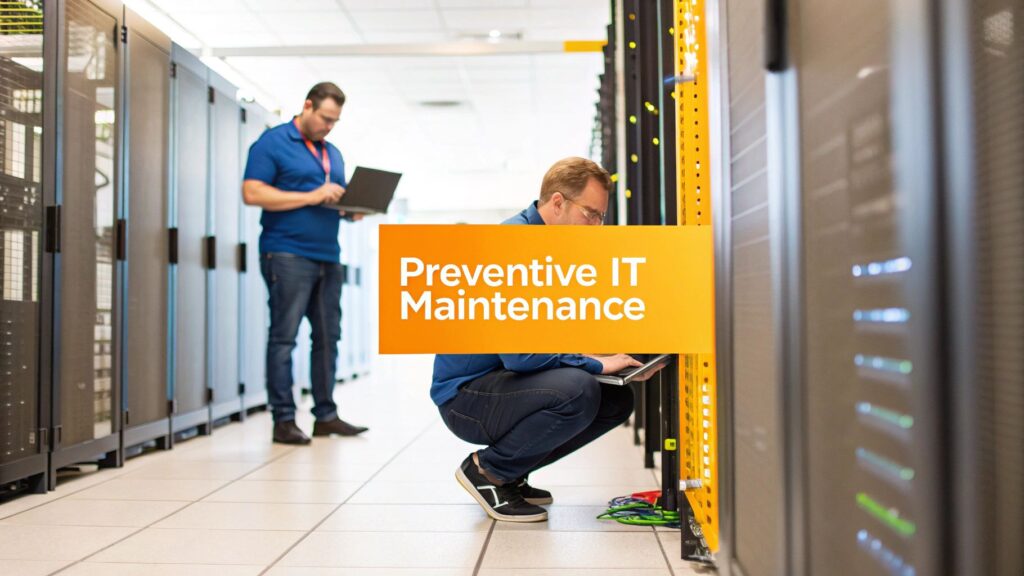
Preventive IT maintenance is not merely about scheduled checks; it is a strategic shift from reactive firefighting to proactive future-proofing. For any facility in Dubai or the UAE, this means moving away from the costly chaos of unexpected failures towards a structured program of planned services on your IT infrastructure to maintain its health and reliability. This proactive approach is essential for controlling costs, extending asset lifecycles, and ensuring business continuity. Shifting From Reactive Fixes to Proactive IT Health For many years, the "break-fix" model was the operational default: a system fails, an emergency repair is requested, and a premium is paid for the urgent fix. For modern facilities across Dubai and the UAE, this is no longer a viable strategy. It creates a cycle of unpredictable downtime and even more unpredictable costs. A structured preventive IT maintenance program reframes upkeep not as an expense, but as an investment in operational stability. For property managers, procurement teams, and engineering leaders, the logic is clear. It replaces sudden, high capital expenditures (CAPEX) for emergency equipment replacement with a steady, predictable operational expenditure (OPEX). This financial control is critical for budgeting and resource allocation in the competitive UAE market. To fully grasp the financial implications, it is useful to compare the two models side-by-side. While a reactive approach may appear less expensive on a monthly basis, the long-term total cost of ownership tells a different story. Preventive vs. Reactive IT Maintenance: A Cost-Benefit Analysis for UAE Facilities This table provides a direct comparison between the two maintenance models, focusing on key decision-making criteria for facility and asset managers in the UAE. Decision Factor Reactive Maintenance (Break-Fix Model) Preventive Maintenance (Scheduled Model) Budgeting Unpredictable. Costs are variable and spike during emergencies, creating CAPEX shocks. Predictable. Fixed monthly or annual costs (OPEX) for simplified budgeting. Downtime High and unplanned. Failures occur at peak operational times, halting business. Minimal and planned. Maintenance is scheduled during off-peak hours (e.g., 2 AM – 5 AM) to avoid disruption. Asset Lifespan Shorter. Constant stress and emergency fixes lead to premature hardware failure (typically 20-30% shorter). Longer. Regular care extends the life of servers, network gear, and UPS systems, maximizing the initial investment. Total Cost Higher over the long term due to premium emergency rates, replacement costs, and operational losses. Lower over the long term (often by 12-18%) by avoiding major failures and extending asset life. Operational Risk High. Constant risk of data loss, security breaches, and business interruption. Low. Proactive patching, backups, and monitoring mitigate risks before they escalate. Tenant/Guest Impact Negative. Unreliable WiFi, BMS failures, and system outages lead to complaints and potential contract terminations. Positive. Consistent uptime and reliable services enhance satisfaction and retention. Ultimately, the break-fix model is a gamble on asset reliability. A preventive model is a calculated strategy that delivers returns through enhanced reliability, efficiency, and financial predictability. Mitigating UAE-Specific Operational Risks The unique environmental conditions in the UAE pose specific threats to IT equipment, which a robust preventive plan must address. These are not minor inconveniences; they can cause catastrophic hardware failure. Extreme Heat: High ambient temperatures place immense stress on cooling systems in server rooms and data closets. If HVAC units, server fans, and ventilation are not performing at 100% capacity, heat-related hardware failure is imminent. Regular maintenance ensures cooling systems are calibrated for Dubai's climate. Dust and Sand: Fine airborne dust infiltrates sensitive equipment, clogging fans, coating components in an insulating layer, and leading directly to overheating. Scheduled, professional cleaning of IT environments and hardware is a non-negotiable risk mitigation task. Humidity Fluctuations: High humidity, particularly in coastal areas, can cause condensation and corrosion on delicate electronic components. Preventive checks verify that environmental controls and dehumidifiers are functioning within specified tolerances (e.g., 40-60% Relative Humidity) before corrosion occurs. A proactive maintenance strategy directly confronts these regional challenges. It transforms environmental vulnerabilities from potential crises into manageable operational tasks, safeguarding critical infrastructure against conditions that can silently degrade performance and shorten asset lifespan. The market is reflecting this shift. The UAE's predictive maintenance market, which encompasses advanced IT solutions, was valued at USD 230.3 million in 2023 and is projected to reach USD 1,435.6 million by 2030. This growth indicates a widespread move away from reactive chaos toward proactive control. To understand the specifics, you can discover more insights about these UAE market trends and their drivers. Embracing preventive IT maintenance is about ensuring operational uptime. For a hotel, it means guest WiFi, booking systems, and access controls are always functional. For a commercial tower, it ensures building management systems (BMS), security cameras, and tenant internet are stable. This proactive stance protects revenue, enhances tenant satisfaction, and solidifies a property's reputation for reliability. Building Your Preventive IT Maintenance Framework A robust preventive IT maintenance program must be built upon a detailed, comprehensive inventory of every critical IT asset within a facility. This is the foundational step; without it, any maintenance plan is based on guesswork. For a commercial tower in Dubai, this involves mapping everything from the servers running the Building Management System (BMS) to the core network switches in the main distribution frame (MDF) room. It includes uninterruptible power supply (UPS) units and the entire CCTV server and storage array. For a hotel, the inventory must include point-of-sale (POS) servers, guest Wi-Fi controllers, and digital signage players. An unlisted asset is a blind spot and a potential point of failure. This process is not merely list-making. True asset management involves creating a single source of truth for the entire IT infrastructure through systematic tagging and documentation. The Importance of Asset Tagging and Documentation Proper asset tagging enables the tracking of each piece of equipment's entire lifecycle. An effective asset tag includes a unique ID, purchase date, and a QR code linking to its digital record. The digital record should contain: Asset Details: Make, model, serial number, and specific configurations. Location: Precise physical location (e.g., "Server Rack 12U, B2 Data Centre"). Maintenance History: A full log of every check, repair,