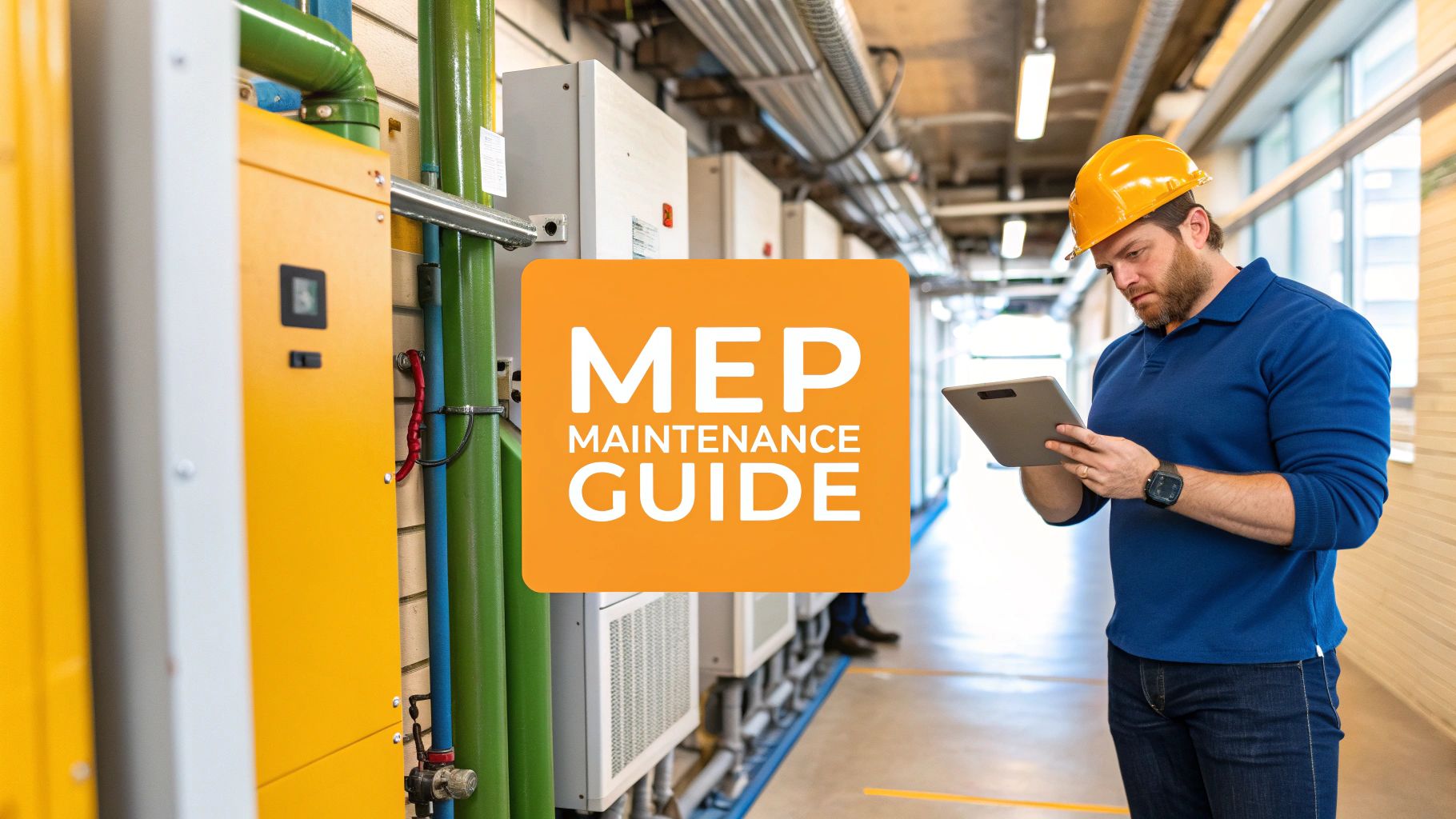
For property managers, facility managers, and asset owners in Dubai, selecting an MEP maintenance partner is a critical operational decision, not a procurement exercise. It’s the integrated, engineering-led management of a building's Mechanical, Electrical, and Plumbing systems. Partnering with a proficient mep maintenance company in dubai, uae ensures asset integrity, operational continuity, and predictable expenditure—all essential for maintaining asset value and tenant satisfaction.
What MEP Maintenance Means in Commercial Buildings
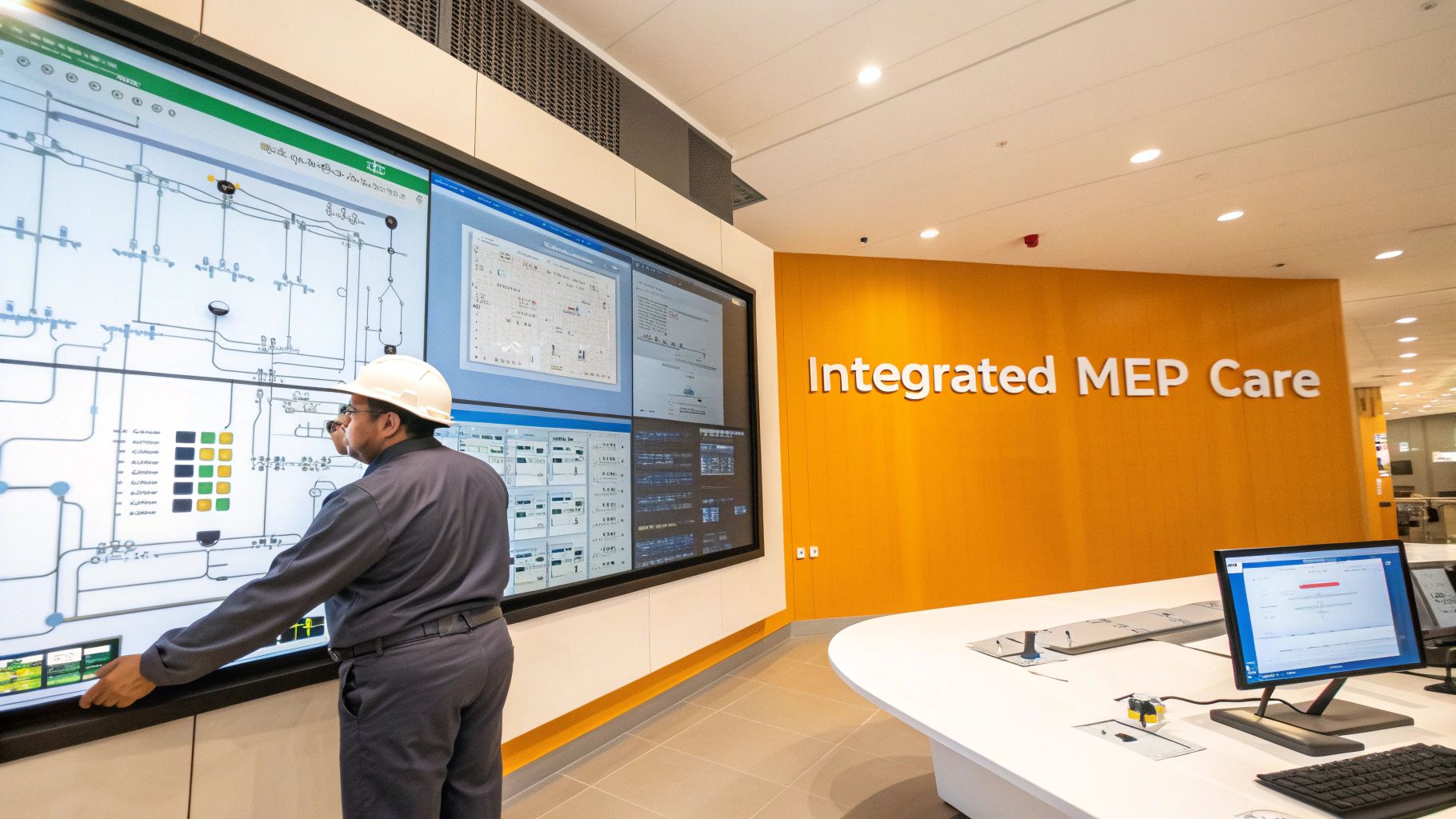
In a commercial asset, MEP systems are not discrete components; they are an interdependent ecosystem where a failure in one domain can trigger a cascading failure in another. An electrical trip can disable an entire HVAC system, while a concealed plumbing leak can compromise critical electrical infrastructure. Effective MEP maintenance requires a holistic understanding of these dependencies.
The scope of MEP maintenance covers three core disciplines:
- Mechanical: Primarily focused on Heating, Ventilation, and Air Conditioning (HVAC) systems. This includes chillers, pumps, Air Handling Units (AHUs), and ventilation fans—all vital for maintaining specified temperature, humidity, and air quality parameters.
- Electrical: Encompasses main distribution boards (MDBs), switchgear, lighting systems, backup power generators, and low-voltage systems such as fire alarms, access control, and building management systems (BMS).
- Plumbing: Involves the complete potable water supply network, drainage systems, water heaters, booster pumps, and all sanitary fixtures required for operational hygiene and functionality.
The Risks of Fragmented Maintenance
Engaging separate vendors for each discipline (e.g., one for HVAC, another for electrical) introduces significant operational risk. This fragmented approach creates accountability gaps, prolonged diagnostic times, and contractual disputes when a fault involves multiple systems.
For example, an HVAC unit failure could stem from a mechanical fault or an electrical supply issue. With two separate contractors, diagnostic efforts can devolve into finger-pointing, escalating downtime and associated costs.
A unified MEP provider offers single-point responsibility for diagnostics and resolution. This integrated approach ensures root-cause analysis is performed efficiently, preventing recurring issues and minimising operational disruption.
For professional environments like commercial offices, operational continuity is paramount. A unified maintenance strategy delivered by a professional mep maintenance company in Dubai, UAE is fundamental to protecting asset value and ensuring a safe, compliant, and fully functional environment.
Why MEP Maintenance Is Critical in Dubai’s Operating Conditions
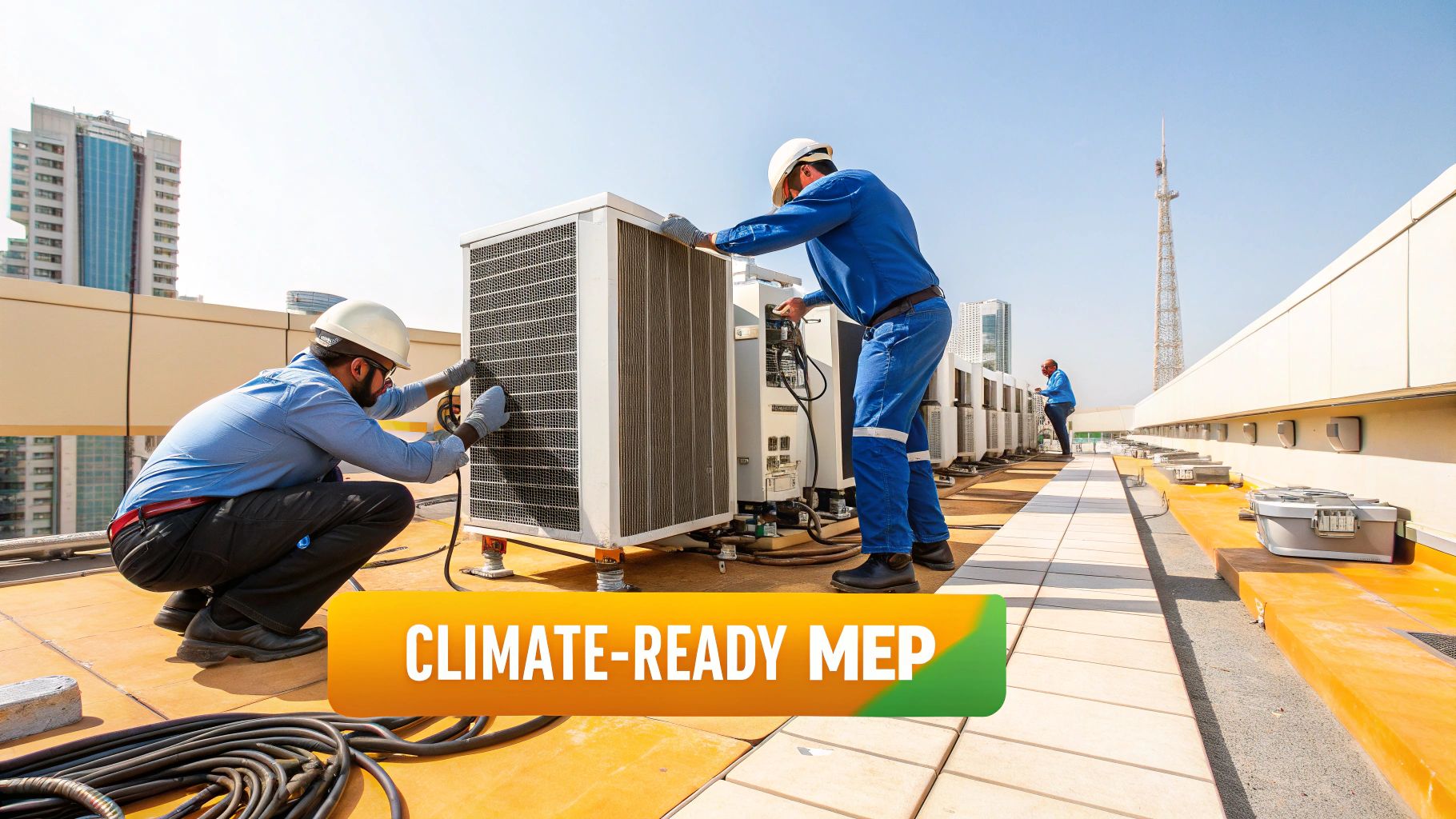
The unique combination of extreme climate, continuous occupancy, and stringent regulations in Dubai makes MEP maintenance a core strategic function rather than a simple operational cost. Neglecting these local factors leads to accelerated asset degradation, regulatory non-compliance, and significant business interruption.
Climate Stress and Asset Lifecycle Impact
The primary operational challenge is the climate. HVAC systems operate under extreme load for over eight months of the year, with ambient temperatures regularly exceeding 45°C alongside high humidity. This environment directly impacts MEP assets by causing:
- Accelerated wear on mechanical components like compressors, fan motors, and bearings.
- Increased risk of refrigerant leaks due to high operating pressures.
- Elevated energy consumption as systems run at or near peak capacity for extended periods.
- Performance degradation from sand and dust accumulation, which obstructs filters and coils.
Without a structured, preventive maintenance schedule, the probability of a critical system failure during peak summer months increases significantly. Learn more about HVAC maintenance scheduling in our detailed guide.
Continuous Occupancy and Regulatory Expectations
Dubai's commercial properties—from Grade-A office towers to luxury hotels and large-scale retail centres—operate continuously. In these high-stakes environments, unplanned downtime is not a viable option. A single chiller failure can result in direct revenue loss, tenant disputes, and reputational damage.
A poorly maintained chiller doesn't just waste energy; its premature failure represents a significant, unplanned capital expenditure. Proactive maintenance is a direct investment in asset preservation and operational continuity.
Furthermore, regulatory bodies like Dubai Municipality and DEWA enforce strict standards for energy efficiency, water conservation, and life safety systems. Non-compliance can lead to substantial fines and operational penalties. Adherence to these standards is only achievable through regular, documented maintenance performed by a qualified MEP maintenance company in Dubai, UAE. A reactive "break-fix" approach is operationally and financially unsustainable in this market.
Preventive vs Reactive MEP Maintenance
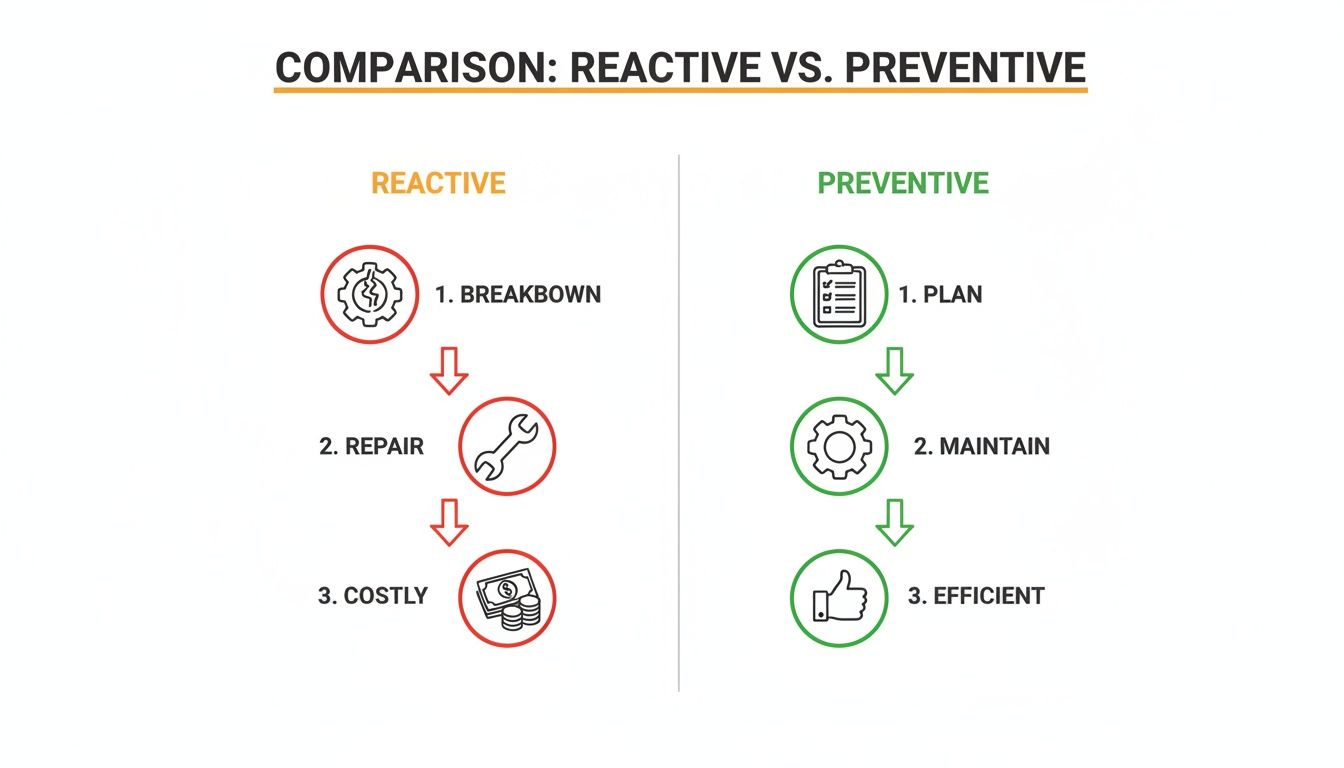
For commercial properties in Dubai, the choice between a reactive and preventive maintenance model directly determines operational stability, asset longevity, and total cost of ownership. The reactive, or "break-fix," model is an inherently flawed strategy for critical assets. It involves taking action only after a component has failed, leading to emergency call-out fees, premium costs for expedited parts, and significant secondary costs from business interruption.
How Preventive Maintenance Reduces Downtime
A preventive maintenance model shifts the focus from emergency repair to scheduled, data-driven servicing. This approach involves regular inspections, cleaning, calibration, and component replacement based on manufacturer specifications and operational data. The primary benefit is control. By identifying and rectifying potential faults before they escalate, preventive maintenance can reduce unplanned downtime by an estimated 70-75% and lower overall maintenance costs by 12-18% compared to a purely reactive strategy. For a deeper dive, explore a cost analysis of preventive vs reactive maintenance.
Importance of Documentation & Root-Cause Analysis
An effective preventive program is built on meticulous documentation. Every service visit, inspection finding, and component replacement must be logged in a centralised system, creating a detailed service history for each asset. This data is crucial for moving beyond simple repairs to perform root-cause analysis. It enables technicians to identify recurring issues and address the underlying problem rather than repeatedly treating the symptom.
Without detailed records, maintenance is just guesswork. True preventive care uses data to move from fixing symptoms to solving the underlying problem.
Standard Operating Procedures (SOPs) are essential for ensuring consistency. For example, well-defined SOPs for electrical maintenance guarantee that every inspection is performed with the same rigour, ensuring compliance and safety.
Comparing Maintenance Models: Preventive vs. Reactive
| Metric | Preventive Maintenance Model | Reactive Maintenance Model |
|---|---|---|
| Cost Profile | Predictable, budgeted OPEX. Lower lifetime costs. | Unpredictable, volatile expenses. High emergency repair costs. |
| Downtime | Scheduled and minimised. Typically occurs during off-peak hours. | Unplanned and disruptive. Occurs at the worst possible times. |
| Asset Lifespan | Maximised through regular care and early fault detection. | Significantly shortened due to operation until failure. |
| Safety & Compliance | High. Regular checks ensure systems meet safety standards. | Risky. Undetected faults can create hazardous conditions. |
| Resource Planning | Efficient. Labour and parts are scheduled in advance. | Inefficient. Scrambling for technicians and parts leads to delays. |
How to Evaluate an MEP Maintenance Company in Dubai
Selecting the right MEP maintenance company in Dubai, UAE is a due diligence process, not a price comparison. The goal is to identify a partner capable of protecting asset value and ensuring operational continuity. A structured evaluation framework helps cut through sales pitches and focus on core capabilities.
Engineering Capability
Assess whether the company relies on in-house certified technicians versus extensive subcontracting. An over-reliance on subcontractors can lead to inconsistent service quality, communication gaps, and a lack of accountability during emergencies. A credible provider maintains a core team of directly employed, multi-skilled engineers and technicians for key MEP disciplines, ensuring better control over workmanship and faster mobilisation.
SLA Clarity
The Service Level Agreement (SLA) must contain clear, quantifiable, and tiered response times based on fault criticality. Vague commitments are a red flag. Look for specific guarantees:
- Critical Faults (e.g., total power loss, major leak): Response time of 1-2 hours.
- Urgent Faults (e.g., partial system failure): Response time of 2-4 hours.
- Routine Calls: Acknowledged and scheduled within 24 hours.
An inability to commit to these benchmarks in writing exposes your facility to unacceptable risk.
Reporting & Escalation
Modern MEP maintenance is data-driven. A prospective partner should use a Computerised Maintenance Management System (CMMS) or similar digital platform. This technology is non-negotiable for providing real-time job updates, photographic evidence of work, and a complete audit trail. Manual, paper-based reporting is inefficient and lacks transparency.
Compliance Readiness
Verify the company's trade licenses, accreditations, and familiarity with local regulations from authorities like Dubai Municipality, DEWA, and Dubai Civil Defence. The provider must demonstrate a proven ability to maintain systems in a compliant manner, including maintaining necessary documentation for inspections.
Asset History Tracking
Effective maintenance depends on a detailed history of each asset. The provider’s system should track every fault, repair, and service, allowing for trend analysis and informed decisions on capital replacement.
A provider that cannot offer a detailed, accessible asset history is not equipped for true lifecycle management. Transparent reporting through a digital platform is a non-negotiable indicator of a modern, accountable MEP partner.
When evaluating MEP contractors in Dubai, these criteria provide a robust framework for identifying a partner focused on long-term value and operational excellence.
Common Mistakes Building Owners Make When Selecting MEP Contractors
Selecting an MEP partner is a decision with long-term consequences. Certain common mistakes during the procurement process can lead to operational disruption, escalating costs, and contractual disputes.
Choosing Based on Price
The most frequent error is selecting a provider based solely on the lowest price. Unusually low quotes often indicate a limited scope of work, use of non-genuine spare parts, or undertrained technicians. The initial saving is quickly eroded by the high cost of frequent breakdowns, emergency call-out fees, and the secondary costs of business interruption.
A price-driven selection process without rigorous scope validation is the number one cause of failed MEP contracts. The true cost of a service is revealed not in the quotation, but in the operational disruptions and hidden fees that follow.
No Scope Clarity
Accepting a contract with an ambiguous scope of work creates a foundation for future disputes. Vague terms like "chiller maintenance" are insufficient. A comprehensive contract must itemise every included task, frequency, and responsibility for all critical assets. Without this clarity, essential services may be deemed "out-of-scope" during a failure, resulting in unexpected charges and extended downtime.
No Performance Tracking
Failing to establish and monitor Key Performance Indicators (KPIs) makes it impossible to hold a contractor accountable. Without measurable goals, performance is subjective. Essential KPIs for an MEP contract should include:
- Asset Uptime: Target >99.5% for critical systems.
- First-Time Fix Rate: Target >85% to ensure problems are solved, not patched.
- Preventive Maintenance Completion Rate: Target 100% adherence to the agreed schedule.
Without these benchmarks, service quality can decline over time due to a lack of consequences for underperformance.
When a Structured AMC Becomes Necessary
While ad-hoc, reactive repairs may seem cost-effective for small facilities, this approach becomes untenable for most commercial, hospitality, or large-scale residential properties in Dubai. A structured Annual Maintenance Contract (AMC) becomes an operational necessity when certain thresholds of scale and risk are crossed.
Scale Thresholds
Managing more than 10 major assets (chillers, generators, AHUs) or a facility exceeding 50,000 square feet on an ad-hoc basis is operationally inefficient. At this scale, tracking service histories, managing invoices, and maintaining a clear view of asset health becomes an administrative burden.
Risk Triggers
The decision is also driven by the cost of failure. For facilities with 24/7 operations (hotels, data centres, hospitals) or high-value tenants with zero tolerance for disruption, any unplanned downtime has immediate financial and reputational consequences.
An Annual Maintenance Contract transforms volatile, unpredictable repair costs into a fixed, budgetable operational expenditure (OPEX). This shifts the financial model from risk assumption to risk management.
An AMC formalises the partnership with an mep maintenance company in dubai, uae, establishing guaranteed response times, documented preventive schedules, and a shared objective of asset preservation. The relationship evolves from transactional break-fix services to a strategic partnership focused on maximising asset lifecycle and ensuring operational stability. The decision is clear: when the potential cost of an unexpected failure outweighs the cost of planned maintenance, a structured contract is the only responsible path forward.
Conclusion
MEP maintenance in Dubai is an operational discipline critical to asset value protection and business continuity. The extreme climate and high tenant expectations demand an engineering-led, preventive approach. An informed selection process, focused on technical capability, SLA clarity, and transparent reporting, is paramount. Building owners and facility managers who prioritise long-term value and operational resilience over short-term cost savings will secure a partnership that safeguards their investment and ensures a safe, compliant, and continuously operational facility.
FAQs
What does MEP maintenance include in commercial buildings?
MEP maintenance in commercial buildings covers the scheduled servicing, repair, and optimisation of all Mechanical (HVAC), Electrical (power, lighting), and Plumbing (water supply, drainage) systems. A professional mep maintenance company in Dubai, UAE ensures these interdependent systems function cohesively to maintain operational continuity, safety, and comfort.
How often should MEP systems be maintained in Dubai?
Due to Dubai's harsh climate, critical HVAC systems require major servicing at least twice annually, with monthly filter checks. Electrical distribution boards and plumbing networks should be inspected quarterly or bi-annually. The exact frequency depends on asset age, usage intensity, and manufacturer recommendations detailed within the maintenance plan.
What is the difference between MEP maintenance and an AMC?
MEP maintenance refers to the physical, technical tasks of servicing and repairing equipment. An Annual Maintenance Contract (AMC) is the formal service agreement that defines the scope, frequency, service levels (SLAs), and cost of these maintenance activities over a one-year period, transforming them into a structured, predictable service.
Why is preventive MEP maintenance important?
Preventive maintenance is critical for minimising unplanned equipment failures and the associated costly downtime. It extends asset lifespan, improves energy efficiency, reduces overall operational costs, and ensures compliance with Dubai's strict safety and building regulations. It shifts facility management from a reactive, crisis-driven mode to a proactive, strategic function.
For an engineering-led approach to protecting your commercial assets, SnapFixNow provides structured MEP services in Dubai with transparent reporting and SLA-driven performance.