A UAE asset owner usually sees the same pattern during FM procurement. One proposal is cheaper but thin on technical detail. Another offers integrated scope, call centre support, and broad staffing, yet the commercial schedule hides where risk lies. A third looks strong on HVAC and MEP but leaves soft services and compliance coordination outside the contract boundary.
That’s where inaya facilities management becomes a useful case study. Not because a buyer should copy one provider model blindly, but because a large integrated FM operator makes the trade-offs easier to inspect. If you can deconstruct how a scaled provider is built, how it prices risk, and how it controls delivery across technical and soft services, you can evaluate almost any FM bid in Dubai with less ambiguity.
Table of Contents
- An Engineering Framework for Evaluating FM Providers in the UAE
- Deconstructing the Model of Inaya Facilities Management
- Evaluating Core Technical and MEP Service Capabilities
- Analyzing Performance Frameworks and Contractual SLAs
- Financial Trade-Offs Integrated vs Specialized FM Models
- A Practical Framework for Procuring FM Services in Dubai
- Frequently Asked Questions
An Engineering Framework for Evaluating FM Providers in the UAE
Most FM buying errors in the UAE don’t start with price. They start with a weak definition of scope, an unclear operating model, and contract language that doesn’t separate preventive work from reactive labour. In mixed-use towers, hospitality assets, and commercial portfolios, that gap usually shows up later as avoidable rectification cost, delayed response, or repeated failures in the same plant.
What procurement teams usually miss
The first test isn’t whether a provider can maintain a building. Almost any bidder will say yes. The first test is whether the bidder’s proposal explains who performs the work, how the scope is sequenced, what sits inside the monthly fee, and where specialist subcontracting begins.
A serious FM review should break the bid into four layers:
- Service architecture: hard FM, soft FM, specialist systems, and compliance support should be separated clearly.
- Labour model: in-house technicians, mobile teams, and outsourced trades carry different delivery risk.
- Control systems: work order closure, escalation chains, and reporting cadence matter as much as manpower.
- Commercial structure: fixed fee, consumables exclusions, major spare treatment, and variation approval rules often decide whether the contract remains stable after mobilisation.
Practical rule: If a provider can’t explain failure ownership at asset level, it probably can’t control lifecycle cost at portfolio level.
This is also where workforce visibility matters. Buyers increasingly want evidence that scheduling, attendance, and mobilisation are organised through structured systems rather than informal supervisor coordination. For teams benchmarking delivery controls, a review of best workforce management software options is useful because it clarifies what mature labour planning and field visibility should look like in practice.
A practical screen for serious bidders
In Dubai procurement, buyers often spend too much time comparing rates and too little time comparing operating assumptions. A better first-pass screen is whether the provider can support the building type you own. A residential community, a hospitality tower, and an industrial site don’t fail in the same way.
Use this short screen before commercial negotiation:
- Asset fit. Ask whether the bidder has an operating model suited to your asset category and plant criticality.
- Technical boundaries. Confirm exactly which systems are included in routine maintenance and which require specialist call-out.
- Reporting discipline. Require sample dashboards, sample PPM plans, and a rectification approval workflow.
- Reference logic. Don’t ask only for logos. Ask for comparable building conditions and service complexity.
If your team is benchmarking the wider UAE market structure before tendering, a practical starting point is reviewing how an FM company landscape in the UAE is typically segmented by service model rather than by branding.
Deconstructing the Model of Inaya Facilities Management
The integrated model becomes easier to understand when viewed through a real operator. Inaya facilities management was established in 2010 as part of the Belhasa Group and public business data associates it with annual revenue of $147.9 million, a workforce of 570 to 601 staff, and an operating footprint of more than 549 hectares across the UAE, according to public company data on Inaya Facilities Management Services.

What the integrated model looks like in practice
An integrated FM structure combines hard services such as HVAC, electrical, plumbing, MEP, and civil maintenance with soft services such as cleaning, landscaping, pest control, and security under one commercial umbrella. The buyer gets one management interface, one escalation route, and usually one reporting framework.
That sounds administratively simple, but the engineering question is different. Can one provider manage technical depth without diluting specialist quality? Scale helps, but only if the operator has real coordination discipline between helpdesk, site teams, supervisors, and subcontract specialists.
In Inaya’s public profile, that scale is visible not only in staffing and revenue but also in service breadth. Public information also links the company to operations from Jebel Ali and to work on projects such as The Gardens. For a buyer, the significance isn’t corporate size on its own. It’s whether the provider has enough density to absorb peaks in reactive demand without destabilising planned maintenance elsewhere.
Why this matters to an asset owner
A large integrated provider changes the risk map in three ways.
First, it can reduce handoff failure. When a leak affects finishes, access, housekeeping, and MEP response, a fragmented vendor setup often creates argument over responsibility. An integrated model can shorten that chain.
Second, it changes supervision economics. One provider can allocate supervisors, call handling, procurement support, and reporting over a wider base of contracts. That can improve consistency, but it can also hide under-resourcing if the site-level plan is vague.
Third, it alters commercial interpretation. Buyers often mistake broad scope for complete coverage. They aren’t the same thing. A bundled contract may still exclude major spares, specialist testing, statutory services, or third-party certifications.
The right question isn’t “Is integrated FM better?” It’s “Does this integrated model match the operational complexity of this asset?”
A consultant reviewing a bid from a provider of this size usually looks for one thing above all else. Evidence that scale translates into controlled execution rather than just larger administration. Without that, the buyer may be paying for organisational breadth while still carrying operational risk at asset level.
Evaluating Core Technical and MEP Service Capabilities
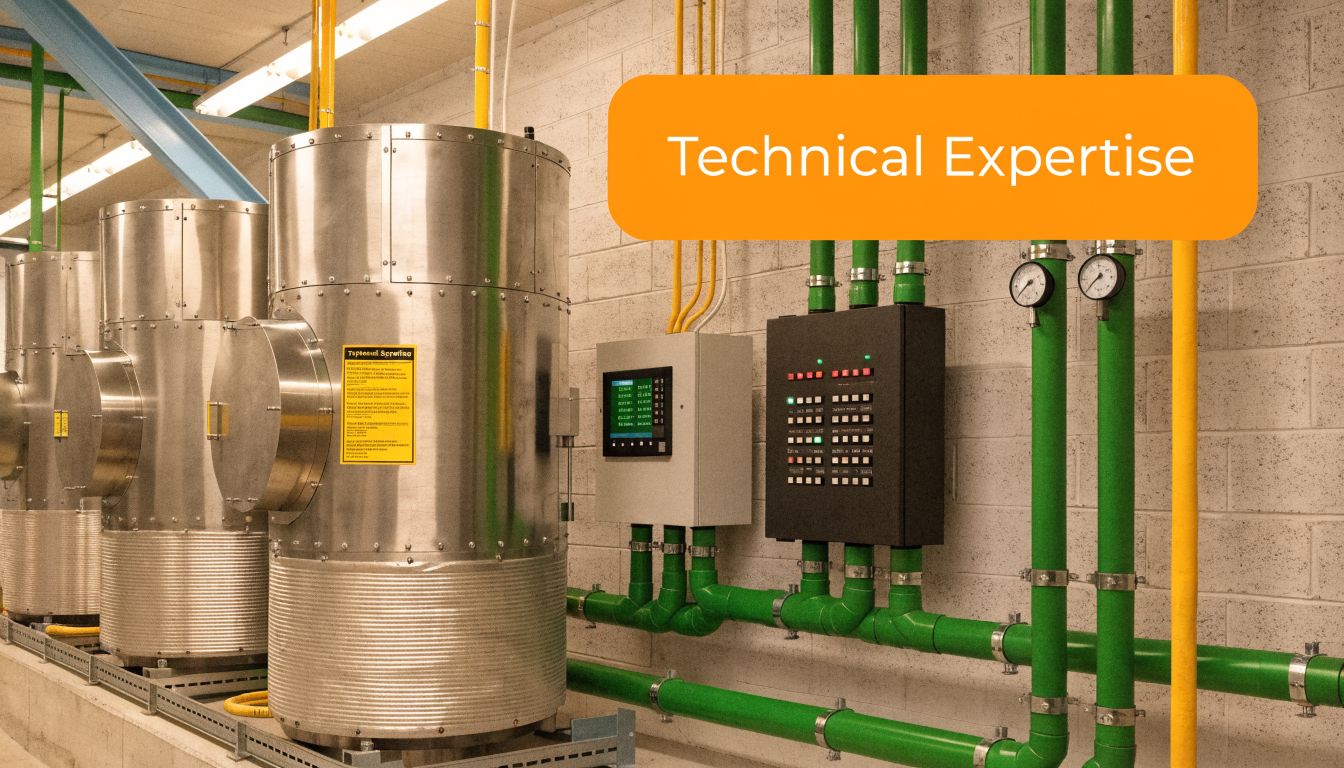
The UAE climate exposes weak hard FM quickly. Dust loading affects filtration and heat exchange. Humidity cycles strain controls and condensate management. Long cooling seasons push chillers, pumps, AHUs, FCUs, and electrical distribution harder than many building owners expect when they compare contracts only on labour count.
How to test hard FM depth
For MEP-heavy facilities, public case material associated with Inaya states that integrated FM providers managing footprints of over 549 hectares can achieve 15 to 25% energy efficiency gains through optimised preventive maintenance and system tuning in UAE conditions, as described in the Ameyo case study on Inaya Facilities Management Services.
A buyer shouldn’t treat that as an automatic result. It’s a signpost. The operational point is that real savings usually come from method, not slogans. In practice, assess technical depth by asking for evidence of:
- Preventive logic. Does the PPM schedule reflect asset criticality, seasonal HVAC loading, and access constraints?
- Diagnostic capability. Can the team distinguish symptom repair from root-cause rectification in controls, pumps, valves, and airside systems?
- Trade coordination. Mechanical, electrical, BMS, and civil issues often sit in the same failure chain.
- Closeout quality. Photo-backed work orders, test readings, and cause notes matter more than generic completion remarks.
For buyers comparing vendors for MEP services in Dubai, the most useful differentiator is often not manpower size but whether the provider can explain how it handles recurring faults, seasonal tuning, and asset-history-based planning.
What UAE conditions do to weak maintenance models
Reactive models tend to look affordable at award stage because they defer labour intensity. In UAE buildings, that can become expensive. HVAC inefficiency, poor balancing, delayed strainers cleaning, neglected insulation, and weak controls calibration usually compound into comfort complaints, excess energy use, and repeated call-outs.
Hospitality and commercial assets have an extra layer of exposure. Faults become guest impact, tenant dissatisfaction, or trading disruption. In water ingress scenarios, FM teams also need a structured external response path for containment and reinstatement. Property managers dealing with those incidents often need practical commercial property water damage help alongside the FM contractor’s own emergency process.
Field note: In Dubai, the strongest hard FM teams don’t just restore operation. They document why the failure occurred, what temporary measure was used, and what permanent rectification is required.
That distinction matters when reviewing annual maintenance proposals. A labour-only contract can keep equipment running for a while. It often won’t protect lifecycle value unless the provider also has planning discipline, competent MEP supervision, and authority to escalate root-cause repairs before the next seasonal peak.
Analyzing Performance Frameworks and Contractual SLAs
A chiller trips at 2:10 p.m. in a Dubai mixed use tower. Retail tenants log comfort complaints within minutes, the FM helpdesk opens a ticket, and the provider reports "response achieved" after dispatching a supervisor. By 4:00 p.m., the plant is still unstable because the contract never defined whether response meant logging, attendance, diagnosis, temporary stabilisation, or rectification. That gap is not administrative. It is an operating risk with a financial consequence.
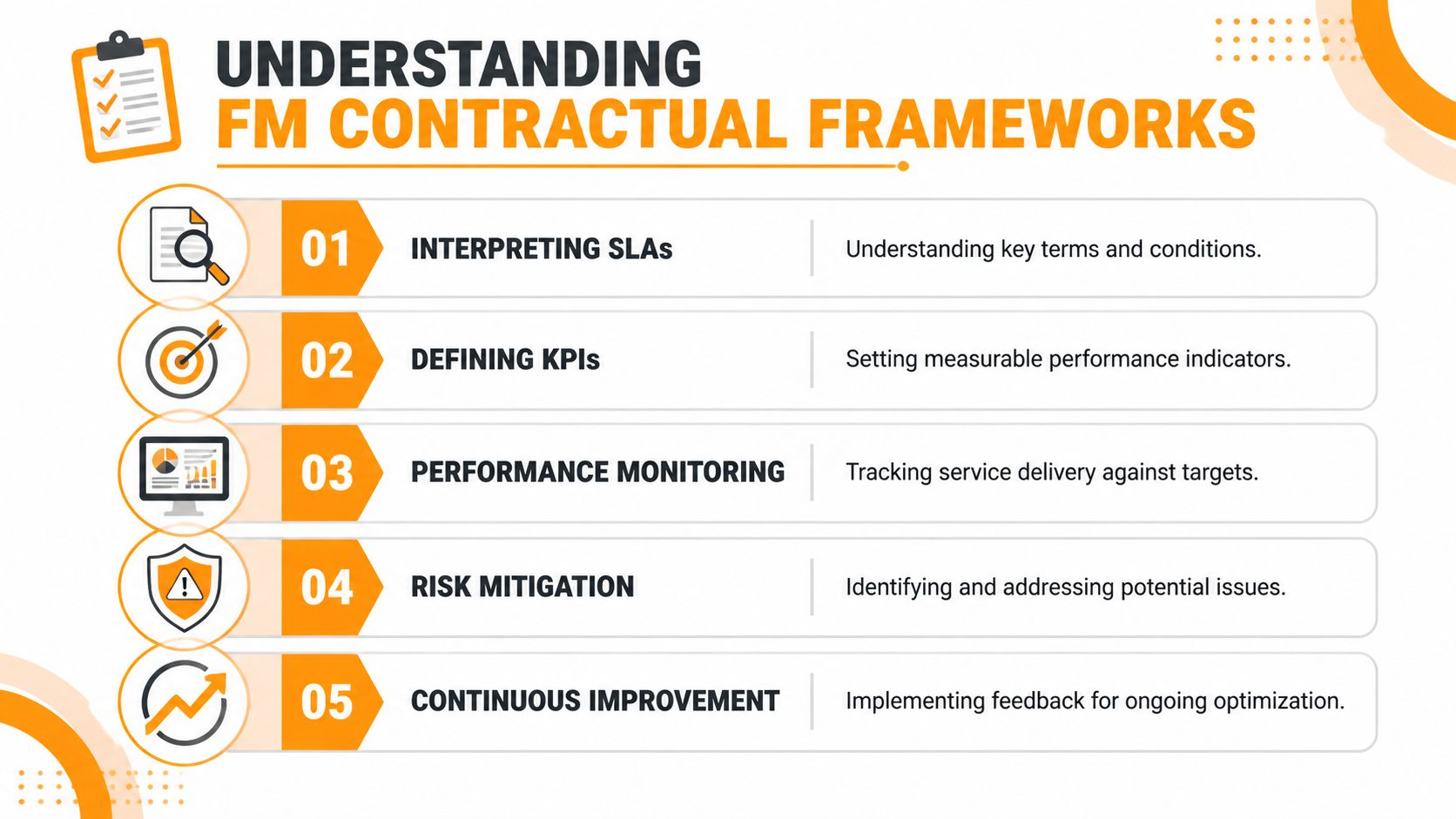
Well-drafted FM contracts assign four things with precision: trigger point, response obligation, evidence standard, and commercial consequence. Buyers evaluating a large integrated provider such as Inaya should test whether the SLA framework controls real failure modes at site level, not just reporting discipline at management level. Providers with scale often present polished dashboards. The stronger test is whether the contract closes the gap between a fault occurring and the asset being put back into a controlled state.
Which SLA clauses actually change outcomes
UAE FM contracts often reference emergency attendance targets for critical failures. The useful question is not whether a provider offers a fast headline response. It is whether the response matrix is tied to business impact, life safety exposure, and asset criticality. A four-hour target may be acceptable for one fault class and inadequate for another.
The contract should separate event categories clearly:
| Event type | What the contract should define | Buyer risk if omitted |
|---|---|---|
| Critical failure | Attendance threshold, temporary stabilisation requirement, named escalation route, client notification timing | Extended downtime, tenant impact, dispute over whether the provider acted in time |
| Urgent defect | Response window, diagnosis standard, quotation or approval path for parts, follow-up deadline | Repeat complaints, stalled rectification, growing backlog |
| Routine work | Planned service window, access rules, completion evidence, sign-off protocol | Poor visibility, weak audit trail, low confidence in completion quality |
Definitions carry as much weight as targets. If "attendance" means a technician arrived at the gate, the KPI can be met while the operational problem remains unresolved. If "closure" allows a helpdesk comment with no readings, photo evidence, or defect note, the buyer cannot tell whether the asset was repaired, reset, or left in temporary condition.
Many portfolios lose control in this specific area. The SLA appears tight on paper but measures administrative speed rather than technical outcome.
How to write enforceable accountability into the contract
An enforceable SLA works like a site instruction set. It should allow an owner, consultant, or internal audit team to test whether the provider complied without relying on verbal explanations after the event.
For buyers preparing integrated facility management annual maintenance contract scopes in Dubai, the service schedule should set out auditable mechanics, not broad service promises. That matters more in hospitality, commercial towers, healthcare, education, and mixed-use assets where one technical failure can create multiple consequences at once, comfort complaints, compliance exposure, revenue interruption, and reputational damage.
Use the contract checklist below to make those mechanics enforceable:
- Define cost boundaries precisely. Separate labour, consumables, minor materials, statutory testing, specialist subcontract works, and replacement parts.
- Tie PPM tasks to the asset register. Generic monthly or quarterly frequencies are weak unless they map to actual equipment, location codes, and capacity data.
- Set evidence rules for completion. Require readings, photographs, technician comments, and fault codes where applicable, especially for critical assets and repeat issues.
- Control rectification workflow. State quotation turnaround times, spending authority, temporary repair limits, and the escalation path when a permanent fix is deferred.
- Attach commercial consequences to performance failure. Service credits, corrective action plans, hold points, and repeated-failure triggers matter more than headline KPI tables.
A useful drafting test is simple. Could a new property manager, appointed mid-contract, read the SLA and run the site without relying on informal explanations from the incumbent FM team? If the answer is no, the document is still too vague.
The clauses buyers underweight
Three contract points are often treated as minor drafting issues even though they drive a large share of disputes.
First, measurement start points. The clock should identify whether response begins at ticket creation, automated alarm receipt, call centre acknowledgment, or client notification. Different start points can change monthly KPI results materially.
Second, exclusion language. Many integrated bids look competitive until exclusions shift practical risk back to the owner through specialist call-outs, parts thresholds, temporary access equipment, or after-hours attendance assumptions.
Third, repeat-fault logic. A contract that records each attendance as a separate success can hide chronic failure patterns. Better SLAs define a repeat fault window and require root-cause review, supervisory sign-off, or management escalation once the same asset fails again within a stated period.
Good FM contracts measure performance where operational risk first appears, then tie that measurement to evidence and consequence. That is how an SLA becomes a control mechanism rather than a reporting exercise.
Financial Trade-Offs Integrated vs Specialized FM Models
A Dubai asset owner reviews two bids for the same mixed-use portfolio. One comes in lower with a single monthly fee and broad scope language. The other is split across specialist packages, priced higher on day one, but clearer on staffing, parts logic, and technical accountability. The commercial gap looks simple. The risk allocation behind it is not.
Price differences between FM bids usually come from five variables: mobilisation assumptions, staffing density, subcontract reliance, exclusions, and the extent to which performance risk sits with the provider rather than the owner. Buyers who compare only the annual fee often miss the larger cost driver, which is how the contract behaves after the first service failure, major call-out, or disputed variation.
Where integrated pricing creates value
Integrated FM can work well when the asset base is broad, operating patterns are stable, and the owner wants one control point across hard and soft services. The savings case is rarely about cheaper technicians alone. It comes from reducing duplicated supervision, overlapping site attendance, multiple procurement workflows, and inter-vendor coordination time. For portfolios with similar buildings, that operating model can lower administrative drag and improve budget consistency. Buyers assessing that model can benchmark providers against this broader integrated facility management procurement approach in Dubai.
The strongest integrated bids usually share three traits. They show how central support functions reduce site overhead. They define which trades are self-performed and which are subcontracted. They also make the boundary between fixed fee and variable cost easy to audit.
A single-provider structure tends to suit owners that prioritize:
- Lower coordination effort across multiple service lines
- One reporting and escalation path for routine operations
- Faster cross-trade fault isolation where issues span MEP, fabric, and cleaning interfaces
- Consistent operating standards across a portfolio of similar assets
When specialized procurement earns its premium
Specialized procurement remains the better financial choice when one technical system carries outsized downtime, compliance, or tenant-revenue risk. In those cases, a higher contract sum may still be the lower-risk decision. A specialist or OEM-backed vendor can reduce diagnostic error, shorten repeat-fault cycles, and protect equipment life in ways a broad IFM structure may not match.
That is common in assets with complex HVAC controls, industrial processes, data-heavy environments, or aging plant that needs deep manufacturer knowledge. The owner takes on more coordination work, but gains clearer technical accountability at the system level.
The right comparison is not integrated versus specialized in the abstract. The right comparison is total cost to operate, supervise, and recover from failure.
Comparison of FM Procurement Models
| Criterion | Integrated FM Model (Single Provider) | Specialized Model (Multi-Vendor) |
|---|---|---|
| Contract structure | One umbrella agreement across multiple scopes | Multiple contracts split by discipline |
| Cost visibility | Cleaner headline fee, but exclusions and provisional sums need close review | Clearer pricing by trade, but harder to aggregate into one operating view |
| Management burden | Lower day-to-day coordination for the owner | Higher coordination, approval, and interface management effort |
| Root-cause ownership | Easier to assign where failures cross service lines | Disputes are more common at trade boundaries |
| Technical depth | Broad coverage. Quality depends on self-delivery capability and specialist oversight | Often stronger in narrow, high-skill disciplines |
| Flexibility | Easier to standardize service across a portfolio | Easier to replace one underperforming specialist without retendering all services |
| OPEX predictability | More stable if asset condition, scope limits, and parts rules are well defined | More variable where call-outs, overlap, and reactive work are frequent |
| Procurement risk | Low headline price can conceal service gaps or subcontract layering | Fragmentation can produce handoff failures and slower fault closure |
A practical test helps. If the building has moderate complexity, repeatable maintenance patterns, and no single system whose failure would materially disrupt operations, integrated FM often produces a cleaner cost base. If one system can stop business activity, trigger regulatory exposure, or damage tenant retention, ring-fencing that scope under a specialist contract is often financially rational even if the annual fee is higher.
Trade-off is between coordination cost and failure cost. Integrated FM reduces the first. Specialized procurement can reduce the second. Strong buyers model both before award.
A Practical Framework for Procuring FM Services in Dubai
Good FM procurement in Dubai is less about choosing a brand and more about reducing hidden risk before award. The cleanest process starts with the asset itself, not with vendor brochures.

A five-step procurement pathway
Start with a technical baseline. Build an asset register, identify critical systems, and separate mandatory compliance activities from routine maintenance. If that baseline is weak, every tender response will be hard to compare.
Then run a structured process:
Define service scope by asset type
A residential tower, office, hotel, and industrial facility need different attendance logic, access protocols, and maintenance sequencing.Issue a technical RFP, not just a commercial RFQ
Ask for staffing plans, site coverage assumptions, escalation matrices, sample reports, and subcontract disclosure.Interrogate the operating method
Review how the bidder handles PPM planning, reactive dispatch, spare parts approvals, permit coordination, and repeat-fault review.Visit a comparable live site
A reference visit reveals more than a proposal deck. Check plant room standards, logbooks, work order evidence, and housekeeping around technical spaces.Stress-test mobilisation
Ask how the provider handles takeover condition surveys, backlog identification, and the first seasonal HVAC peak after award.
In Dubai, mobilisation failure usually appears before technical failure. If the handover, asset data, and reporting setup are weak, the maintenance programme starts behind schedule.
Questions worth asking before award
Use pointed questions rather than generic capability requests:
- Which assets are excluded from the fixed fee, and why?
- When a defect repeats, who performs root-cause review and who approves permanent rectification?
- How are Civil Defense, municipality, and landlord compliance tasks documented?
- What is the escalation route if the site team can’t restore service within the response window?
- Which trades are in-house and which are routinely subcontracted?
This is usually where the most practical next step appears. In operation, these systems are commonly managed under structured maintenance arrangements that define attendance, preventive planning, and rectification approval before failure occurs. Whether the final model is integrated or specialised, the contract should make those mechanics visible.
Frequently Asked Questions
Q: What does inaya facilities management represent in procurement analysis?
A: It represents a large integrated FM model in the UAE. That makes it useful as a case study for buyers who want to understand how scale, bundled services, and contract structure affect operational risk.
Q: Is integrated FM always better than using several specialist contractors?
A: No. Integrated FM can reduce coordination burden and improve accountability across linked services. A specialised model can still make sense where one technical system carries outsized risk or requires narrower expertise.
Q: What should a Dubai asset owner check first in an FM proposal?
A: Check scope boundaries first. Confirm what is included in routine maintenance, what counts as specialist support, what materials are excluded, and how reactive rectification is approved. Many cost disputes start there.
Q: How important are response times in UAE FM contracts?
A: They’re important only if they’re defined properly. The contract should state what triggers the clock, what counts as attendance, and what temporary and permanent actions are required after arrival.
Q: How can buyers tell whether a provider is preventive rather than reactive?
A: Ask for PPM schedules tied to the actual asset register, sample completion evidence, repeat-fault analysis, and examples of seasonal planning for HVAC and MEP systems. A preventive provider should be able to show method, not just promise it.
If you’re turning these criteria into a live tender or contract review, a practical next step is to benchmark your current scope, SLA language, and maintenance model against an engineering-led FM operator. SnapFixNow provides Dubai-focused support for hard FM, AMC structures, and building maintenance workflows that procurement teams can use as a reference point when tightening service scope and operational accountability.
Meta description: Consultant analysis of inaya facilities management in the UAE, covering FM risk, MEP capability, SLAs, contract structure, and procurement decisions in Dubai.