Evaluating Facility Management Companies in Dubai: An Operational Framework
Selecting a facility management (FM) company in Dubai is a critical operational and financial decision. It requires a structured, engineering-led evaluation of a provider's capability to manage technical risk, ensure compliance, and preserve asset value within the UAE's demanding climate. This guide provides a technical framework for asset owners, property managers, and procurement teams to move beyond marketing claims and focus on operational performance. The objective is to equip decision-makers with a defensible methodology for evaluating service models, contract structures, and technical competencies. The framework will analyze the trade-offs between integrated versus specialist providers, the impact of contract types on operational expenditure (OPEX), and the role of Service Level Agreements (SLAs) in mitigating asset risk. An Engineering Framework for FM Provider Selection This guide is not a ranking but a technical framework for evaluating FM providers in Dubai. It moves past promotional language to focus on the operational and financial impact of procurement decisions. The goal is to provide a structured, defensible methodology based on quantifiable metrics. This analysis will break down the trade-offs between service delivery models, examine how contract structures affect OPEX, and define how to use Service Level Agreements (SLAs) to protect assets. Core Evaluation Principles The evaluation process is built on three pillars: technical capability, compliance assurance, and operational resilience. The focus is on verifiable performance indicators rather than marketing assertions. Key areas of analysis include: Service Delivery Models: An examination of the structural differences between an Integrated Facility Management (IFM) provider and a multi-specialist contractor model. This decision directly impacts accountability, communication protocols, and risk concentration. Contractual Impact: Analysis of how comprehensive versus labour-only contracts allocate risk and influence OPEX predictability. For a deeper review of maintenance agreements, our guide on MEP contractors in Dubai provides additional context. Technical Competence: Assessment of a provider's ability to manage assets under the unique environmental stresses of the UAE, including high heat loads on HVAC systems, significant dust loading, and specific material degradation patterns. Compliance and Governance: Verification of adherence to regulations stipulated by Dubai Municipality and Civil Defence, which is a critical component of risk management. A common failure in FM procurement is selecting a provider based on the lowest price alone. This approach frequently leads to deferred preventive maintenance, accelerated asset degradation, and higher lifecycle costs. An effective evaluation prioritizes technical competence and robust processes over initial cost. By applying this engineering-based logic, decision-makers can make a more strategic and informed selection that protects the long-term value of the asset. Comparing FM Service Models and Operational Differences Choosing an FM partner in Dubai requires a fundamental decision on the operational model: a single Integrated Facility Management (IFM) provider or multiple specialist contractors. This is a strategic decision that defines risk management, communication flows, and ultimate accountability. The Integrated Facility Management (IFM) Model The IFM model consolidates all facility services—from MEP and HVAC to cleaning and security—under a single contract with one point of contact. This model is frequently adopted for large, complex assets such as commercial towers, mixed-use developments, or large residential communities. The primary advantage is streamlined administration. It simplifies work orders, reporting, and financial management. A critical chiller failure and a simultaneous plumbing leak require only one communication channel for resolution. However, the model's effectiveness depends entirely on the provider's in-house technical depth across all disciplines. Service gaps can emerge if the IFM partner has capability imbalances, such as a strong HVAC team but a weak civil works division. Key operational characteristics of IFM include: Centralised Command: A single management structure oversees all services, theoretically improving coordination. Potential Cost Synergies: Bundling services may offer volume-based pricing, though this depends on negotiation and scope. Standardised Processes: Effective IFM providers use a single Computerised Maintenance Management System (CMMS) for all services, providing consistent performance data. The primary risk is dependency. If an IFM provider underperforms in a critical area, decoupling that single service from the master contract can be operationally complex and disruptive. The Multi-Contractor Specialist Model The multi-contractor model involves procuring separate, specialized companies for distinct functions. An asset owner might engage a dedicated HVAC contractor, a separate firm for fire safety compliance, and another for soft services. This approach is often favored for facilities with highly critical or specialized assets, such as data centers or industrial plants. The key advantage is access to deep, domain-specific expertise. A specialist fire safety contractor possesses a level of regulatory knowledge that a generalist IFM technician may not. This model procures focused technical competence. This approach has distinct operational implications: Increased Administrative Load: The in-house facility management team acts as the central coordinator, managing multiple contracts, vendors, and inter-contractor disputes. Defined Expertise: This model mitigates the risk of a single point of failure. Underperformance by one contractor does not impact the delivery of other critical services. Potential for Scope Gaps: Ambiguity can arise at the interface between contractors. For example, determining responsibility for wall damage from an AC leak—the HVAC contractor or the civil works contractor—can cause rectification delays. The decision represents a trade-off. The IFM model offers administrative simplicity at the potential cost of specialized depth. The specialist model provides technical excellence but requires higher management overhead from the client's team. The optimal choice depends on asset complexity and the internal team's vendor management capacity. A practical decision framework is to assess asset criticality. If 80% of operational risk is concentrated in HVAC and electrical systems, securing top-tier specialists for those functions may be the prudent choice, despite the administrative burden. For a standard residential building with less complex systems, the streamlined nature of an IFM model often provides a more efficient operational solution. How Contract Structures Impact Your Financials and Risk The FM contract structure is the blueprint for operational expenditure (OPEX), risk exposure, and provider motivation. An incorrectly structured agreement can lead to budget overruns and accelerated asset degradation. The contract allocates financial and operational risk between the client and the provider. A low upfront cost may conceal significant downstream liabilities for parts and
Apartment AMC in Dubai: What Tenants & Owners Should Expect (Checklist + Pricing)
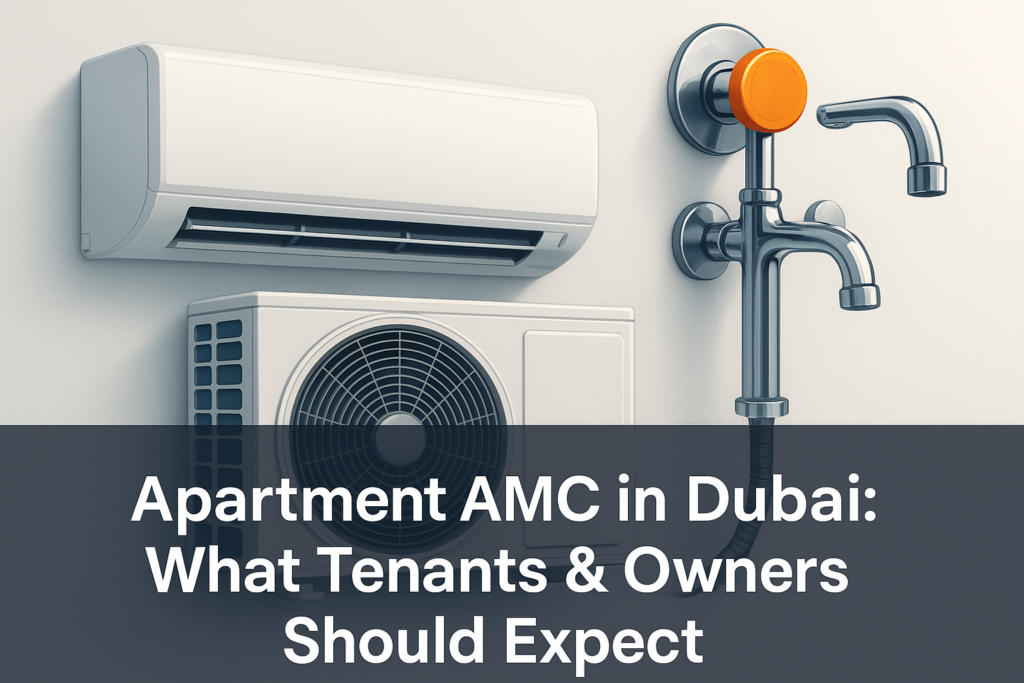
Dubai is a city of dreams, but keeping your home in top shape can be a challenge. The hot climate means your air conditioning works overtime. Plumbing and electrical systems also need regular care. This is where an Apartment Annual Maintenance Contract (AMC) in Dubai becomes incredibly useful. An AMC is like a yearly health check-up for your home. It’s a service agreement with a company to handle routine maintenance and repairs. This guide will help both apartment owners and tenants understand what to expect from an AMC in Dubai. We will cover costs, typical inclusions, and how to choose the best provider. What is an Apartment AMC in Dubai? An Apartment Annual Maintenance Contract (AMC) in Dubai is a service agreement. You pay a set fee each year to a maintenance company. In return, they provide scheduled maintenance and emergency repairs for your apartment’s systems. This typically includes AC, plumbing, and electrical work. Think of it as peace of mind. Instead of finding a technician every time something breaks, your AMC provider is just a call away. It helps you budget for maintenance costs and keeps your home comfortable. This is different from service charges, which cover common building areas like lifts, gyms, and lobbies. An AMC focuses on your specific apartment unit. Dubai-Specific Considerations for Your Apartment Dubai’s unique environment directly impacts your maintenance needs. The extreme heat means your AC system is critical and needs constant care. Regular AC servicing is not just about comfort; it prevents breakdowns and keeps energy bills in check. The Real Estate Regulatory Agency (RERA) sets clear guidelines for landlord and tenant responsibilities. Understanding these rules is crucial when you sign a tenancy or an AMC contract. Different residential communities in Dubai also have varied regulations for external maintenance. Always check your community’s specific guidelines. What’s Typically Covered in Dubai Apartment AMCs When you get an Apartment AMC in Dubai, certain services are usually part of the package. These standard inclusions ensure your home runs smoothly. It is wise to review the specific terms of your contract carefully. Standard Inclusions AC Servicing: This is vital in Dubai. It includes cleaning filters, checking refrigerant gas levels, and inspecting the overall unit. Regular AC maintenance prevents breakdowns and improves efficiency. Many contracts offer 2-4 services per year. Plumbing Maintenance: This covers common issues like leaky faucets, clogged drains, and running toilets. It also includes checks on water heaters and pumps. Technicians will fix minor leaks and ensure proper water flow. Electrical Systems: Expect checks on light fittings, switches, sockets, and distribution boards. This also covers minor wiring repairs and troubleshooting electrical trips. It ensures all your electrical appliances are safely powered. General Repairs: Many AMCs include basic handyman services. This might mean fixing a loose door hinge, minor carpentry, or re-attaching curtain rails. These are small fixes that make a big difference in daily living. Common Exclusions to Watch Out For While AMCs offer extensive coverage, some items are usually excluded. Be aware of these to avoid surprises later. Major replacements like a completely new AC unit or water heater are typically not part of a standard AMC. These often incur separate charges. Cosmetic repairs, such as painting, wallpaper touch-ups, or tiling work, are usually excluded. Damage caused by the tenant, like accidental breakage or misuse of appliances, also falls outside AMC coverage. Structural issues, like cracks in walls or roof leaks, are usually the building management’s responsibility, not your apartment’s AMC provider. Tenant vs. Owner Responsibilities in Apartment Maintenance Understanding who pays for what is crucial in Dubai. RERA guidelines offer clarity on this. Generally, landlords are responsible for major structural repairs and ensuring the property is habitable. This includes big fixes to the AC system or plumbing infrastructure. Tenants, on the other hand, are typically responsible for minor repairs and daily upkeep. This includes things like replacing light bulbs or fixing small issues caused by their usage. An AMC can bridge this gap by offering a clear framework. Sometimes the landlord includes an AMC as part of the rental agreement. Other times, a tenant might choose to get one for their own peace of mind, especially for minor repairs not covered by the landlord. 2025 Pricing Guide for an Apartment AMC in Dubai The cost of an Apartment AMC in Dubai can vary widely. It depends on several factors, including the size of your apartment and the level of service you choose. Here’s an estimated breakdown for 2025. Average AMC Costs by Apartment Size Studio/1-Bedroom Apartment: Expect to pay between AED 3,000 to AED 8,000 per year. These prices reflect basic to comprehensive coverage. 2-Bedroom Apartment: For a larger unit, costs typically range from AED 8,000 to AED 13,000 annually. 3-Bedroom+ Apartment: For bigger homes, an AMC can cost AED 13,000 to AED 20,000 or even more per year. These figures are estimates. The actual price can go up or down based on the apartment’s age, specific systems installed, and the chosen provider. A basic package might cover only emergency call-outs. A premium package could include more frequent preventive checks and even minor spare parts. When an AMC Makes Financial Sense Many wonder if an AMC is worth the cost. Consider the alternative: paying for every repair as it happens. Unexpected breakdowns, especially for AC in peak summer, can be very expensive. An AMC offers cost predictability. It also includes preventive maintenance, which can avoid costly repairs down the line. For busy individuals or property owners who want hassle-free management, an AMC often provides significant value and peace of mind. Choosing the Right Apartment AMC Provider in Dubai Selecting a reliable maintenance partner is key. You want a company that is responsive, professional, and offers good value. Look for providers with strong local experience and a reputation for quality. Our Top Recommendation: SnapFixNow When it comes to dependable and comprehensive apartment maintenance in Dubai, SnapFixNow stands out as a leading choice. They offer a wide range of AMC packages tailored for
A Consultant’s Guide to VRF, Chillers & AC Repair Services in the UAE
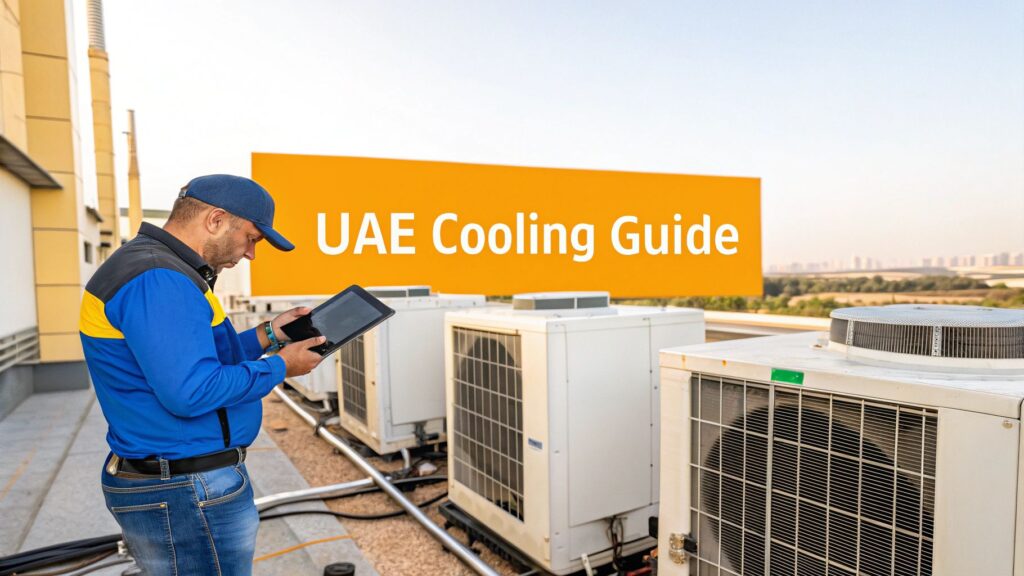
This guide provides a technical framework for asset owners, facility managers, and procurement teams responsible for managing high-value HVAC systems in the UAE. The content is structured to reduce decision ambiguity by using quantified, risk-based analysis for VRF, chiller, and AC systems, focusing on operational expenditure (OPEX), asset lifecycle, and regulatory compliance. Decision Navigation: For Existing Assets: Jump to Section 1: Cooling Optimization For New Buildings: Jump to Section 2: Lifecycle Selection For Failing Systems: Jump to Section 3: Asset Strategy For Occupant Health: Jump to Section 4: Indoor Air Quality & Health For Future Compliance: Jump to Section 5: 2026 Regulatory & Future Compliance Section 1: Cooling Optimization (Performance Engineering) Focus: Mitigating the "Efficiency Tax" in the UAE Climate The primary operational challenge for any HVAC system in the UAE is the "efficiency tax"—a performance degradation caused by two persistent environmental factors: high ambient temperatures causing derating and airborne dust insulating condenser coils. This phenomenon, if unmanaged, can inflate energy-related OPEX by 15-25% annually and accelerate component failure. Effective management requires an engineering-led approach to quantify performance loss, execute precise rectification, and validate the return on investment. The Evidence Framework: Quantifying Performance Loss Performance cannot be managed without being measured. The core metric is the Energy Efficiency Ratio (EER), which degrades under UAE operational conditions. The quantification of this degradation is calculated as follows: Formula: Efficiency Loss (%) = 1 – (Measured EER / Design EER) Decision Trigger: If the measured efficiency loss exceeds 12% against the manufacturer's design specifications, an immediate chemical coil restoration is triggered. Industry data indicates a typical Return on Investment (ROI) of approximately 4.2 months for this action, based on current DEWA commercial electricity tariffs. The Rectification Protocol Standard pressure washing is insufficient to remove the baked-on combination of dust, salt, and pollutants common in the UAE. A systematic, multi-step process is required for effective performance restoration. Step 1 (Diagnosis): Establish a baseline by measuring the current EER and airflow. Step 2 (Chemical Restoration): Apply a non-corrosive, foaming chemical cleaner formulated to penetrate deep into coil fins and dissolve contaminants without causing material damage. Step 3 (Low-Pressure Rinse): Thoroughly rinse coils to remove chemical residue and dislodged debris. High pressure must be avoided to prevent damage to delicate fins, which would further impede performance. Step 4 (Validation): Re-measure EER and airflow to confirm performance has been restored to within 5% of the original design specifications. This structured protocol transitions maintenance from a routine cost into a quantifiable investment with a direct impact on OPEX reduction. For further optimization, a commercial HVAC maintenance checklist provides a foundational layer for preventive planning, which can be enhanced with technologies like variable frequency drives for additional VFD energy savings. You can read more about energy efficiency through strategic AMC planning. Section 2: Lifecycle Selection (Financial Modeling) Focus: High-Stakes Procurement—VRF vs. Chillers The selection between a Variable Refrigerant Flow (VRF) system and a central water-cooled chiller plant is a high-impact procurement decision with long-term financial consequences. The optimal choice is determined by the financial crossover point where the modularity and part-load efficiency of VRF are weighed against the scale and peak-load efficiency of chillers. This decision must be based on a comprehensive 10-Year Total Cost of Ownership (TCO) analysis, not solely on initial capital expenditure (CAPEX). The Evidence Framework: 10-Year TCO Predictor A TCO model provides a financial forecast that accounts for all costs over a decade of operation under UAE conditions. This prevents the common procurement error of selecting a low-CAPEX system that results in excessive OPEX. Key TCO Variables: Initial CAPEX: Equipment, installation, and commissioning costs. Energy Consumption (OPEX): Modeled against specific building occupancy profiles and current DEWA commercial tariffs. Preventive Maintenance Costs: Reflecting the different cost structures of distributed VRF units versus a centralized chiller plant. Projected Corrective Repair Costs: Budgeted based on component failure probabilities over a 10-year lifespan. End-of-Life Decommissioning Costs. TCO Decision Matrix: VRF vs. Water-Cooled Chillers Decision Factor VRF System Profile Water-Cooled Chiller Profile Ideal Cooling Load Optimal for loads under 350 RT. Most efficient for loads over 450 RT. Occupancy Profile High variability (e.g., hotels, boutique offices). Consistent, high base-load (e.g., malls, large towers). Initial CAPEX Generally lower upfront investment. Higher initial investment for plant and equipment. 10-Year OPEX Lower energy costs at part-load (40-70% capacity). Can deliver up to 22% lower OPEX at peak load. Maintenance Distributed maintenance across multiple smaller units. Centralised maintenance on a single large plant. Installation Footprint Smaller, modular outdoor units; less plant room space. Requires a significant dedicated central plant room. Scalability Excellent; can be expanded in modular phases. Limited; designed for a specific peak capacity. Decision Output: Based on 2026 UAE cooling market data, if the total cooling load is less than 350 RT with highly variable occupancy, VRF typically emerges as the winner on a 10-year TCO. Conversely, if the load is greater than 450 RT with 24/7 base-load requirements, a water-cooled chiller system is projected to reduce long-term OPEX by as much as 22%. Case Study Logic: Dubai Marina Tower (High Base-Load >450 RT): The peak-load efficiency of a water-cooled chiller system provides superior OPEX savings over ten years, justifying the higher initial CAPEX. JLT Boutique Hotel (Variable Load <350 RT): A VRF system's ability to operate efficiently at 40-60% capacity during periods of low occupancy significantly reduces energy waste, making it the more prudent long-term investment. This TCO model provides procurement teams with a risk-based framework to align HVAC system selection with the building's specific operational and financial strategy. The implementation of such systems is typically handled by a qualified MEP contracting company in Dubai. Section 3: Asset Strategy (Replacement Logic) Focus: Eliminating "Zombie Assets" from Maintenance Budgets "Zombie assets" are legacy HVAC systems that remain technically operational but are practically obsolete, consuming disproportionate maintenance budgets due to repeat failures and poor energy efficiency. Their continued operation is often justified by the sunk-cost fallacy, leading to unpredictable OPEX and an elevated risk of catastrophic failure during peak cooling demand. A
An Evaluation Framework for Facility Management Service Models in Dubai
This guide provides a structured methodology for evaluating facility management (FM) service providers in Dubai, designed for procurement teams, asset managers, and engineering leaders. Instead of a subjective ranking of providers, it presents an operational framework. The focus is on assessing the risk, cost, and performance trade-offs inherent in different FM models available within the UAE market. We will analyse key service delivery structures, from comprehensive integrated facility management (IFM) to specialised hard FM contracts, examining their direct impact on operational expenditure (OPEX), asset lifecycle, and regulatory compliance. The objective is to equip decision-makers with the technical criteria needed to compare service models and select a partner aligned with specific asset performance goals. This moves the evaluation beyond marketing claims to focus on quantifiable operational value and technical capability. Key considerations addressed include the harsh Dubai climate, specifically high humidity cycles and extreme heat stress on HVAC systems, and the critical importance of adherence to Dubai Municipality and Civil Defence standards. Understanding how potential partners address these regional challenges is fundamental to mitigating operational risk. The structure of this guide is designed to be easily found by its target audience; understanding how to keyword research is a foundational step in connecting specialised professional content with the decision-makers who need it most. Each company profile that follows includes direct links and a summary of their operational focus to streamline your evaluation process. 1. SnapFixNow SnapFixNow operates as an engineering-led facility management specialist, focusing on hard FM, preventive maintenance through Annual Maintenance Contracts (AMCs), and 24/7 ad-hoc support. Operating across Dubai and the Northern Emirates, its service model is built on a foundation of structured processes, in-house technical expertise, and technology-driven operational transparency. This approach is designed to shift clients from a reactive, unpredictable maintenance cycle to a proactive, data-informed strategy that controls operational expenditure (OPEX) and protects asset longevity. The company’s core proposition centres on delivering predictable outcomes. By embedding ISO 9001:2015 certified processes and backing its work with warranties, SnapFixNow aims to reduce the operational risk and financial uncertainty often associated with property maintenance. Its in-house team of over 50 certified technicians across MEP, HVAC, and civil works mitigates reliance on third-party contractors, ensuring greater control over response times and quality of execution. Key Service Offerings & Operational Model SnapFixNow’s portfolio is geared towards comprehensive asset lifecycle management, particularly for commercial, hospitality, and high-end residential properties. Preventive Maintenance (Customised AMCs): The primary offering involves creating tailored AMCs based on asset condition, usage, and client-defined Service Level Agreements (SLAs). This moves maintenance from a cost centre to a strategic function aimed at maximising uptime. 24/7 Emergency Response: SLA-backed rapid deployment for critical failures in MEP, HVAC, and plumbing systems is a key feature, designed to minimise business disruption and protect tenant satisfaction. Specialist Technical Services: Expertise in HVAC systems optimisation, electrical load management, and complex plumbing solutions is a stated capability. Technology-Enabled Workflow: A photo-based work order and real-time tracking platform streamlines communication between facility managers and technicians. This system provides auditable records, speeds up approvals, and reduces administrative overhead, with the company claiming it can save teams up to five hours per week. Operational Insight: SnapFixNow's model demonstrates a clear preference for a preventive maintenance framework over a purely reactive one. This strategy aligns with industry practice for asset management, where scheduled servicing and data analysis help pre-empt failures, thereby reducing costlier emergency repairs and extending the operational life of critical equipment. Performance & Credibility The company provides quantifiable evidence of its impact through case studies and client testimonials. For example, a documented 22% energy reduction on an HVAC optimisation project provides a tangible ROI metric for potential clients. Endorsements from entities like InterContinental, Jumeirah, and Dubai British School lend credibility, particularly for decision-makers in the hospitality and education sectors. The stated 99% client satisfaction metric, combined with ISO 9001:2015 certification, reinforces a commitment to quality-controlled service delivery. Ideal Client Profile & Pricing Structure SnapFixNow is suited for facility managers, property owners, and operations leaders who prioritise reliability, technical competence, and data-driven performance. The model is particularly effective for those seeking to transition from an unpredictable, break-fix maintenance approach to a structured, preventive plan backed by clear SLAs. While not publishing a fixed price list, the company provides indicative benchmarks for its AMC services: Grade A Offices: Typically ranges between AED 7–15+ per sqft High-End Residential: Typically ranges between AED 5–10 per sqft Retail Spaces: Typically ranges between AED 8–18+ per sqft Final pricing is determined after a detailed site survey and the definition of specific SLA requirements, ensuring the contract is precisely aligned with the asset's needs. This customised approach is a strong fit for clients who require more than a generic service package. You can explore a more detailed breakdown of how facility management companies in the UAE structure their contracts and services. Pros: SLA-backed 24/7 service with a focus on predictable performance and rapid response. Technology platform that enhances transparency and operational efficiency. Certified, in-house technical teams reduce subcontractor risk. Demonstrable results through case studies and client testimonials. Cons: Service area is limited to Dubai and the Northern Emirates. Customised pricing requires a site survey, which is not suitable for those seeking immediate, fixed-cost quotes. Website: https://www.SnapFixNow.com 2. Emrill Services Emrill Services has established a significant presence in the UAE as an integrated facilities management provider, offering a comprehensive suite of services under a single contractual framework. The company’s website serves as a detailed portal for procurement managers and asset owners evaluating large-scale or technically complex FM partnerships. It clearly outlines their capabilities across hard, soft, and security services, demonstrating their capacity to manage diverse and high-profile portfolios. , it's clear that integrated models like Emrill's are designed to streamline accountability and reduce the operational burden on property owners by consolidating multiple vendor relationships into one. Scope of Services and Sector Expertise Emrill's website provides a structured overview of its service delivery model, which is a key differentiator for decision-makers. The site is organised to help
HVAC Maintenance Company in Dubai, UAE: A Commercial Building Perspective
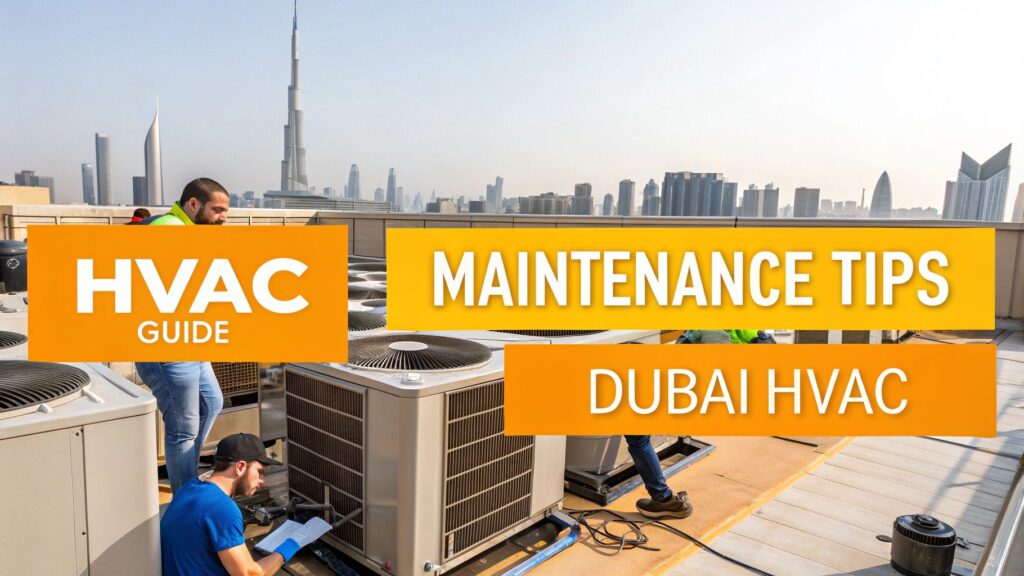
Executive Summary For facility managers, asset owners, and procurement teams in Dubai, selecting an HVAC maintenance company is a critical operational decision impacting OPEX, asset lifecycle, and business continuity. This guide provides a technical framework for evaluating HVAC maintenance strategies, focusing on the specific environmental and regulatory demands of the UAE. It compares preventive vs. reactive models, outlines key deliverables for a commercial HVAC provider, and quantifies the financial impact of structured maintenance. The objective is to equip decision-makers with the operational reasoning and risk-based analysis needed to optimize HVAC performance, ensure compliance, and protect long-term asset value in Dubai's challenging commercial property market. The Role of HVAC Systems in Commercial & Institutional Buildings In Dubai's competitive commercial real estate sector, HVAC systems are not merely utilities for comfort; they are core operational assets directly influencing financial performance and tenant retention. An engineering-led perspective treats HVAC not as an expense item but as a critical system with measurable impacts on several key business metrics. Energy Consumption: HVAC systems are a primary driver of operational expenditure (OPEX). In UAE conditions, they can represent 35–50% of a commercial building's total energy consumption. Inefficient or poorly maintained systems directly inflate DEWA utility costs, eroding net operating income. Indoor Air Quality (IAQ): The system's function extends beyond temperature control to air filtration and ventilation. Inadequate maintenance can lead to the circulation of contaminants, affecting occupant health and productivity, and potentially violating Dubai Municipality regulations. Tenant Satisfaction: Consistent thermal comfort and reliable cooling are non-negotiable expectations for commercial tenants. Frequent breakdowns, hot spots, or poor air quality are leading drivers of complaints and can negatively impact lease renewals. Business Continuity Impact: For mission-critical facilities like data centres, hospitals, or high-value retail, an HVAC system failure is not an inconvenience but a significant operational event. Such failures can halt operations, result in data or inventory loss, and cause substantial financial and reputational damage. Effective HVAC management is, therefore, a strategic component of asset management, directly linked to OPEX control, risk mitigation, and the overall commercial viability of the property. Why HVAC Systems Fail Frequently in Dubai Commercial HVAC systems in Dubai operate under some of the most demanding environmental conditions globally. Failures are rarely random events; they are typically the cumulative result of intense, predictable stressors. Understanding these failure modes is fundamental to developing an effective preventive planning strategy. Extreme Heat Load Stress: With ambient summer temperatures frequently exceeding 45–50°C, HVAC systems run at near-maximum capacity for extended periods. This sustained high-load operation places immense strain on critical components, particularly compressors, leading to accelerated wear, lubricant degradation, and premature mechanical failure. Coil Contamination from Sand/Dust: Airborne particulate matter, primarily sand and dust, is a primary cause of inefficiency and failure. This dust loading clogs condenser coils, severely impeding the system's ability to reject heat. This forces the compressor to work harder, increasing energy consumption and raising system pressures to dangerous levels, which can lead to catastrophic failure. Condensate Drain Blockages: High humidity cycles produce significant volumes of condensate. If drain lines are not regularly flushed, they become blocked by biological growth and accumulated sludge. This often results in water overflow, causing significant interior water damage, ceiling collapse, and costly rectification works. Deferred Maintenance Culture: A common operational gap in the UAE market is the deferral of scheduled maintenance to reduce short-term costs. This approach allows minor issues—like failing capacitors or low refrigerant levels—to cascade into major system breakdowns, resulting in higher lifecycle costs. Compressor Strain: The combination of high heat load, contaminated coils, and potential refrigerant imbalances places continuous strain on compressors. This is the single most common cause of high-cost, high-disruption failures in the region. Oversized/Undersized System Issues: Incorrectly specified systems from the design phase can lead to chronic operational problems. Oversized units cycle too frequently, failing to dehumidify the air properly, while undersized units run constantly without achieving setpoints, leading to premature burnout. Preventive HVAC Maintenance vs Breakdown Repairs The decision between a planned preventive maintenance strategy and a reactive, breakdown-driven model is a choice between managed risk and unmanaged liability. This choice fundamentally dictates OPEX predictability, asset lifecycle costs, and operational stability. Reactive repairs—addressing failures as they occur—may appear to offer lower upfront costs but introduce significant financial and operational volatility. This approach exposes the asset to emergency call-out premiums, unplanned downtime, and accelerated equipment degradation. A structured preventive maintenance program, executed by a qualified HVAC maintenance company in Dubai, UAE, is a risk mitigation strategy designed to identify and rectify faults before they escalate into system failures. Comparison Table: Preventive Maintenance vs Reactive Repairs This framework contrasts the operational and financial outcomes of a structured preventive maintenance contract against a reactive, breakdown-only service approach for a commercial facility in Dubai. Metric Preventive Maintenance Model (AMC) Reactive Repair Model (Breakdown Only) Total Cost of Ownership (TCO) Lower. Achieved through reduced major repairs, optimized energy use, and extended asset lifespan. Higher. Driven by premium emergency labour rates, accelerated component failure, and premature capital replacement. Budget Predictability (OPEX) High. Fixed contract costs allow for accurate operational budgeting and financial forecasting. Low. Costs are unpredictable and volatile, leading to significant budget variances and unplanned expenditures. Energy Efficiency (DEWA Costs) Optimized. Regular coil cleaning, refrigerant calibration, and component checks ensure operation at peak efficiency. Poor. Degraded performance from dust loading and system imbalances leads to sustained higher energy consumption. Asset Lifecycle Extended. Proactive care mitigates operational stress, potentially extending equipment life by 20-30%. Shortened. Repeated stress cycles and catastrophic failures drastically reduce the functional lifespan of the equipment. Tenant Complaint Risk Low. High system reliability and consistent performance lead to improved tenant satisfaction and retention. High. Frequent system failures are a primary source of tenant complaints, negatively impacting building reputation. Business Disruption Minimal. Maintenance is scheduled during off-peak hours to avoid impacting core business operations. Significant. Unplanned failures often occur during peak hours, causing maximum disruption to tenants and operations. The analysis clearly indicates that a preventive maintenance model delivers superior financial and operational outcomes, transforming