In the UAE's sophisticated property market, asset owners and facility managers face constant pressure to protect property value and control operational expenditure. While property insurance is a critical financial safeguard, its effectiveness hinges on meticulous documentation, proactive maintenance, and strategic claim management. A seemingly minor oversight in record-keeping or compliance can lead to significant claim reductions or even outright denials, directly impacting profitability and asset lifecycle costs. Many decision-makers discover too late that the strength of an insurance claim is determined by the quality of operational data captured long before an incident occurs.
This guide addresses the seven most common mistakes property owners make that reduce insurance payouts, offering a structured framework specifically for B2B decision-makers across the UAE's commercial, residential, hospitality, and industrial sectors. We will move beyond generic advice to explore the quantifiable impact of proper documentation, regulatory compliance, and vendor coordination on claim outcomes. Having detailed records is essential, but their value is lost if they are disorganised. Adopting a clear Standard Operating Procedure format ensures your evidence is accessible and understandable to loss adjusters when it matters most.
The following analysis provides actionable frameworks to help you secure the full value your policy promises, turning robust facility management practices into a powerful tool for financial protection. Each point will detail the mistake, explain its financial and contractual implications with UAE-specific benchmarks, and provide specific prevention steps. By understanding these pitfalls, you can build a more resilient asset management strategy, ensuring you are prepared to substantiate claims fully and effectively, safeguarding your investments against unforeseen events.
1. Inadequate Documentation and Photo Evidence of Property Condition
One of the most frequent and costly errors is failing to maintain a comprehensive visual and written record of an asset's condition. This oversight becomes a major liability when a loss event occurs, such as a fire, flood, or significant equipment failure. Without a clear "before" state documented, proving the "after" damage to an insurer becomes a subjective argument, often leading to claim disputes, delays, and substantial reductions in payouts.
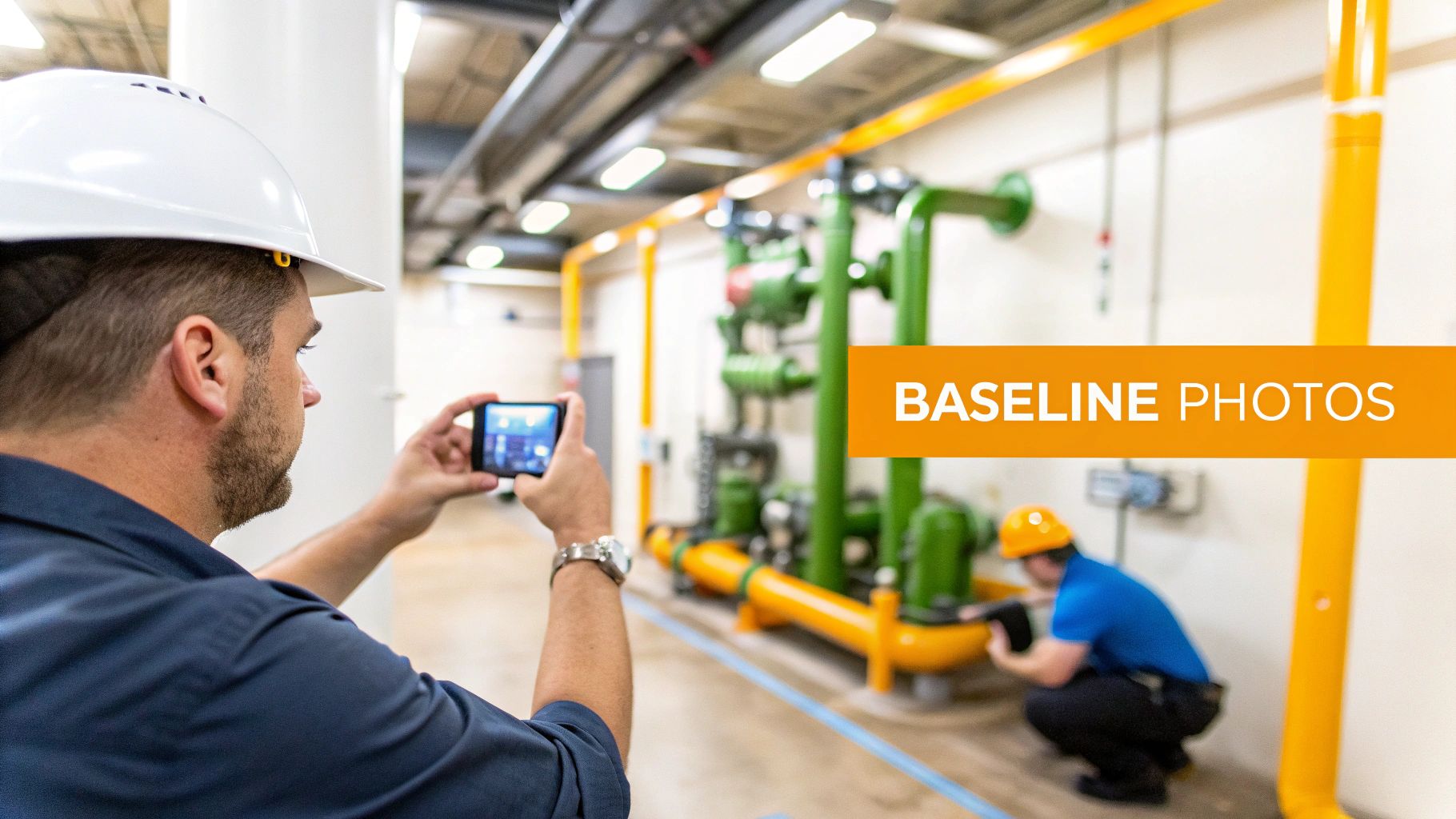
Insurance loss adjusters operate on evidence. Their primary role is to validate the extent of the damage claimed against the policy by distinguishing pre-existing wear and tear from acute, incident-related damage. A lack of baseline documentation creates ambiguity, forcing adjusters to make conservative assumptions that almost always favour the insurer. This is a classic example of a common mistake property owners make that can significantly reduce insurance payouts, with potential claim reductions ranging from 20% to over 50% depending on the quality of evidence.
Why It Hurts Your Claim
The absence of proof directly undermines a claim's credibility. For instance, a commercial tower in Dubai experienced a major pipe burst in its mechanical room. Without baseline photos or recent maintenance logs, the owner could not prove the system was well-maintained prior to the failure. The insurer argued negligence and pre-existing corrosion, reducing the payout for equipment replacement and business interruption by an estimated 40%.
Conversely, a residential community in the UAE that experienced flash flooding recovered a claim settlement that was demonstrably higher than a neighbouring property with similar damage. The key difference was their facility management platform, which contained a complete, timestamped photo library of all common areas and drainage systems, clearly demonstrating their pre-flood condition.
How to Build an Evidence-Based System
Proactive documentation is your best defence. It transforms a subjective argument into an objective, fact-based discussion with your insurer.
- Implement a Photo Protocol: Mandate quarterly photo documentation of all critical areas: mechanical, electrical, and plumbing (MEP) rooms, rooftops, facades, common areas, and high-value equipment.
- Leverage Technology: Use mobile platforms like SnapFixNow to capture geo-tagged and timestamped photos. This creates an irrefutable evidence chain that cannot be easily disputed. To understand what documentation is most compelling, you can learn more about the evidence insurance loss adjusters look for during site inspections.
- Create a Digital Asset Registry: Maintain a detailed inventory of all major equipment. This registry should include:
- Make, model, and serial number.
- Purchase date and installation records.
- Original cost and estimated replacement value.
- A complete maintenance and repair history.
- Act Immediately Post-Incident: Photograph all damage within 24 hours of discovery. Capture wide-angle shots to establish context and detailed close-ups to show the specific damage.
- Centralise and Secure Data: Store all documentation, photos, and records in a secure, cloud-based system with backups. Ensure your insurance broker and key management personnel have access.
2. Neglecting Preventive Maintenance Records and Compliance Documentation
A major oversight that frequently leads to denied or reduced claims is the failure to maintain and produce verifiable records of preventive maintenance. Insurers view a property not just as a static asset but as a complex system requiring diligent upkeep. When a critical system fails—like HVAC, electrical, or fire safety—adjusters immediately look for proof of negligence. A lack of documented, scheduled maintenance provides them with a powerful argument that the loss resulted from the owner's poor stewardship, not a sudden, covered event.
Insurance policies are contracts of good faith, but they are built on the principle of managing unforeseeable risks, not predictable failures. An adjuster's investigation will focus on whether the property owner fulfilled their duty of care. Without a clear paper trail of regular servicing, inspections, and compliance with manufacturer guidelines, insurers can successfully argue that the damage was a preventable outcome of wear and tear or neglect, which are typically policy exclusions. This is a critical common mistake property owners make that can significantly reduce insurance payouts.
Why It Hurts Your Claim
Neglecting maintenance documentation hands insurers a valid reason to attribute the loss to your actions, or lack thereof. For instance, a Dubai office building saw its initial claim payout offer for a major electrical fire reduced from a potential 95% down to just 40% of the claimed amount. The insurer cited the absence of certified annual electrical inspection records as evidence of negligence, shifting the blame to the owner. Only after the owner located and produced detailed Annual Maintenance Contract (AMC) records proving quarterly servicing did the insurer revise their offer.
Similarly, a residential tower in the UAE avoided a complete claim denial following a fire-safety incident. Their defence was a robust digital logbook containing three years of annual fire system inspections, service reports, and maintenance activities. This documentation proved the system was maintained to code, forcing the insurer to cover the loss as an unforeseen accident rather than a failure of due care.
How to Build an Evidence-Based System
A systematic approach to documenting maintenance transforms it from a routine operational cost into a powerful risk mitigation tool. It provides irrefutable proof that you have acted responsibly to maintain your asset.
- Establish Comprehensive AMCs: Implement and maintain Annual Maintenance Contracts with certified and approved service providers for all critical systems, including HVAC, electrical, plumbing, and fire safety. Ensure contracts specify service frequency and reporting requirements.
- Digitise Every Record: Document every maintenance visit with detailed service reports that include dates, tasks performed, parts replaced, and the technician's certifications. Store these records in a secure, cloud-based system. To prevent issues arising from neglected records, consider leveraging specialised tools; modern property management apps can significantly streamline the tracking and archiving of maintenance and compliance documentation.
- Maintain a Master Maintenance Calendar: Create a centralised schedule for all planned maintenance activities, with automated alerts sent to relevant staff 30 days before a service is due.
- Schedule Compliance Audits: Conduct quarterly internal audits to verify that all maintenance activities adhere to Dubai Municipality codes, DEWA standards, and equipment manufacturer specifications.
- Link Maintenance to Policy Requirements: Actively review your insurance policy for any specific maintenance clauses or warranties (known as "subjectivities"). Ensure your maintenance schedule directly addresses and fulfils these requirements to avoid a breach of contract. A deeper understanding of the financial impact can be found by analysing preventive vs. reactive maintenance costs.
3. Failing to Report Claims Promptly or Within Policy Deadlines
One of the most damaging yet avoidable errors in the claims process is delaying the notification of a loss event. Most insurance policies in the UAE contain strict clauses requiring prompt notification, often stipulating a deadline of 30 to 90 days from the date of discovery. Waiting too long to report a claim gives insurers a contractual basis to dispute, reduce, or outright deny coverage, regardless of the validity of the damage.
Insurance is a time-sensitive process. Adjusters need to inspect the primary damage before it is altered or compounded by secondary issues like mould, corrosion, or structural instability. A delay hinders their ability to accurately assess causation and liability, creating ambiguity that benefits the insurer. Failing to adhere to reporting timelines is a clear example of a common mistake property owners make that can significantly reduce insurance payouts, as it breaches policy conditions and prejudices the insurer's investigation.
Why It Hurts Your Claim
Delayed reporting fundamentally weakens your position. A Dubai commercial tower, for instance, had a significant water damage claim of AED 2.4M rejected because the incident was reported 45 days after discovery, violating the 30-day notification clause in its policy. The insurer argued the delay prevented a timely investigation and allowed secondary damage to set in, which they were not liable for.
In contrast, a hospitality property that notified its broker within 12 hours of a fire in its mechanical systems recovered its claim in full. The swift reporting enabled the loss adjuster to inspect the primary fire damage before subsequent water damage from sprinklers and mould growth could obscure the original cause, leading to a smooth and successful claim settlement.
How to Implement a Timely Reporting System
Establishing a formal notification protocol is essential to protect your right to claim. This system ensures that all relevant parties act with the required urgency, preserving evidence and complying with policy terms.
- Develop a Written Incident Response Protocol: Clearly assign responsibility for claim notification. For example, mandate that the facility manager must report any incident estimated to exceed AED 50,000 to the insurance broker within 24 hours.
- Notify Immediately, Even if Details are Unclear: Contact your insurance broker within 24 hours of discovering any significant damage. Early notification is a procedural requirement; you can provide detailed assessments later.
- Document and Formalise Communication:
- Record the exact date and time of incident discovery using a platform that provides timestamps.
- Send the formal claim notification in writing via email, copying all stakeholders, to create a timestamped proof of delivery.
- Request written confirmation from the insurer acknowledging receipt of the claim.
- Establish a Direct Communication Channel: Create a dedicated communication group (e.g., a specific email thread or shared digital channel) connecting your facility manager, property manager, and insurance broker to streamline information flow.
- Know Your Policy Deadlines: Diarise all critical deadlines stipulated in your insurance policy and set automated reminders well in advance to ensure compliance.
4. Underestimating or Inaccurately Declaring Asset Values and Replacement Costs
A critical yet common misstep for property owners is declaring asset values that do not reflect their true, current replacement costs. This often happens due to overlooking inflation, market fluctuations, or technology upgrades. When a claim is filed, insurers conduct their own valuation, and if the declared value is significantly lower than their assessment, it triggers a "co-insurance penalty," which can severely reduce the final payout.
This penalty is applied because the owner has effectively paid lower premiums by underinsuring the asset. Insurers view this as the owner sharing a portion of the risk, whether intentionally or not. On the other hand, over-declaring values can also be detrimental, as it needlessly inflates premiums and can trigger fraud investigations during a claim. This is a classic example of a common mistake property owners make that can significantly reduce insurance payouts.
Why It Hurts Your Claim
Under-insurance directly exposes you to significant financial loss. For instance, a Dubai office tower had its HVAC system valued at AED 1.2 million in its policy. After a major failure, the actual replacement cost was found to be AED 2.8 million due to inflation and newer, required specifications. Because the asset was insured for less than 80% of its true replacement cost, the insurer imposed a 40% co-insurance penalty, reducing the payout by over AED 650,000 and leaving the owner with a massive shortfall.
Conversely, a hotel in Dubai avoided this pitfall after a fire suppression system failure. They had proactively updated their asset valuation, providing supplier quotes that showed the replacement cost was AED 950,000, not the AED 600,000 originally declared. By adjusting their policy coverage pre-incident, they ensured a full payout and avoided any penalties.
How to Maintain Accurate Asset Valuations
Proactive and regular valuation is the only way to safeguard against co-insurance penalties and ensure your coverage is adequate. This transforms your policy from a potential liability into a reliable safety net.
- Commission Professional Valuations: Engage a certified valuer recognised in the UAE to conduct a comprehensive Property Valuation Assessment every two to three years. This should cover all building systems, high-value equipment, and contents.
- Secure Annual Supplier Quotes: For critical systems like MEP and life safety, request detailed replacement cost quotations from certified suppliers annually. This provides current, market-based evidence to justify declared values.
- Maintain a Dynamic Asset Register: Create and regularly update a detailed inventory of all major assets. This digital registry should include make, model, original purchase price, supplier quotes for current replacement cost, and maintenance history.
- Adjust for Inflation: Annually review and adjust your declared insured values based on relevant inflation indices, such as the Dubai Consumer Price Index (CPI) or international equipment cost data.
- Consult Your Broker on Co-Insurance: Work with your insurance broker to understand and set the appropriate co-insurance percentage for your policy, which is typically 80% or 90%. This ensures you meet the minimum threshold to avoid penalties.
5. Failing to Conduct Regular Building Inspections and Risk Assessments
Neglecting regular, professional building inspections is a significant operational risk. Property owners who skip this crucial step miss the early warning signs of deterioration, such as subtle roof leaks, minor structural movement, foundation issues, or electrical degradation. When a loss occurs, insurers will investigate the cause, and if they discover pre-existing conditions that contributed to the damage, they can argue negligence and deny the claim. This is a classic and costly example of a common mistake property owners make that can significantly reduce insurance payouts.
Insurance policies are contracts based on the principle of utmost good faith, which includes the owner's responsibility to maintain the property in a safe and sound condition. Without documented inspections and risk assessments, owners cannot demonstrate they have proactively managed foreseeable hazards. This lack of evidence provides insurers with a powerful lever to attribute the loss to poor maintenance rather than an insured peril, leading to claim disputes and significant financial loss for the asset owner.
Why It Hurts Your Claim
The absence of a professional inspection history implies a reactive, rather than proactive, approach to property management. For an insurer, this signals a higher-risk client. For instance, an industrial facility in Dubai avoided a potential AED 1.8M claim denial for a fire loss by providing records of its quarterly MEP system inspections. This documentation proved it had identified electrical system deterioration and was already initiating corrective actions before the incident, shifting the blame away from owner negligence.
Similarly, a commercial tower in Dubai prevented a major claim denial after discovering significant roofing damage. By providing a professional engineer's inspection report from six months prior, management demonstrated they had identified and begun remediating the risk. The insurer accepted the claim because these mitigation efforts were formally documented. Proactive risk management is not just good practice; it is a critical claims defence strategy.
How to Build an Evidence-Based System
A structured inspection and risk assessment programme transforms your property from an unknown variable into a well-documented, managed asset in the eyes of an insurer.
- Schedule Comprehensive Inspections: Commission full building inspections every 2-3 years, or annually for buildings over 10 years old. These should cover structural integrity, MEP systems, electrical and plumbing infrastructure, roofing, and fire safety systems. To better prepare, it is useful to understand what property managers look for when inspecting commercial buildings.
- Engage Certified Professionals: Hire certified professional engineers, preferably those approved by Dubai Municipality, to conduct inspections and issue formal reports that identify defects and recommend remediation.
- Act on Findings Promptly: Prioritise corrective actions for identified defects, aiming for completion within 60 days. Document all repairs with before-and-after photos and contractor completion certificates.
- Maintain an Annual Risk Assessment: Create and update a formal document that lists known hazards, the mitigation steps taken, and any residual risk levels. Share this document with your insurer during policy renewal discussions.
- Develop a Long-Term Maintenance Plan: Use inspection findings to create a 3-5 year building maintenance and upgrade plan, complete with budget allocations for preventive repairs and capital expenditures.
6. Incomplete or Inaccurate Policy Information and Coverage Gaps
A surprisingly frequent cause of denied or reduced claims is a misunderstanding of the insurance policy itself. Property owners often operate under broad assumptions about their coverage, leading to devastating financial gaps when a loss event occurs that falls outside their actual policy terms, exclusions, or declared asset values. This is not about insurer bad faith; it is about the contractual nature of insurance, where what is not explicitly covered or declared is implicitly excluded.
Insurance policies are precise legal documents. Failing to notify insurers of material changes, like renovations or new equipment, can void coverage on the grounds of non-disclosure. Similarly, overlooking specific exclusions for hazards common in the UAE, such as flash flooding or sandstorm damage to external fixtures, creates uninsured risks. This gap between perceived and actual coverage is a common mistake property owners make that can significantly reduce insurance payouts, turning a recoverable loss into an unbudgeted catastrophe.
Why It Hurts Your Claim
An outdated or inaccurate policy gives the insurer a straightforward contractual basis for claim denial. For example, a Dubai hotel lost a AED 3.6 million water damage claim after renovating its HVAC system without notifying its insurer. The policy required written approval for any significant system modifications, and the claim was denied for non-disclosure of a material change in risk.
In another case, a commercial tower only recovered a portion of its claim because the owner assumed all water damage was covered. The policy covered damage from burst pipes within the building's structure but excluded damage to tenant-owned equipment. This oversight left the owner exposed to significant secondary claims from its tenants. Proactive policy management is the only way to close these dangerous gaps.
How to Build an Evidence-Based System
Treat your insurance policy as a living document that must evolve with your property. This requires diligent review and transparent communication with your broker and insurer.
- Conduct an Annual Policy Review: Schedule a mandatory annual meeting with your insurance broker to review your policy line by line. Document all property changes from the past year, including renovations, system replacements, new high-value equipment, or building expansions, and request formal policy endorsements.
- Create and Distribute a Policy Summary: Develop a one-page summary of your policy's key terms, inclusions, exclusions, and coverage limits. Distribute this vital document to facility managers, maintenance teams, and key operational staff so they understand the insurance implications of their actions.
- Clarify All Exclusions: Request a formal, written list of all policy exclusions from your broker. Confirm you understand the coverage gaps and consider supplemental policies for critical, region-specific risks like floods or certain types of storm damage if they are not included.
- Align Maintenance with Policy Requirements: When engaging an FM provider, explicitly communicate policy requirements, such as a mandate for certified technicians or specific maintenance frequencies. This ensures maintenance activities do not inadvertently void your coverage.
- Document and Notify Immediately: For all major renovations or system modifications, ensure you have completion certificates and provide written notification to your insurer within 30 days. Store a copy of the insurer’s acknowledgement with your policy records.
7. Occupancy, Regulatory Compliance, and Coordination Failures
A surprisingly common oversight involves failing to maintain and provide evidence of active occupancy, regulatory compliance, and coordinated communication between stakeholders. Insurers view vacant or non-compliant properties as significantly higher risk, which can lead to claim denials or drastic reductions. Separately, when facility management, property managers, and insurance brokers operate in silos, the resulting information gaps create fertile ground for disputes, delays, and policy violations.

Insurance policies are underwritten based on a specific set of risk assumptions, including that the property is actively used, legally compliant, and managed cohesively. A failure in any of these areas can be considered a material change in risk, potentially voiding coverage. This is a classic example of a common mistake property owners make that can significantly reduce insurance payouts, as it strikes at the core validity of the insurance contract itself.
Why It Hurts Your Claim
Lacking proof of occupancy, compliance, or coordinated incident response gives the insurer grounds to argue that policy conditions were breached. For example, a commercial office tower in Dubai reduced its claim settlement time from 120 days to just 35 days by implementing a tri-party coordination protocol. The facility manager, property manager, and broker exchanged information via a shared platform, eliminating document gaps and the adjuster’s repeated requests for missing information.
Conversely, another UAE residential tower recovered an additional AED 1.2M in previously disputed claims after submitting annual DEWA electrical safety certificates and occupancy records. This evidence proved to the insurer that systems were regulatory-compliant and the building was actively managed at the time of loss, reversing the initial reduction.
How to Build an Evidence-Based System
A proactive, integrated approach to compliance and communication is essential. It proves due diligence and ensures all parties are aligned when an incident occurs.
- Establish a Tri-Party Communication Protocol: Create a formal document, signed by the property manager, facility management provider, and insurance broker, that outlines claim notification procedures and documentation responsibilities.
- Maintain Compliance and Occupancy Records:
- Keep current occupancy records documenting active tenancy and facility usage.
- Request and centrally file annual compliance certificates from authorities like Dubai Municipality and DEWA.
- Maintain active utility accounts, even for partially occupied buildings, as proof of management.
- Centralise Communication: Use a shared platform, such as a dedicated email group or a project management tool, for real-time coordination on incidents, maintenance, and claim documentation.
- Conduct Stakeholder Meetings: Schedule quarterly meetings with property management, the FM provider, and the insurance broker to review compliance status, maintenance plans, and any policy updates.
- Inform Insurers of Status Changes: If a building is expected to undergo an extended period of vacancy or partial closure, notify the insurer immediately to request an 'unoccupancy' endorsement to maintain coverage validity.
7-Point Comparison: Property Owner Mistakes That Reduce Insurance Payouts
| Issue | Implementation complexity | Resource requirements | Expected outcomes | Ideal use cases | Key advantages |
|---|---|---|---|---|---|
| Inadequate documentation & photo evidence of property condition | Low–Moderate — establish photo protocols and storage | Staff time, mobile/photo app with geo‑timestamping, cloud storage, documentation owner | Stronger claim validation, faster settlements, higher payouts | Facilities with high-value systems or frequent incidents | Timestamped before/after evidence reduces adjuster disputes |
| Neglecting preventive maintenance records & compliance documentation | Moderate — set AMCs, SOPs and audit trails | Certified FM providers, service contracts, digital maintenance logs | Fewer denials, improved payout rates, lower future premiums | Critical systems (HVAC, fire safety), regulated buildings | Demonstrates due diligence and creates compliance-ready audit trail |
| Failing to report claims promptly or within policy deadlines | Low — implement notification protocols and reminders | Incident response protocol, automated alerts, broker contact lists | Preserves coverage rights, enables timely inspections, avoids denials | Any facility with strict policy timeframes | Protects against late-notice denials and secondary-damage exclusions |
| Underestimating or inaccurately declaring asset values & replacement costs | Moderate — periodic valuations and asset register updates | Professional valuers, supplier quotes, comprehensive asset register | Accurate claim settlements, avoids co‑insurance penalties | High-value equipment, recent upgrades or renovations | Aligns insured sums with real replacement costs; prevents penalties |
| Failing to conduct regular building inspections & risk assessments | Moderate–High — schedule inspections and remediation plans | Certified inspectors/engineers, inspection schedules, remediation budget | Early detection of defects, reduced denial risk, lower exposure | Older buildings, complex MEP or structural systems | Documents condition and mitigation efforts to support claims |
| Incomplete or inaccurate policy information & coverage gaps | Low–Moderate — annual policy reviews and communications | Insurance broker reviews, written policy summaries, endorsements | Corrected coverage, fewer uncovered losses, clearer limits | Renovations, expansions, multi‑property portfolios | Clarifies exclusions and ensures policy reflects property changes |
| Occupancy, regulatory compliance & coordination failures | Moderate — implement coordination protocols and shared platforms | Occupancy logs, compliance certificates, shared FM/broker platform, meetings | Sustained coverage for occupied properties, coordinated claims, faster settlements | Properties with variable occupancy or multiple stakeholders | Centralizes records, ensures regulatory compliance and stakeholder alignment |
A Framework for Integrated Risk Management and Claim Optimisation
Navigating the complexities of property insurance in the dynamic UAE market is not merely about purchasing a policy; it is about cultivating a strategic, evidence-based ecosystem that protects asset value and guarantees claim integrity. The detailed exploration of the seven most common mistakes property owners make that reduce insurance payouts reveals a powerful, unifying theme: the critical gap between routine property management and strategic insurance readiness. From inadequate photographic evidence of pre-loss conditions to lapsed maintenance records and delayed claim reporting, each pitfall stems from a reactive, rather than proactive, operational posture.
Maximising your insurance payout is not a negotiation tactic employed after a disaster. It is the direct, predictable outcome of a disciplined, systematic approach implemented long before an incident ever occurs. It is the meticulous documentation of a newly installed HVAC unit, the timestamped photo report of a completed waterproofing repair, and the digitally archived compliance certificate from a third-party fire safety inspection. These are not just administrative tasks; they are the foundational pillars of a successful insurance claim.
Synthesising the Solution: From Disparate Actions to an Integrated System
The core lesson is that insurance claim optimisation is an operational discipline, not a financial one. It requires shifting the mindset from viewing maintenance and documentation as mere cost centres to recognising them as vital components of your asset’s financial security framework. The most significant takeaway is the need for an integrated system where daily operations automatically generate the evidence required for future claims.
Consider the interconnected nature of the mistakes discussed:
- Documentation and Maintenance: Neglecting preventive maintenance (Mistake #2) directly exacerbates the lack of pre-loss condition evidence (Mistake #1). Without structured AMCs, you have no consistent record of asset health, making it difficult to counter an insurer's claim of pre-existing wear and tear.
- Valuation and Inspection: Underestimating asset values (Mistake #4) is often a symptom of infrequent or poor-quality building inspections (Mistake #5). A robust inspection regime provides the data needed for accurate valuations and identifies latent risks before they become uninsured perils.
- Reporting and Compliance: A failure to report claims promptly (Mistake #3) is often linked to poor internal coordination and unclear documentation trails. Similarly, a breakdown in regulatory compliance (Mistake #7) can create coverage gaps (Mistake #6) that render a policy ineffective precisely when it is needed most.
Actionable Next Steps: Building Your Claim-Ready Framework
To transition from theory to practice, focus on embedding three core principles into your operational DNA. These steps are designed to directly counteract the common mistakes property owners make that reduce insurance payouts and build a resilient risk management programme.
- Mandate a "No Photo, No Job" Policy: Institutionalise the use of time-stamped, geo-tagged photographic evidence for all maintenance, repair, and inspection activities. This creates an unshakeable visual timeline of your asset's condition, which is the single most powerful tool in refuting claims of negligence or poor upkeep.
- Digitise and Centralise All Compliance Records: Move away from paper-based files and disparate spreadsheets. Implement a centralised digital repository for all AMCs, inspection reports, third-party certifications (e.g., Dubai Civil Defence), and supplier contracts. This ensures immediate access to critical documentation when a claim deadline is looming.
- Conduct an Annual Insurance Policy Review with Your FM Team: Bridge the gap between the administrative function that procures insurance and the technical team that manages the property. Your facility manager or chief engineer should review the policy specifics, warranties, and exclusions annually with the insurance broker to ensure coverage aligns with the building’s operational reality, recent upgrades, and occupancy changes.
By systematically addressing these areas, you transform your facility management programme into a powerful loss mitigation and claim substantiation engine. The objective is to build a fortress of evidence so robust that it pre-empts disputes, accelerates the adjustment process, and ensures you receive the full and fair settlement you are entitled to. This proactive stance is the ultimate strategy for protecting your property's financial future.
Transform your reactive maintenance processes into a proactive, claim-ready documentation system. With SnapFixNow, you can leverage photo-based reporting and streamlined AMC management to build the indisputable evidence trail needed to mitigate the common mistakes property owners make that reduce insurance payouts. Visit SnapFixNow to see how you can secure your asset's value today.