Executive Summary
For facility managers, asset owners, and procurement teams in Dubai, selecting an HVAC maintenance company is a critical operational decision impacting OPEX, asset lifecycle, and business continuity. This guide provides a technical framework for evaluating HVAC maintenance strategies, focusing on the specific environmental and regulatory demands of the UAE. It compares preventive vs. reactive models, outlines key deliverables for a commercial HVAC provider, and quantifies the financial impact of structured maintenance. The objective is to equip decision-makers with the operational reasoning and risk-based analysis needed to optimize HVAC performance, ensure compliance, and protect long-term asset value in Dubai's challenging commercial property market.
The Role of HVAC Systems in Commercial & Institutional Buildings
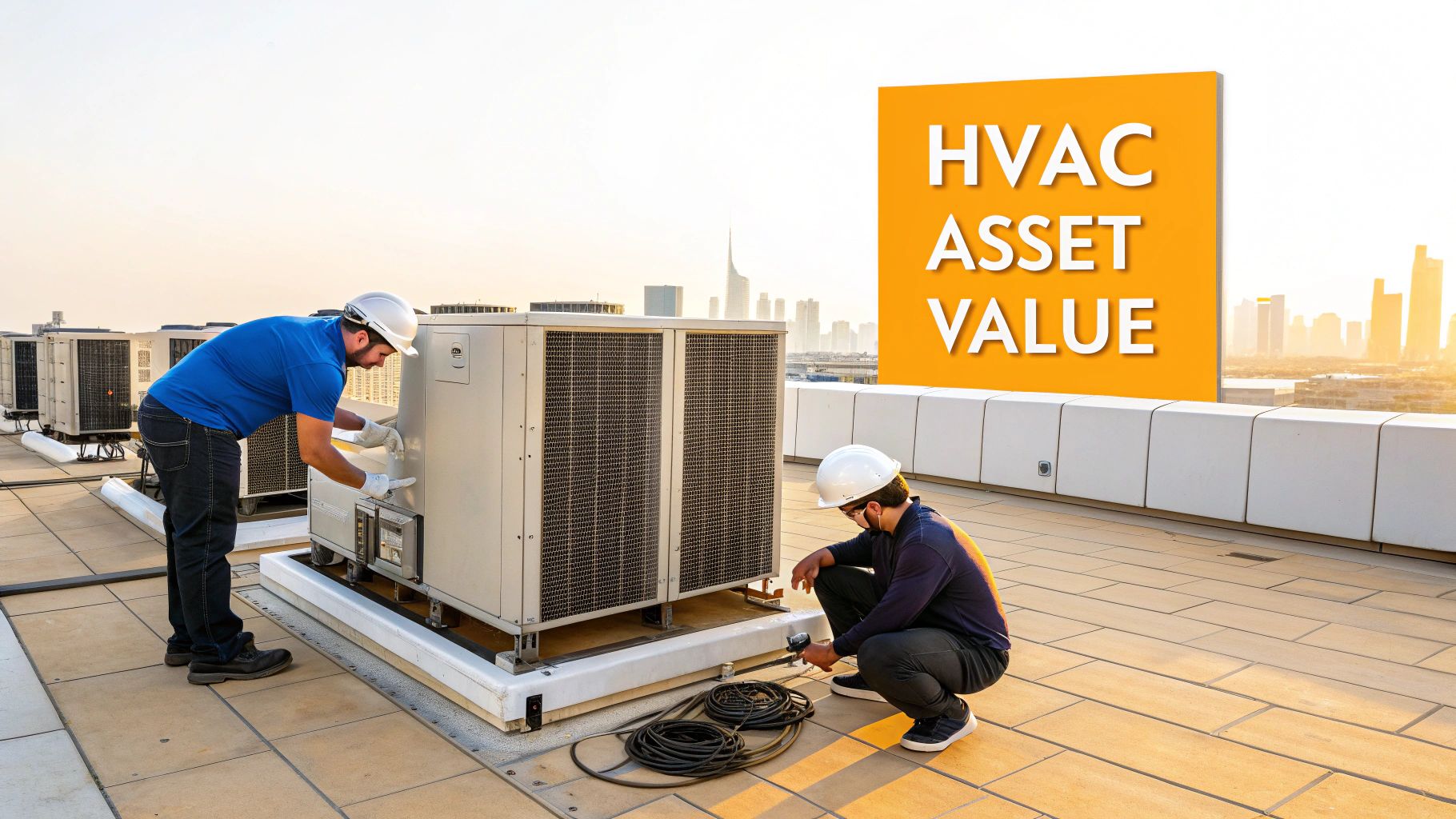
In Dubai's competitive commercial real estate sector, HVAC systems are not merely utilities for comfort; they are core operational assets directly influencing financial performance and tenant retention. An engineering-led perspective treats HVAC not as an expense item but as a critical system with measurable impacts on several key business metrics.
- Energy Consumption: HVAC systems are a primary driver of operational expenditure (OPEX). In UAE conditions, they can represent 35–50% of a commercial building's total energy consumption. Inefficient or poorly maintained systems directly inflate DEWA utility costs, eroding net operating income.
- Indoor Air Quality (IAQ): The system's function extends beyond temperature control to air filtration and ventilation. Inadequate maintenance can lead to the circulation of contaminants, affecting occupant health and productivity, and potentially violating Dubai Municipality regulations.
- Tenant Satisfaction: Consistent thermal comfort and reliable cooling are non-negotiable expectations for commercial tenants. Frequent breakdowns, hot spots, or poor air quality are leading drivers of complaints and can negatively impact lease renewals.
- Business Continuity Impact: For mission-critical facilities like data centres, hospitals, or high-value retail, an HVAC system failure is not an inconvenience but a significant operational event. Such failures can halt operations, result in data or inventory loss, and cause substantial financial and reputational damage.
Effective HVAC management is, therefore, a strategic component of asset management, directly linked to OPEX control, risk mitigation, and the overall commercial viability of the property.
Why HVAC Systems Fail Frequently in Dubai
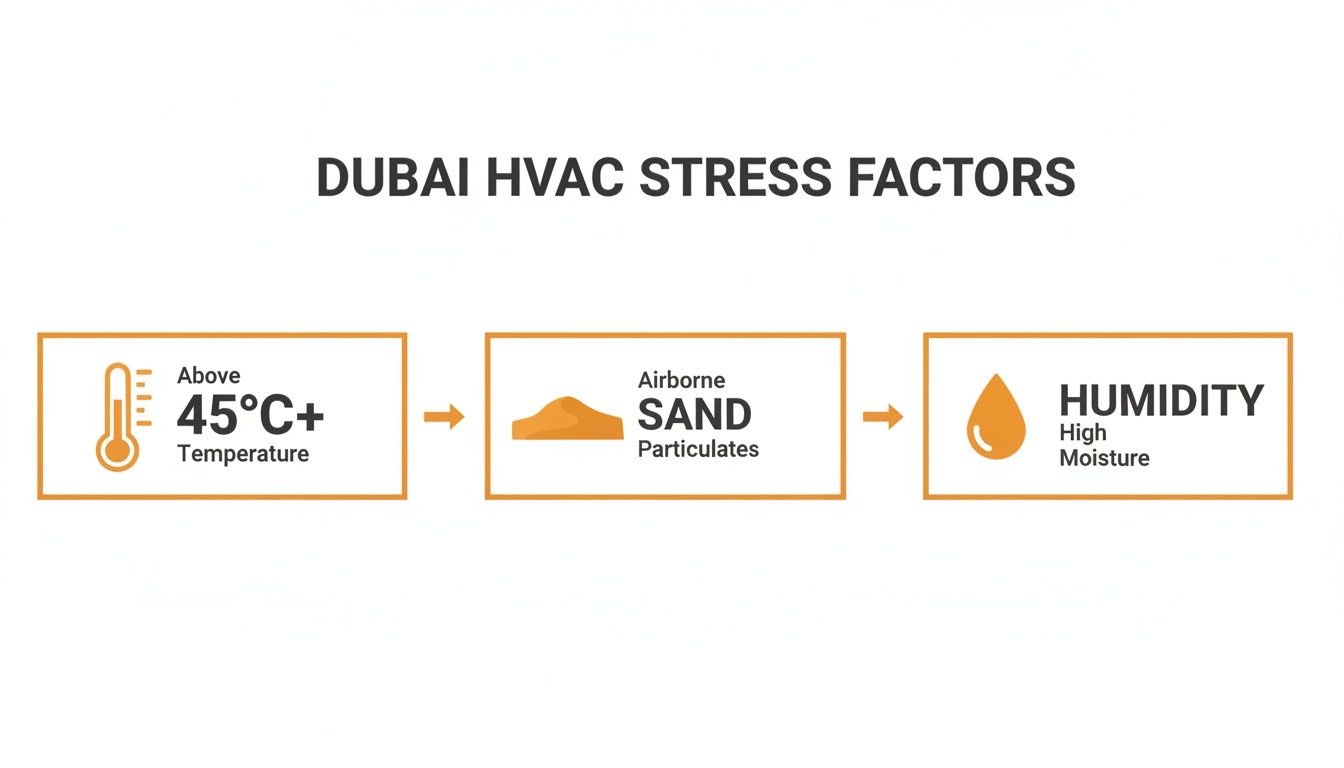
Commercial HVAC systems in Dubai operate under some of the most demanding environmental conditions globally. Failures are rarely random events; they are typically the cumulative result of intense, predictable stressors. Understanding these failure modes is fundamental to developing an effective preventive planning strategy.
- Extreme Heat Load Stress: With ambient summer temperatures frequently exceeding 45–50°C, HVAC systems run at near-maximum capacity for extended periods. This sustained high-load operation places immense strain on critical components, particularly compressors, leading to accelerated wear, lubricant degradation, and premature mechanical failure.
- Coil Contamination from Sand/Dust: Airborne particulate matter, primarily sand and dust, is a primary cause of inefficiency and failure. This dust loading clogs condenser coils, severely impeding the system's ability to reject heat. This forces the compressor to work harder, increasing energy consumption and raising system pressures to dangerous levels, which can lead to catastrophic failure.
- Condensate Drain Blockages: High humidity cycles produce significant volumes of condensate. If drain lines are not regularly flushed, they become blocked by biological growth and accumulated sludge. This often results in water overflow, causing significant interior water damage, ceiling collapse, and costly rectification works.
- Deferred Maintenance Culture: A common operational gap in the UAE market is the deferral of scheduled maintenance to reduce short-term costs. This approach allows minor issues—like failing capacitors or low refrigerant levels—to cascade into major system breakdowns, resulting in higher lifecycle costs.
- Compressor Strain: The combination of high heat load, contaminated coils, and potential refrigerant imbalances places continuous strain on compressors. This is the single most common cause of high-cost, high-disruption failures in the region.
- Oversized/Undersized System Issues: Incorrectly specified systems from the design phase can lead to chronic operational problems. Oversized units cycle too frequently, failing to dehumidify the air properly, while undersized units run constantly without achieving setpoints, leading to premature burnout.
Preventive HVAC Maintenance vs Breakdown Repairs
The decision between a planned preventive maintenance strategy and a reactive, breakdown-driven model is a choice between managed risk and unmanaged liability. This choice fundamentally dictates OPEX predictability, asset lifecycle costs, and operational stability.
Reactive repairs—addressing failures as they occur—may appear to offer lower upfront costs but introduce significant financial and operational volatility. This approach exposes the asset to emergency call-out premiums, unplanned downtime, and accelerated equipment degradation. A structured preventive maintenance program, executed by a qualified HVAC maintenance company in Dubai, UAE, is a risk mitigation strategy designed to identify and rectify faults before they escalate into system failures.
Comparison Table: Preventive Maintenance vs Reactive Repairs
This framework contrasts the operational and financial outcomes of a structured preventive maintenance contract against a reactive, breakdown-only service approach for a commercial facility in Dubai.
| Metric | Preventive Maintenance Model (AMC) | Reactive Repair Model (Breakdown Only) |
|---|---|---|
| Total Cost of Ownership (TCO) | Lower. Achieved through reduced major repairs, optimized energy use, and extended asset lifespan. | Higher. Driven by premium emergency labour rates, accelerated component failure, and premature capital replacement. |
| Budget Predictability (OPEX) | High. Fixed contract costs allow for accurate operational budgeting and financial forecasting. | Low. Costs are unpredictable and volatile, leading to significant budget variances and unplanned expenditures. |
| Energy Efficiency (DEWA Costs) | Optimized. Regular coil cleaning, refrigerant calibration, and component checks ensure operation at peak efficiency. | Poor. Degraded performance from dust loading and system imbalances leads to sustained higher energy consumption. |
| Asset Lifecycle | Extended. Proactive care mitigates operational stress, potentially extending equipment life by 20-30%. | Shortened. Repeated stress cycles and catastrophic failures drastically reduce the functional lifespan of the equipment. |
| Tenant Complaint Risk | Low. High system reliability and consistent performance lead to improved tenant satisfaction and retention. | High. Frequent system failures are a primary source of tenant complaints, negatively impacting building reputation. |
| Business Disruption | Minimal. Maintenance is scheduled during off-peak hours to avoid impacting core business operations. | Significant. Unplanned failures often occur during peak hours, causing maximum disruption to tenants and operations. |
The analysis clearly indicates that a preventive maintenance model delivers superior financial and operational outcomes, transforming maintenance from a reactive expense into a strategic investment in asset preservation and performance. For a deeper analysis, learn more about the long-term costs of reactive maintenance versus AMCs in our detailed guide.
What a Commercial HVAC Maintenance Company Should Deliver
For procurement and facility management teams, evaluating a potential HVAC maintenance company in Dubai, UAE requires moving beyond price comparisons to an assessment of their operational framework. A competent provider delivers a structured, transparent, and accountable service designed to protect asset value and ensure operational continuity. Key deliverables include:
- Planned Preventive Maintenance (PPM) Schedules: The foundation of service is a detailed PPM schedule customized to the specific asset types, operational loads, and environmental conditions of the building. This plan must clearly define the scope and frequency of all tasks, from coil cleaning and refrigerant level checks to electrical component testing.
- Asset Register Tracking: A professional provider will establish and maintain a comprehensive asset register. This database should track make, model, installation date, full service history, performance data, and an assessment of the asset's lifecycle status. This data is essential for accurate OPEX forecasting and long-term capital expenditure planning.
- Performance Monitoring: Beyond routine checks, the provider should monitor key performance indicators (KPIs) like temperature differentials, amperage draw, and system pressures. This data-driven approach helps identify performance degradation before it leads to a failure.
- SLA-Backed Response Times: Service Level Agreements (SLAs) are non-negotiable. The contract must stipulate precise response times for critical and non-critical issues. In Dubai's commercial environment, a 2-to-4-hour response time for critical failures is a common benchmark. These agreements ensure accountability for commercial HVAC services in Dubai.
- Compliance Documentation: The provider must manage and maintain all necessary compliance documentation required by authorities like Dubai Municipality and Civil Defence. This includes IAQ records, fire damper inspection certificates, and other records essential for avoiding penalties and ensuring regulatory adherence.
- Digital Reporting & Transparency: All service activities should be documented through digital reports, often including photographic evidence and detailed work summaries. This creates a transparent and auditable trail, providing clear verification that contracted services are being delivered to standard.
Signs Your Building Needs a Structured HVAC AMC
Systemic HVAC issues rarely manifest as a single, sudden failure. They typically present as a pattern of recurring minor problems, indicating that the current maintenance approach is inadequate. Recognizing these early warning signs is critical for transitioning from a high-risk reactive model to a proactive Annual Maintenance Contract (AMC).
- Repeated Cooling Complaints from Specific Zones: A persistent stream of complaints from the same areas indicates an underlying systemic issue, such as air balancing problems, failing Variable Air Volume (VAV) boxes, or ductwork blockages, which ad-hoc repairs will not resolve.
- Uneven Airflow and Hot/Cold Spots: Inconsistent temperature distribution across a floor is a clear sign of deteriorating system performance, often linked to blocked filters, failing fans, or unbalanced ductwork.
- Rising DEWA Bills: An unexplained, consistent increase in energy consumption is a primary financial indicator of declining HVAC efficiency. This is often the first sign of clogged coils or incorrect refrigerant levels forcing the system to work harder.
- Frequent Emergency Call-Outs: A high frequency of emergency breakdowns signifies a failure in preventive planning. Each call-out represents a missed opportunity for proactive intervention and points to a maintenance strategy that is no longer managing risk effectively.
- Declining Indoor Air Quality: Reports of stuffy air, unusual odours, or increased dust levels are direct indicators of inadequate filtration and ventilation, often caused by neglected filter changes or contaminated ductwork.
Estimated Annual Cost Savings from Preventive HVAC Maintenance
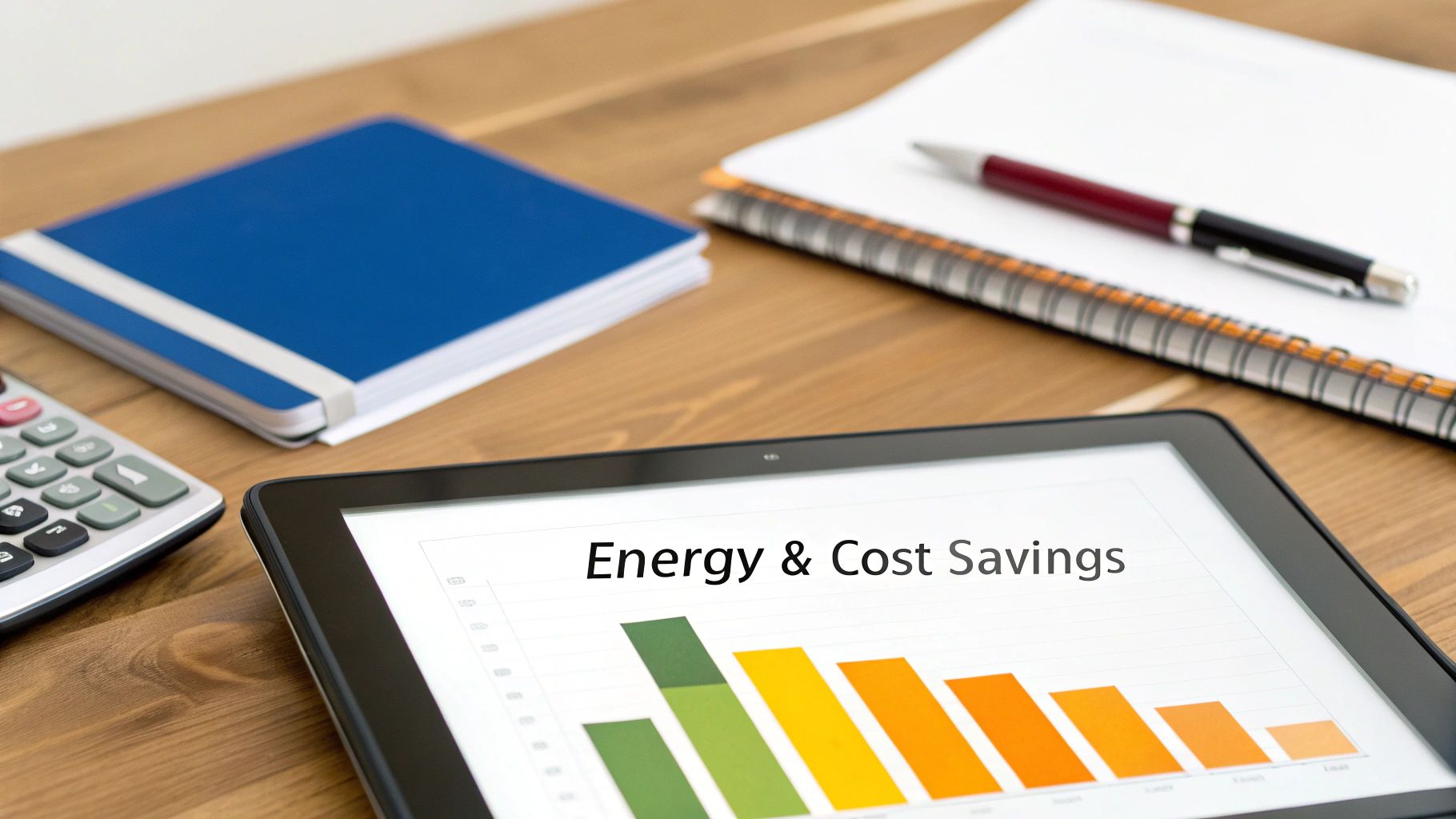
The decision to invest in a structured AMC is supported by quantifiable returns. Shifting from a reactive to a preventive maintenance strategy generates measurable savings across OPEX and defers capital expenditures. These figures are based on industry benchmarks and operational data from commercial properties in the UAE.
- Energy Savings: A properly maintained HVAC system operates closer to its designed efficiency. By ensuring clean coils, correct refrigerant levels, and calibrated controls, energy waste is minimized. Industry practice often shows that a structured PPM program can reduce HVAC-related energy consumption by 5% to 15% annually. For large commercial assets, this translates into substantial OPEX reduction.
- Breakdown Reduction: Preventive maintenance is designed to identify and rectify minor faults before they escalate into major failures. A well-executed AMC can reduce the incidence of major, unplanned breakdowns by 70% to 85%. This significantly lowers expenditure on emergency call-outs, premium labour rates, and urgent parts procurement.
- Equipment Lifespan Extension: Proactive maintenance reduces the operational strain on critical components like compressors and fan motors. In UAE conditions, equipment under a consistent PPM schedule can see its operational lifespan extended by 20% to 30%. This postpones the need for significant capital investment in system replacement, improving the asset's total cost of ownership.
Why SnapFixNow™ FMC
SnapFixNow™ FMC provides HVAC maintenance solutions for commercial and institutional assets in Dubai, built on a foundation of engineering principles and operational transparency. Our approach is designed for decision-makers who prioritize performance, reliability, and long-term asset value.
- Engineering-Led Approach: Our methodology is rooted in technical diagnostics and root cause analysis, moving beyond superficial checklist-based maintenance. We focus on optimizing system performance and mitigating failure risk.
- SLA-Backed AMC Framework: We deliver services within a robust contractual framework defined by clear Service Level Agreements. Our commitments to response times and preventive planning are contractually guaranteed to ensure accountability.
- Commercial Asset Experience: Our teams possess specific experience managing the complex HVAC systems found in commercial towers, institutional facilities, and large-scale residential developments across the UAE.
- Structured Reporting: We provide transparent, data-driven reporting through a digital platform. Photo-based service reports and a comprehensive asset history provide clients with a clear audit trail of all maintenance activities and system health.
- Performance-Focused Methodology: Our objective is to transition client assets from a reactive repair cycle to a state of optimized performance. We focus on enhancing energy efficiency, extending equipment lifecycle, and ensuring business continuity through structured annual HVAC maintenance contracts.
FAQ Section
How often should commercial HVAC systems be serviced in Dubai?
For most commercial buildings in Dubai, a quarterly (four times per year) Planned Preventive Maintenance (PPM) schedule is the industry-standard minimum. This frequency is necessary to combat the severe operational stress from high heat and significant dust loading. However, this baseline should be adjusted based on asset criticality and usage. For example, Fresh Air Handling Units (FAHUs) and systems serving critical 24/7 environments like data centres or hospitals may require monthly filter checks and coil inspections to prevent performance degradation. A competent HVAC maintenance company in Dubai, UAE will conduct an initial asset survey to recommend a tailored PPM frequency that aligns with your specific operational risk and equipment type, rather than applying a generic schedule.
What is included in a commercial HVAC maintenance contract?
A comprehensive commercial HVAC maintenance contract, or AMC, is a detailed service framework, not just a repair agreement. Core inclusions should cover a full scope of preventive activities, including chemical cleaning of coils, lubrication of moving parts, tightening of electrical connections, calibration of controls, and flushing of condensate drain lines. Crucially, the contract must define Service Level Agreements (SLAs), stipulating guaranteed response times for emergency call-outs (typically 2-4 hours in Dubai). It should also include provisions for regular digital service reporting with photographic evidence, asset register management, and compliance documentation support. Be wary of contracts that are vague on the scope of PPM tasks or lack firm SLA commitments.
How does HVAC maintenance affect DEWA bills?
The impact of HVAC maintenance on DEWA bills is direct and significant. In Dubai, HVAC systems can account for 35-50% of a commercial building's total energy use. The primary driver of inefficiency is coil contamination from airborne dust and sand. A clogged coil acts as an insulator, forcing the system's compressor to run longer and harder to reject heat, which dramatically increases electricity consumption. Regular professional maintenance that includes deep coil cleaning, refrigerant charge verification, and filter replacement can restore a unit's efficiency. Industry benchmarks in the UAE show that a structured maintenance program can reduce HVAC-related energy costs by a conservative range of 5% to 15%, directly reducing OPEX.
When should a building opt for an HVAC AMC?
A building should transition to a structured Annual Maintenance Contract (AMC) as soon as operational indicators suggest that a reactive approach is failing. Key triggers include a rising frequency of tenant complaints about cooling, an unexplained upward trend in DEWA bills, an increase in emergency breakdown calls, or feedback about poor indoor air quality. If your facility team is spending more time firefighting HVAC issues than on planned work, it is a clear sign that you have lost control over asset performance. An AMC is a strategic tool to regain that control, stabilize maintenance budgets, mitigate operational risk, and shift the focus from reactive rectification to proactive asset management.
What are the risks of deferred HVAC maintenance?
Deferring HVAC maintenance in the UAE's climate is a high-risk strategy that almost invariably leads to higher long-term costs. The immediate risks include a significantly increased probability of catastrophic component failure, particularly compressors, due to unchecked operational stress. This leads to expensive, unplanned emergency repairs and significant business disruption. Financially, deferred maintenance results in degraded energy efficiency, causing inflated DEWA bills. Operationally, it leads to inconsistent cooling, poor indoor air quality, and a higher volume of tenant complaints, which can damage a property's reputation. The most significant long-term risk is the accelerated depreciation of the asset, forcing premature and costly capital replacement of the entire system.