Think of a professional property maintenance company in Dubai less as a vendor and more as a strategic partner—someone whose entire job is to protect the value and smooth operation of your real estate assets. In a city defined by its demanding climate and stunning architecture, being proactive about maintenance isn't just good practice; it's essential for survival and growth.
Why Your Choice of Maintenance Partner Is Critical
Choosing the right maintenance partner in Dubai is one of the most important decisions a property owner or facility manager can make. Get it right, and you’ll have a proactive strategy that preserves your asset's value, keeps tenants happy, and brings your operational budget under control. Get it wrong, and you’re stuck in a costly, reactive cycle of emergency repairs.
An asset in Dubai isn't just a structure; it's a high-performance machine constantly battling extreme environmental stress.

Your building's core systems—the HVAC, electrical, and plumbing—are like its vital organs. Here in Dubai, those organs are under relentless pressure. The intense summer heat, the pervasive humidity, and the fine airborne sand accelerate wear and tear far beyond what you'd see in more temperate climates.
This constant environmental assault means that minor issues can escalate into major failures with frightening speed. A neglected air conditioning unit isn't just an inconvenience; it's a potential catalyst for mould growth, poor air quality, and skyrocketing energy bills.
The Foundation of Strategic Maintenance
To get ahead of these challenges, two concepts are fundamental to professional property management in the UAE: Annual Maintenance Contracts (AMCs) and Service Level Agreements (SLAs). Think of an AMC as your proactive game plan for the year, while the SLA defines the rules of the game—like guaranteed response times for critical failures.
A well-structured maintenance plan is the cornerstone of asset protection. It shifts the focus from costly, reactive fixes to a preventive approach that extends the lifespan of critical equipment and maintains the property’s premium appeal.
This guide is designed to give you the practical knowledge needed to select the ideal property maintenance company in Dubai. We’ll walk through everything from the specific services required to thrive in this market to understanding contract types and spotting the red flags that could cost you dearly.
A Growing Market Demands Proactive Care
The need for professional maintenance is only growing more urgent as the city’s real estate sector continues to boom. Dubai's residential property market has seen explosive growth, with a recent first half-year recording approximately 91,900 residential transactions valued at a staggering AED 262.1 billion.
That represents a massive 36.4% increase in value compared to the previous year, highlighting the ever-expanding portfolio of assets that require diligent, professional upkeep. As the number of properties grows, so does the demand for reliable maintenance partners to protect these significant investments. You can explore more data on Dubai’s property market performance to understand the full scope of this expansion.
To help you get started, we've outlined the most critical factors to consider when you begin your search for the right partner.
Key Decision Factors for Selecting a Maintenance Partner
This table provides a quick checklist of what to evaluate, why it's crucial for your asset's health, and what excellence looks like in a provider.
| Evaluation Criterion | Why It Matters for Your Asset | What to Look For |
|---|---|---|
| Comprehensive Service Scope | Your property has diverse needs (HVAC, MEP, civil). A single provider streamlines management and accountability. | A company offering a full suite of in-house services, from technical maintenance to specialised deep cleaning. |
| Proven Local Experience | Dubai's climate and regulations are unique. Local expertise ensures compliance and effective, climate-appropriate solutions. | A long-standing presence in the UAE, with case studies and references from similar properties in your area. |
| Clear SLA and AMC Options | These contracts define your service expectations and budget. Vague terms lead to disputes and unexpected costs. | Detailed, customisable contracts with clearly defined response times, inclusions, exclusions, and transparent pricing. |
| Certified and Trained Technicians | The quality of work depends on the technicians. Unqualified staff can create more problems and safety risks. | Evidence of industry certifications (e.g., ISO), ongoing training programs, and adherence to local safety standards. |
| Proactive, Tech-Enabled Approach | A modern provider uses technology to prevent issues, not just react to them. This reduces downtime and OPEX. | Use of CMMS software, real-time reporting dashboards, and IoT sensors for predictive maintenance. |
| Transparent Pricing and Value | The cheapest option is rarely the best. Hidden fees and poor service lead to higher long-term costs. | Clear, itemised quotes without hidden charges. A focus on delivering long-term value, not just the lowest price. |
Using these criteria as your guide will put you in a much stronger position to find a maintenance partner who not only fixes problems but actively works to prevent them, ultimately protecting and enhancing the value of your property.
Decoding the Services Your Dubai Property Actually Needs
Picking the right property maintenance company in Dubai isn't about finding someone with the longest checklist of services. It's about understanding what your specific property truly needs to stay in peak condition. After all, the demands of a gleaming high-rise in DIFC are worlds apart from a sprawling villa community in Emirates Hills. The real secret is matching the scope of work to the unique challenges of your asset and Dubai's unforgiving climate.
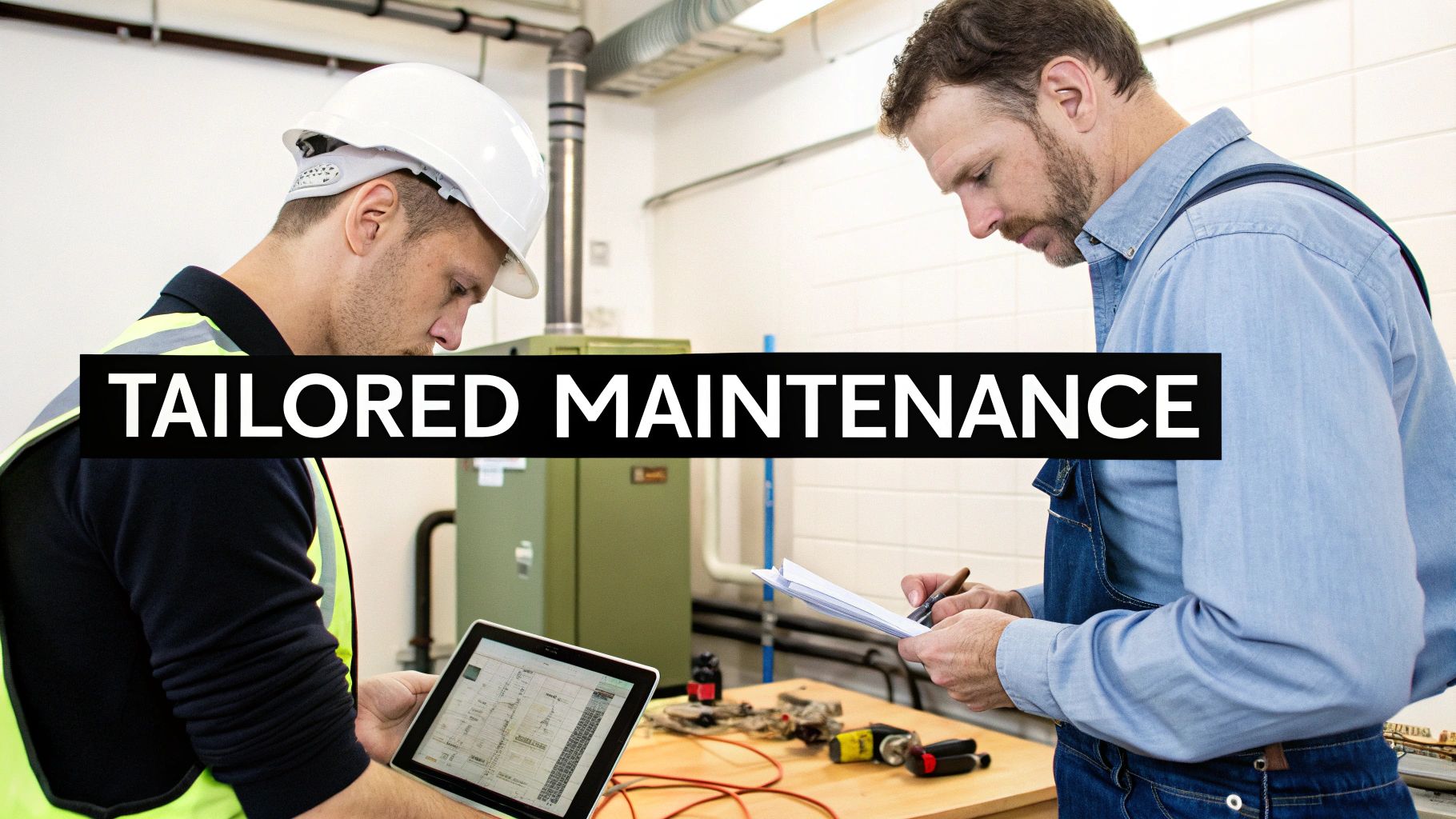
Think of it this way: property maintenance is a blend of keeping the core systems alive and providing specialised care. The core systems are the building’s lifeblood—they keep it functional, safe, and liveable. Let these slip, and you're not just looking at a minor problem; you're facing spectacular failures that lead to huge financial losses and deeply unhappy tenants.
The Critical Core: MEP Services
MEP stands for Mechanical, Electrical, and Plumbing—the three pillars holding up any functional building. In Dubai, the constant heat and high usage put an immense strain on these systems, making proactive maintenance an absolute non-negotiable. A failure here isn't just an inconvenience; it's a critical threat to your operations.
- Mechanical (HVAC): In a place where summer temperatures regularly soar past 45°C, your HVAC system is more than just comfort—it's an essential health and safety system. Proper maintenance is so much more than cleaning a filter. It involves checking refrigerant levels, inspecting ductwork for costly energy leaks, and making sure thermostats are calibrated perfectly to stop your DEWA bills from skyrocketing.
- Electrical: Are you noticing frequent circuit breaker trips or flickering lights? Don't ignore them. These are early warning signs of an overloaded or failing system. In a building over 20 years old, damaged wiring can be a serious fire hazard. Professional inspections catch these risks before they become disasters, protecting both people and property.
- Plumbing: From silent leaks that slowly rot away your building's structure to blocked drains that can shut down entire floors, plumbing issues demand immediate, expert attention. Good maintenance means regularly checking for corrosion, testing water pressure, and ensuring pumps and tanks are working flawlessly to prevent service from ever being cut off.
MEP maintenance isn't just a line item on a budget. It's the single most effective way to prevent catastrophic failures in high-rise towers and large commercial complexes. It directly protects the value of your asset by extending the life of hugely expensive, built-in infrastructure.
Specialised and Civil Maintenance Services
Beyond the core MEP systems, a whole other range of services is needed to maintain your property’s appearance, functionality, and, ultimately, its value. These are the services that are often tailored to the specific type of property you own or manage.
For instance, a five-star hotel needs spotless facade cleaning and specialised deep cleaning for its kitchens and lobbies to protect its brand image. A large residential community, on the other hand, will probably prioritise landscaping, swimming pool maintenance, and pest control to keep its residents happy and ensure a high quality of life.
A truly capable property maintenance company in Dubai should offer a wide array of these specialised services, ready to deploy them as needed:
- Civil Works: This is a broad category covering everything from masonry and plastering repairs to painting and tiling. Fixing a few cracks in the walls or replacing damaged flooring now prevents a minor issue from turning into a major structural or aesthetic headache down the road.
- Carpentry and Joinery: Doors, windows, and cabinets that work properly are essential. Maintenance ensures every fixture operates smoothly and securely, which is just as important for convenience as it is for security.
- Deep Cleaning and Sanitisation: This goes far beyond standard janitorial work. We're talking about using specialised equipment and chemicals to deep clean carpets, sanitise high-touch surfaces, and ensure the entire environment is hygienic and safe.
- Facade and Window Cleaning: For Dubai’s iconic skyline of skyscrapers, this isn't just about looking good. It’s a critical service that maintains curb appeal and prevents the long-term damage caused by sand and pollutants.
At the end of the day, having a detailed grasp of these service categories gives you the power to build a truly comprehensive scope of work. This ensures you’re not just hiring a vendor, but partnering with a company that can meet the precise, real-world demands of your valuable Dubai property.
AMC vs Ad-Hoc Services: Which Model Truly Protects Your Investment?
When you’re looking for a property maintenance company in Dubai, one of the first big decisions you'll make is how you want to engage their services. This isn't just a minor detail; it fundamentally shapes your budget, day-to-day operations, and the long-term health of your property. The two main roads you can go down are signing an Annual Maintenance Contract (AMC) or simply calling for help on an ad-hoc, pay-as-you-go basis.
Let's use a simple analogy: think of it like your own health.
An Annual Maintenance Contract (AMC) is like having a comprehensive wellness plan. It’s all about prevention—regular check-ups, proactive care, and predictable costs to keep your property in peak condition all year round. You have a dedicated partner who knows your systems inside and out.
On the flip side, ad-hoc services are the equivalent of rushing to the emergency room. You only call for help when something is already broken, often badly. This is a purely reactive game, and it almost always leads to unpredictable bills, stressful emergencies, and painful downtime while you scramble to find a decent technician who’s available right now.
The Proactive Power of an AMC
An AMC is a formal agreement with a maintenance company for scheduled, preventive care over a set period, usually a year. The real magic of an AMC is that it’s proactive. Instead of waiting for your AC to die on a sweltering August afternoon, an AMC ensures the unit is serviced and running efficiently well before the heat kicks in.
This forward-thinking approach brings some serious advantages:
- Budget Stability: Your maintenance costs are fixed. No more surprise invoices for emergency call-outs. This allows for precise financial planning, which is a massive relief for any facility manager or property owner.
- Priority Service: AMC clients are always at the front of the queue. When an emergency does pop up, your provider is contractually obligated to respond within a guaranteed timeframe, as spelled out in your Service Level Agreement (SLA).
- Extended Asset Lifespan: Regular, professional servicing makes a world of difference to the lifespan of your expensive equipment—think HVAC systems, generators, and water pumps. This proactive care stops minor issues from snowballing into catastrophic failures that demand a full replacement.
An AMC isn’t just a service contract; it’s an investment protection strategy. By focusing on preventive care, it dramatically minimises the risk of catastrophic failure, which is the single biggest driver of unforeseen maintenance costs.
The Risks of a Reactive Ad-Hoc Approach
Relying only on ad-hoc services might seem cheaper at first glance, but it almost always ends up being the more expensive route. Every call is a brand-new, one-off job. That means you’re paying premium rates for emergency labour and parts. There’s no history, no relationship, and no guarantee of quality—just a different stranger showing up each time who doesn’t know the first thing about your property.
Worse, this model leaves your asset completely vulnerable. A system that hasn't been looked at in months is a ticking time bomb. A burst pipe or an electrical short isn't just a repair bill; it's a waterfall of other costs, from water damage and business interruption to serious safety hazards.
To get a better sense of how these contracts are built for different needs, you can explore the distinctions between residential vs commercial property requirements in Dubai.
Comparing AMC vs Ad-Hoc Maintenance Models
To make the choice clearer, let's break down the key differences between a planned, contractual approach and a reactive, pay-as-you-go model. This table should help you quickly see where the real value lies for your property.
| Feature | Annual Maintenance Contract (AMC) | Ad-Hoc (Pay-As-You-Go) Services |
|---|---|---|
| Cost Structure | Fixed, predictable annual fee. Easy to budget for. | Variable and unpredictable. Pay premium rates per call-out. |
| Service Approach | Proactive & Preventive. Scheduled check-ups to prevent failures. | Reactive. Service is only provided after something has broken. |
| Budgeting | Stable & Controlled. No surprise costs for covered services. | Chaotic & Unpredictable. Impossible to forecast expenses accurately. |
| Response Time | Priority Service. Guaranteed response times outlined in an SLA. | Best Effort. No guarantee; you wait in line behind contract clients. |
| Asset Lifespan | Extended. Regular care helps equipment last significantly longer. | Shortened. "Run-to-failure" approach causes premature wear and tear. |
| Downtime | Minimised. Issues are caught early, reducing unexpected breakdowns. | Maximised. Failures are often catastrophic, leading to long downtimes. |
| Overall Cost | Lower Total Cost of Ownership. Prevents expensive emergency repairs. | Higher Total Cost of Ownership. Emergency rates and damages add up. |
| Best For | High-value residential & commercial properties needing reliability. | Very small properties with non-critical systems and high risk tolerance. |
As you can see, the decision impacts much more than just your immediate spending; it affects your property's long-term financial health and operational stability.
Making the Right Financial Decision
So, which path should you choose? It really comes down to your tolerance for risk and your long-term financial strategy. For any high-value commercial or residential property in Dubai, an AMC is without a doubt the smarter, more financially sound choice. The structured, preventive model offered by a professional property maintenance company in Dubai gives you the stability and protection you need to safeguard your investment against the region’s tough climate and relentless operational demands.
Getting a Grip on Maintenance Costs and Pricing Models
Figuring out the financial side of property upkeep can feel like navigating a maze, but getting your head around the pricing models used by a property maintenance company in Dubai is the secret to setting a budget that actually works. The quote you receive isn't just a number plucked from thin air; it’s a carefully calculated figure based on the unique DNA of your asset. Let's break down what drives those costs so you can see exactly where your money is going.
First and foremost, the biggest influencers on your maintenance quote are the size and age of your property. It's simple logic: a larger building has more systems and more ground to cover, while an older property naturally needs a bit more TLC for its ageing infrastructure.
Think of it like this: looking after a small, modern apartment is like servicing a brand-new car—it just needs routine checks and minor tweaks. On the other hand, managing a sprawling, decade-old commercial tower is more like maintaining a classic vehicle. It demands deeper expertise, more frequent inspections, and a bigger budget for parts and labour to keep it purring.
Key Factors Driving Your Maintenance Quote
Beyond just square footage and age, a few other critical variables will shape the final price of your Annual Maintenance Contract (AMC). Any professional provider will dig into these details to build a quote that truly reflects the work and resources required.
- System Complexity: A building decked out with a sophisticated Building Management System (BMS), advanced smart controls, or other specialised equipment will naturally command a higher maintenance fee than one with straightforward, basic systems.
- Property Usage: How intensely the property is used is a huge factor. A high-traffic commercial building or a bustling hotel sees far more wear and tear on its MEP systems, lifts, and common areas than a quiet residential block.
- Required Response Times: Your Service Level Agreement (SLA) is a major cost driver. If you need a guaranteed one-hour emergency response time, 24/7, the price will be higher to cover the cost of having dedicated technicians on standby.
The core principle is straightforward: higher risk and greater complexity mean a bigger investment in maintenance. The goal isn't to find the rock-bottom cheapest price, but to secure the best value—a price that funds a proactive strategy to head off expensive failures before they happen.
Demystifying AMC Pricing Structures
Not all AMCs are built the same. You'll generally come across two main flavours: Comprehensive and Non-Comprehensive contracts. Understanding the difference is absolutely crucial for your budget.
A Comprehensive AMC is the all-inclusive, peace-of-mind package. It typically covers labour, all scheduled preventive maintenance, emergency call-outs, and—this is the important part—the cost of spare parts and consumables. This model gives you the ultimate budget predictability because you won’t be blindsided by surprise bills for a fried AC component or a broken water pump.
A Non-Comprehensive AMC, on the other hand, is a bit more limited. It usually covers just the labour for preventive check-ups and reactive repair jobs. If a part gives up the ghost, you'll be billed separately for the component itself. While the initial contract price is lower, it introduces a level of budget volatility, as you could get hit with significant, unplanned costs for major parts down the line.
Setting Realistic Cost Expectations
Effective budgeting starts with knowing the lay of the land. For residential properties in Dubai, costs can swing quite a bit depending on the unit size. For example, annual property maintenance costs for studios and 1-bedroom apartments typically land somewhere between AED 3,000 to AED 8,000 a year. For 2-bedroom units, you're more likely looking at the AED 8,000 to AED 13,000 annual range.
Given Dubai's climate, where summer temperatures can soar past 50°C, this spending is less of a luxury and more of a necessity to keep essential HVAC, plumbing, and electrical systems in fighting shape. You can discover more insights about Dubai property maintenance costs to help you nail down your financial planning.
For commercial properties, pricing is far more bespoke and is calculated based on all the factors we’ve just covered. A large commercial complex with a central chiller plant and an extensive BMS could easily have an annual maintenance budget running into the hundreds of thousands of dirhams. The key here is to get detailed, itemised quotes from several reputable firms so you can accurately compare the scope of work and the value on offer. Once you understand these financial building blocks, you can confidently pick a property maintenance company in Dubai that fits both your operational needs and your wallet.
Your Checklist for Vetting a Maintenance Partner
Choosing a property maintenance company in Dubai isn't like picking a vendor from a catalogue. It’s more like hiring a key team member—someone you're trusting with the health of your most valuable asset. The process requires proper due diligence.
You need to look past the glossy brochures and slick sales pitches to verify their credentials, understand their processes, and make sure they’re the right fit for your property's unique demands. A thorough vetting process is your single best defence against shoddy service, surprise costs, and contract nightmares later on.
The Ground-Level Due Diligence
Before you even get to talking about service packages or pricing, there are a few non-negotiable checks every property owner should run. Think of this as the first filter; it quickly weeds out the unqualified or illegitimate operators, saving you a ton of time and potential headaches.
- Check the Trade License: Every legitimate business in Dubai has a valid trade license from the Department of Economy and Tourism (DET). Ask to see it. Make sure it's current and that their listed activities actually cover property maintenance. This is your first, most basic proof that they're a real, legally-operating company.
- Confirm Key Certifications: Look for quality standards that are recognised internationally. An ISO 9001:2015 certification, for instance, is a strong signal that the company has a serious quality management system in place. It shows they’re committed to delivering consistent service and keeping customers happy.
- Actually Call Their Client References: A list of client logos on a website means very little. Ask for the contact details of a few current clients—preferably with properties similar to yours—and pick up the phone. A provider who is confident in their work will have zero hesitation in connecting you with happy customers.
Once a company clears these initial hurdles, you can start digging deeper into their capabilities and how they actually operate day-to-day.
Sharp Questions to Ask at the RFP Stage
This is where you separate the pros from the pretenders. The questions you ask now will reveal a company’s true expertise, their commitment to safety, and how they perform under pressure when things inevitably go wrong.
How a potential partner answers tough operational questions tells you everything about their on-the-ground reality. Vague, fluffy answers usually point to a lack of solid processes. Clear, confident responses suggest a well-oiled machine.
Here are a few pointed questions to slide into your Request for Proposal (RFP) or initial meetings:
- Technician Credentials: What specific training and certifications do your technicians have for specialised jobs like HVAC, electrical work, and plumbing? How do you keep their skills up to date?
- Emergency Game Plan: Walk me through your step-by-step process for an emergency call-out. From the moment the phone rings to the final sign-off, what happens? And what is the guaranteed response time in your SLA?
- Tech and Reporting: What software do you use to manage work orders, keep tabs on your technicians, and generate service reports? Can I see a sample report or a quick demo?
- Subcontractor Policy: Do you use third-party subcontractors for any of your core services? If you do, how do you vet them to ensure their work is up to your standards?
These questions cut through the sales talk and force them to show you their operational backbone. For an even more detailed list, our guide on how to choose the right facility management company in the UAE for long-term reliability offers some great additional points.
This decision tree gives you a visual on how things like property size, age, and complexity should influence your vetting process and eventual costs.
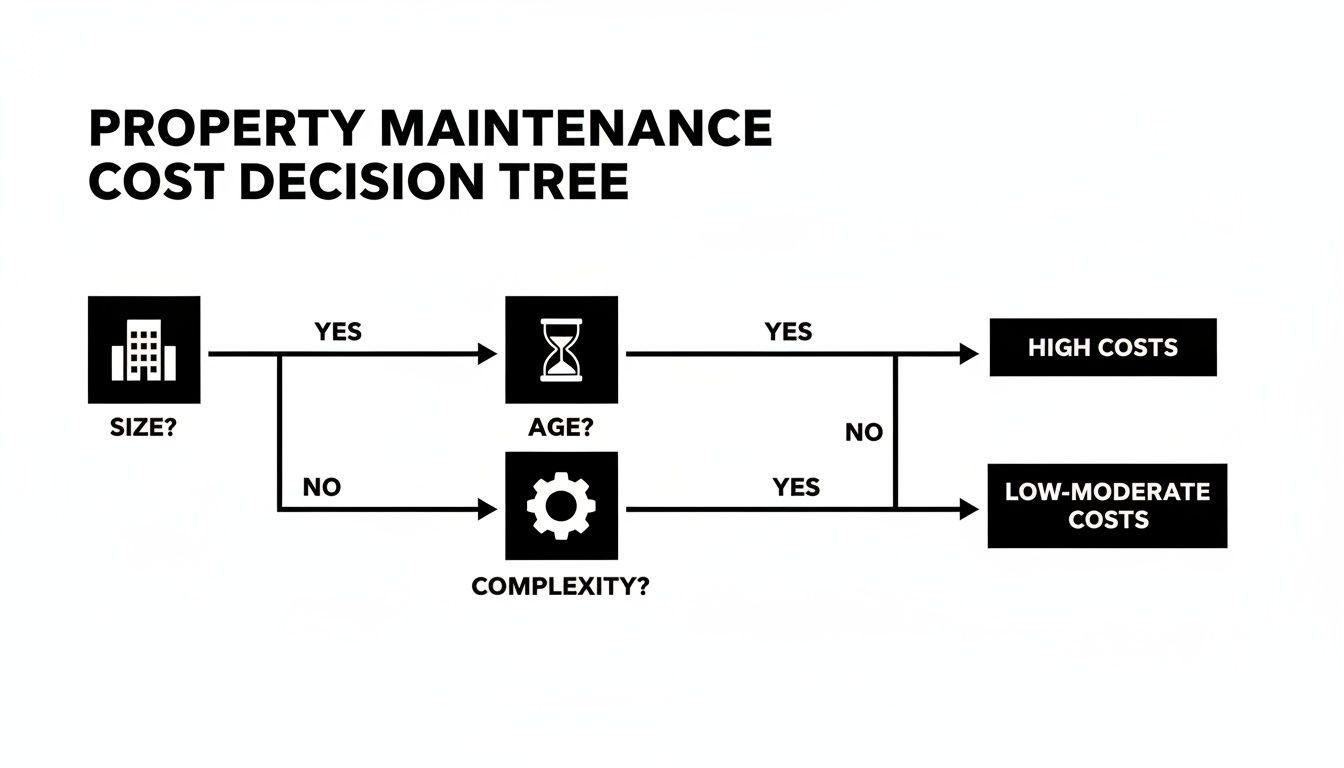
As the infographic shows, the bigger, older, or more complex your property is, the more critical it becomes to partner with a highly certified provider that uses modern technology.
Spotting the Red Flags
Knowing what to look for is only half the battle; you also need to know what to run from. If you spot any of these warning signs during your talks, it’s time to hit the brakes.
- Rock-Bottom Pricing: If a quote looks too good to be true, it is. Dirt-cheap pricing is often a sign of unqualified labour, cheap materials, or a business model that plans to sting you with hidden fees down the road.
- Fuzzy Contract Terms: Be wary of contracts with vague language, especially when it comes to what's included, what's excluded, and guaranteed response times. A professional outfit provides crystal-clear terms.
- Hesitation to Provide References: A top-tier company is proud of their track record and will be eager for you to speak with their clients. If they stall or make excuses, it’s a massive red flag suggesting they might not have many happy customers to begin with.
By following this simple checklist, you can move through the vetting process with confidence, making it much easier to find a property maintenance company in Dubai that acts less like a vendor and more like a true partner in protecting your asset.
How Modern Technology Transforms Property Maintenance
The days of chasing down technicians, shuffling through messy paper trails, and trying to decipher vague verbal instructions are well and truly over. Today, the sharpest edge in property maintenance isn't just about having skilled hands on deck; it's about the powerful technology that directs them. When you partner with a tech-forward property maintenance company in Dubai, you’re not just hiring a repair service—you're shifting your entire strategy from reactive fire-fighting to a proactive, data-driven approach that protects your investment in real time.
This modern mindset completely changes how work gets done and, just as importantly, how it's verified. Imagine a work order that starts not with a confused phone call, but with a simple photograph snapped on a smartphone. This instantly creates an undeniable record of the issue, killing any chance of miscommunication between tenants, managers, and the technicians on the ground.
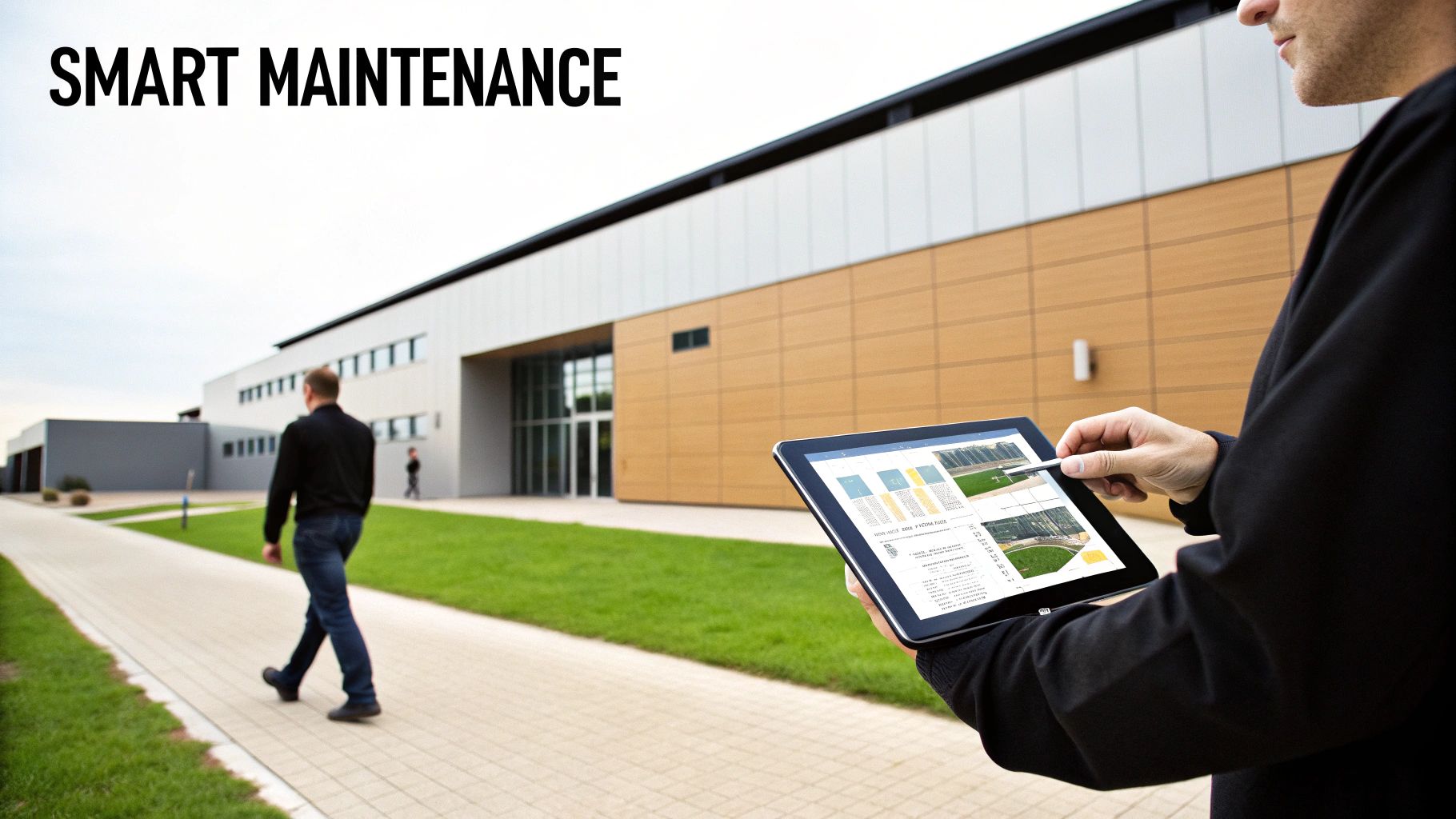
From that point on, every step is documented. The initial report, the technician's arrival, the "after" photos showing the completed fix—it all creates a perfect digital audit trail. This isn't just convenient; it's your proof of compliance and total accountability.
Driving Efficiency and Accountability
Technology also pulls back the curtain on field operations. With real-time GPS tracking, managers know exactly where their teams are. An emergency AC failure in JLT? They can dispatch the nearest expert in minutes, not hours. This dramatically improves response times and ensures those crucial Service Level Agreements (SLAs) are actually met.
This kind of visibility does more than just make things run smoother; it builds trust. You can see precisely when a technician arrives, how long they spend on-site, and the moment the job is closed out. This is what data-driven accountability looks like.
The tangible results here are huge, affecting everything from your operational budget to your tenant satisfaction scores. Here’s a quick breakdown of the impact:
- Reduced Asset Downtime: Smart alerts and faster diagnostics mean critical systems like HVAC units or water pumps get fixed before they fail, avoiding costly and disruptive interruptions.
- Lower Energy Costs: Data from your systems helps fine-tune HVAC servicing schedules. This ensures units run at peak efficiency, which means a welcome reduction in your DEWA bills.
- Improved Tenant Satisfaction: It’s a simple formula: faster, more transparent service and fewer breakdowns lead directly to happier tenants and a stronger reputation for your building.
From Reactive Fixes to Proactive Strategy
Ultimately, technology elevates maintenance from a necessary cost into a strategic function. It gives you the hard data you need to make smarter decisions, forecast capital expenditures with real accuracy, and prove the value of your maintenance programme. You can learn more about how IoT monitoring and predictive maintenance solutions are changing the game and delivering measurable returns right now.
By embracing technology, a modern property maintenance company doesn't just fix what's broken. It creates a highly efficient, transparent, and proactive ecosystem that actively enhances the value and longevity of your asset, ensuring it operates safely and continuously.
This fundamental shift empowers you to move beyond simply managing repairs and start strategically protecting your investment for the long haul.
Frequently Asked Questions
When it comes to property maintenance in Dubai, there are always questions. Whether you're a seasoned facility manager or a first-time property owner, getting clear answers is key to making the right decision. Here’s a rundown of the most common queries we hear.
What Should a Standard AMC in Dubai Include?
Think of a standard Annual Maintenance Contract (AMC) as your property's essential health plan. At its core, it must include scheduled preventive check-ups for your most critical systems—HVAC, electrical panels, and plumbing networks. The goal is to catch small issues before they spiral into costly emergencies.
Beyond that, your contract should clearly state how many reactive call-outs are included for those unexpected breakdowns. A crucial detail to check is whether the AMC is comprehensive (covers spare parts and consumables) or non-comprehensive (covers labour only). This single distinction can make a massive difference to your annual budget, so always read the fine print for exclusions, especially on big-ticket items like chillers or generators.
How Important Is ISO Certification for a Maintenance Company?
An ISO 9001 certification is more than just a fancy badge—it's a powerful stamp of quality and reliability. This international standard confirms that the property maintenance company in Dubai you're considering has solid, documented processes for managing its services.
For you, this means peace of mind. It shows the company is serious about consistency, from how they schedule jobs and train technicians to how they handle your calls and resolve complaints. It’s a clear signal that they’ve invested in being professional and dependable, which is exactly what you want when you’re entrusting them with a high-value asset.
Think of ISO 9001 as a baseline for reliability. It demonstrates that a provider has invested in creating dependable, repeatable processes, reducing the risk of service failures and ensuring a higher standard of care for your property.
What Is a Reasonable Emergency Response Time in Dubai?
The emergency response time is one of the most critical parts of your Service Level Agreement (SLA). When a critical system fails—like a total AC breakdown in July, a major pipe burst, or a complete power outage—you need help, fast. The industry standard for these situations is a guaranteed response time of 1 to 4 hours.
For less urgent problems that don't pose an immediate threat, a 24 to 48-hour window is generally fine. Just make sure these timelines are explicitly defined in your contract. They have a direct impact on your operational continuity and, just as importantly, your tenants' happiness.
Ready to partner with a maintenance provider that combines certified expertise with modern technology? SnapFixNow delivers proactive, SLA-driven maintenance solutions designed to protect your asset and optimise your operational budget. Learn more about our comprehensive maintenance services.